Books Read in May 2026, part 2

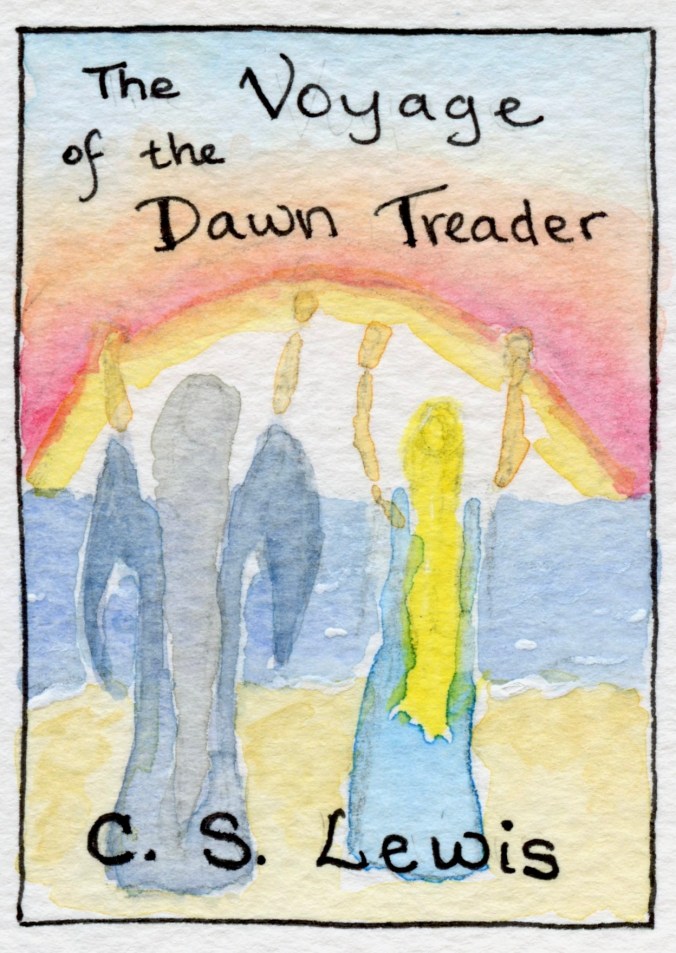
The Voyage of the Dawn Treader

by C. S. Lewis, published 1952

Lucy, Edmund, and their unpleasant cousin Eustace visit Narnia via a painting of a ship and go on a voyage of adventure and growth. Features the best mouse and a great opening line. I enjoy the vignettes of the different islands they visit and my husband speculates that I picked up my horror of sitting with my back to an open door from this book: 

“[Lucy] would have to stand with her back to the door while she read [the magician’s book]. So at once she turned to shut the door. 

“It wouldn’t shut.

“Some people may disagree with Lucy about this, but I think she was quite right. She said she wouldn’t have minded if she could have shut the door, but that it was unpleasant to have to stand in a place like that with an open doorway right behind your back. I should have felt just the same.”

Exactly. The thought of being watched or surprised from behind unsettles me. 

Unlike Prince Caspian, this is in my top tier Narnia books. I enjoy meeting many new characters as the Dawn Treader visits many islands, and Eustace’s transformation is excellent.

Platform Decay

by Martha Wells, published 2026

Murderbot is back! This time, it’s on a mission to extract (rescue) some family members of its favorite human, Dr. Mensah, from a bad situation. 

As usual, Murderbot pairs is grumpy desire to just watch tv with its desire to be useful as an independent security consultant and a grudging member of a community of humans and bots. Murderbot may be grossed out by the inefficiencies and smells of humans, who require sustenance, lots of sleep, restroom “comfort” breaks, and who have emotional breakdowns at inconvenient moments, but Murderbot is also emotional about holding small humans, being respected, and being accepted as part of a team, much to its surprise.

Murderbot is also still dealing with the fact that it endured trauma (emotionally; Murderbot is nearly constantly enduring physical trauma in its security capacity) a couple books ago. So processing its emotions is…tricky. 

This was another fun installment of the series, no complaints. Perfect in novella form.

The Mystery of the Blue Train

By Agatha Christie, published 1928

A wealthy American purchases an enormous ruby necklace for his spoiled daughter, and she takes it with her on a train trip. What could possibly go wrong?

Meanwhile, Hercule Poirot, coincidentally traveling on the same train, meets a young woman who has come into some money and who is going to meet some relatives who hope she will share some of her newfound wealth with them.

When the American woman is discovered murdered and the necklace missing, Poirot must sort through the suspects to discover who killed her and why (the husband she was divorcing? his new mistress/girlfriend? a notorious jewel thief? someone else on the train who held a grudge against her/her father?).

This mystery felt a little more melancholy in tone than some other Christie mysteries, maybe partially because of the brutal murder but also because I felt sorry for the girl who inherited money but feels lonely and out of place. Money does not solve that predicament. I was not quite sure of her place in the story–maybe just to lighten it up a bit? But this was still a solid Poirot mystery.

What Grows in Weary Lands

by Tish Harrison Warren, published 2026

“This is a middle-of-life book, for “what our culture–and what the church–tends to lack are stories of a long, steady continuation of faith…we don’t have categories for the prolonged middle, for the slog.”

So this is a book about the middle. It is for people who are in the midst of life, busy with responsibilities and find themselves weary or restless, unsure about continuing on the same road they have been traveling. Maybe they are not sure they can continue in their spiritual life and it feels easier or better to give up.

Warren looks to the Christian desert fathers and mothers (basically proto-monks) who had much to say about faith in difficult circumstances.

Some of the advice is hard, some of it is necessary for surviving a world with an onslaught of distractions, notifications, inhuman technology and extractive economics, and some of it is encouraging (maybe try softer; be honest; don’t try to “gut it out” alone).

A wise and helpful book. Put one foot in front of the other, but be gentle with yourself and resist the urge to numb or flame out. “To go deep means looking with unflinching honesty at the truth of things–the pain in our lives, the sins and weaknesses in ourselves and those around us.” I found it comforting and encouraging, as I am in the middle of life and finding that I cannot rely on a shallow faith to sustain me. I read this book quickly, but I think it would benefit from slow reading to really take it in. I will probably read it again and much more slowly next time.

Books Read in May 2026, part 1

Prince Caspian

by C. S. Lewis, published 1951

Lucy and her siblings return to Narnia just in time to help the titular prince claim his throne. It’s been a year since their adventure through the wardrobe, but hundreds of years in Narnian time, so no one expects them. “It was as if King Arthur came back to Britain, as some people say he will. And I say the sooner the better.” 

Not quite as magical as The Lion, the Witch and the Wardrobe, but there’s still plenty of magic, a fun adventure, and Caspian is easy to root for. I enjoyed it but it’s not in my top three Narnia books (a ranking I made up just now and worry this will create more work for me later. No matter).

Murder in Mesopotamia

by Agatha Christie, published 1936 

Hercule Poirot detects again! 

This book is told from the point of view of a witness, Amy Leatheran, who is “encouraged to tell the story” of a murder at an archaeological dig. 

Nurse Leatheran was called in to attend Louise Leidner, the wife of the main archaeologist at a dig in Iraq, who has been suffering from “nerves.” 

Leatheran sees right away that the vibes are off, and Louise’s somewhat magnetic and strong personality have upset the team’s equilibrium. When Louise is murdered, it seems impossible: everyone has an alibi…or do they? 

Poirot must unravel the mystery of who killed her and why. Honestly, I cannot see that anyone would have figured out the labyrinthine conclusion, so I just enjoyed the ride (and if you did figure out the ending before you got there, please let me know; your mind sounds like a fascinating place). Not completely top tier Christie, but a solid entry in the top half maybe. Nurse Leatheran is a stand in for a Dr. Watson or Capt. Hastings character who is telling the story and admiring the detective as he reconstructs the crime, and I thought that worked pretty well.

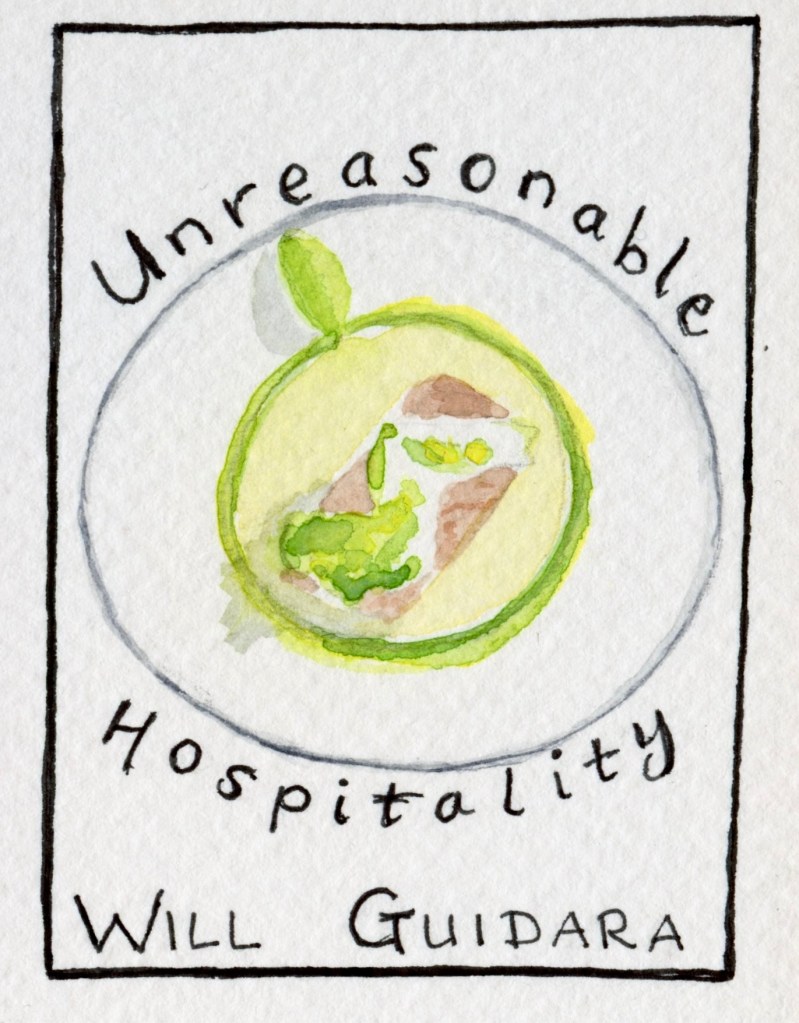
Unreasonable Hospitality

by Will Guidara, published 2022

Most restaurants that aspire to greatness are led by a chef and the restaurant “back of house,” while the “front of house” staff just tries to keep up. Guidara was a “front” guy who paired with a “back” chef to try to marry a hospitality focus with a culinary focus. Their ambition: to be the best restaurant in the world (no big deal). Their ambition drove them hard, which opens its own set of questions, but it led them to innovate in extraordinary ways. 

While you don’t need to aim to be the best _____ (fill in the blank with your own field), there is so much in this book that is applicable to anyone in a service industry, not just the restaurant industry. And many people are in some kind of service industry, even if they don’t view it that way. Many jobs have some sort of customer / client, and many jobs have more than one employee with some sort of hierarchy/ management structure in place. 

I’m not always big on “business books” and I have limited tolerance for the “self help” section, but I thought this book was good. 

Guidara’s idea is this: treat employees well and treat customers / clients really well, and your business will thrive. If your staff feels supported and encouraged to go above and beyond for their customers, they will find ways to surprise and delight the people who come through your doors. It is sort of an argument for treating humans humanely, which I appreciate. So many businesses are focused on the next quarterly earnings statement, and anyone pushing back against extractive business is something I am interested in. Speaking of extraction….

The Age of Extraction

by Tim Wu, published 2025

There’s a lot of overlap here with Enshittification by Cory Doctorow here, but with a slightly different focus. 

“‘The conviction was universal that the country was in real danger from another kind of slavery sought to be fastened on the American people, namely, the slavery that would result from aggregations of capital in the hands of a few individuals and corporations controlling, for their own profit and advantage exclusively, the entire business of the country.’” This was Supreme Court Justice John Marshall Harlan in 1911, but it feels extremely modern. 

Wu argues that tech platforms have dominated modern life in ways that drive our economy and their unfettered access to data, attention, and money have meant that they are extremely extractive and harming us all. They are largely unregulated, and they control vast amounts of capital that allow them to put their finger on the scale to their benefit. 

While it is depressing to read about all the ways that tech platforms and the AI race are plundering humanity and the planet, Wu does remind us that we emerged from the early-20th century Gilded Age and there are things that can be done to restrain the current tech overlords. 

He posits that the economy is not inherently self-balancing, and government needs to intervene sometimes to help balance it, especially by being anti-monopoly, creating neutrality rules, and treating some platforms like utilities. He also notes that union/ worker power is also at a low, and that can help to restrain companies and create a balance if re-established. 

All of this would take political will to push through, and while it would be a tough road, it is not impossible. The question is just whether there are people in power who are willing to use that power for restraint instead of self-dealing. 

Book Read in November 2025

Sometimes my habit of reading multiple books at once backfires and I don’t make enough progress to finish books. This was also a month of a lot of other things going on, including travel, so I didn’t have as much time for reading. 

I also spent more time watching shows with my husband in the evenings in November, which cut into reading time as well. So I only finished one book in November! 

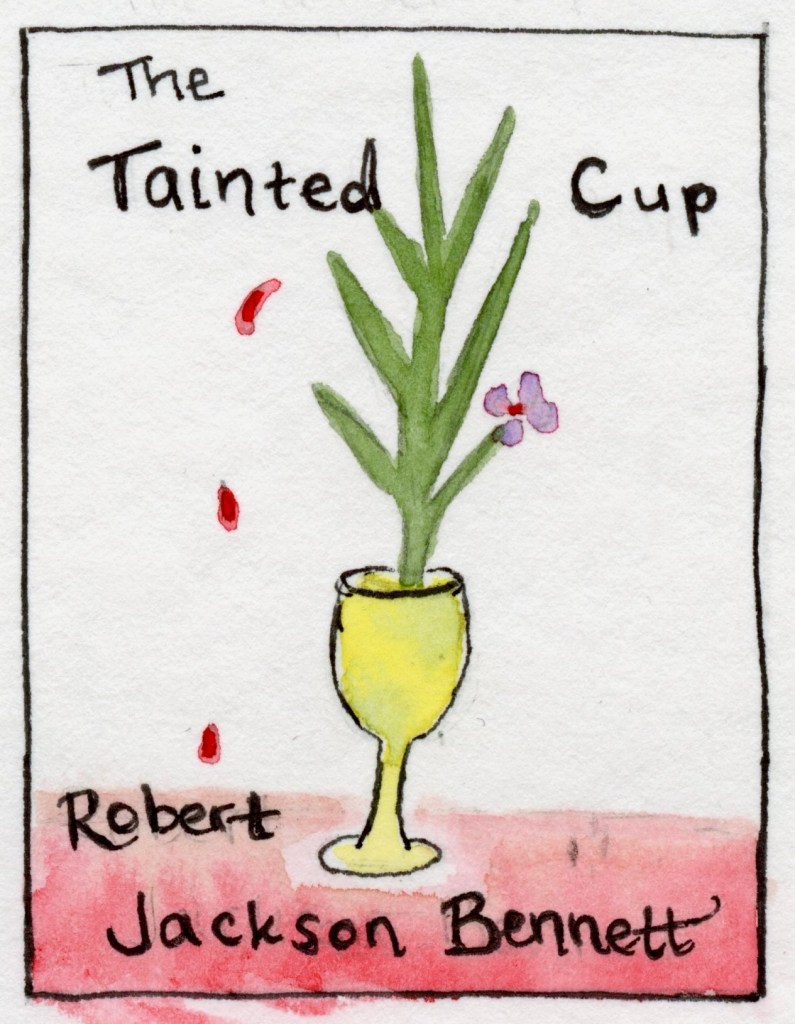
The Tainted Cup, by Robert Jackson Bennett 

Published 2024

This is a mystery novel. It’s dressed up in fantasy trappings, which are fun, but this is primarily a mystery just set in a fantasy world. 

Din is an engraver who possesses a perfect memory, and he is assistant to an eccentric investigator, Ana. They are called in to investigate when an official is killed by a plant erupting from his body (gross). 

Ana and Din must determine if it is a contagion or a murder (it’s the latter, obviously), and proposed next steps. Their investigation leads them to a border town were they discover more murders of the same type. They must catch the killer before even more deaths occur of the city is destroyed by a leviathan (giant mysterious creatures that attack border towns by the sea). 

Ana and Din have a very Holmes-and-Watson dynamic, and it is clear that there is more to the mystery than first appears. 

If you enjoy fantasy and mysteries, you will probably enjoy this book. The world building is interesting: this is a world of human body-hacking where people can be modified organically to be really good at their jobs. The danger is that this can burn them out, and there is a further danger that plants can be deadly as modifications can get out of hand (or be used as murder weapons). The leviathans too are mysterious and clearly connected in some way to the modifications, a larger mystery that I assume will be unspooled over the course of this series of books. 

Some of the body modifications and descriptions of the murders are kind of gross, so if you have a low tolerance for that, be warned. If you like mysteries but want them set in our world, this will also not be for you. But if you, like me, enjoy both mystery novels and fantasy novels, this is a nice blending of both genres.

The mystery at hand is nicely wrapped up by the end of the book, but Ana and Din are clearly set up for further investigations in future books, so if you enjoyed this one, there is a second installment already out, and I’m not sure how many the author has planned, but our detectives might have many more adventures ahead of them! 

Books Read in August 2025, part 2

Dissolution, by Nicholas Binge

Published 2025

Maggie is eighty-three years old and her husband, Stanley, is in a memory care facility called Sunrise because he has dementia. Sometimes he remembers Maggie, and sometimes he doesn’t. 

The story opens with Maggie in a strange interview with someone named Hassan who tells her that actually the problem is that Stanley isn’t forgetting things, his memories are being taken from him. Hassan needs some information from Stanley’s mind to help him stop some baddies who are erasing Stanley, and he needs Maggie’s help to get into Stanley’s mind to retrieve the information before it is too late. 

The story unfolds in the present and the past, delving into Stanley’s early life for the seeds of his discoveries about time travel via memories. It also chronicles Stanley and Maggie’s life story and their deep love for one another. But as Maggie goes deeper into her journey through Stanley’s mind, it becomes clear that Stanley is hiding things, even from her. 

Time travel and memory are also a little mind-bending subjects, and this was a fun ride as well as a sweet love story. The stakes do get raised to “oh no this could affect the world in bad ways if we aren’t careful,” but it does not get to the “and now we’re in a complete dystopia” level that it would if this was a Blake Crouch novel. 

That said, if you enjoy Crouch, you will likely enjoy this novel, and it also avoids some of the annoying time travel tropes while making use of some others. It just depends on what annoys you about time travel if you’ve read other books in the genre! 

The Hidden Life of Trees, by Peter Wohlleben

Published 2015

Written by a German forest manager, this book is designed to evoke wonder and delight around forests and trees. Wohlleben describes trees in extremely anthropomorphic ways which I found overblown or slightly distracting at times, but I also appreciate the technical knowledge he has about tree communication and the ways that trees compete and cooperate. 

Overall I found the book delightful, and while I imagine I might have been irritated by the ways the author describes some trees as “street kids” and “immigrants,” as a lay person some of the analogies were helpful. 

Trees are pretty amazing, and I appreciate that someone is out there trying to convince people that forests are great and we should allow more forested areas to thrive on their own without our intervention and without trying to make all land “productive” for human purposes (even the language of “productive” and “unproductive” creates a value judgment that isn’t helpful). 

Part of being a good steward as a human is caring for the beautiful planet we call home, not simply stripping it for parts, and living more with nature instead of opposed to it, is an interesting topic of much discussion and debate. I loved learning more about networks of trees that make up a forest, how they coexist with other organisms, and how trees work to create a beautiful ecosystem from which we all benefit.