Back to the Classics Challenge – 2014

A couple years ago I tried to participate in a “Back to the Classics” challenge, and I sort of…fizzled out somewhere in the middle of the year. I might have gotten engaged (slightly distracting in the best way), which cut down on plans to plow through classic works of literature. I think that is a pretty good reason to set aside a challenge. In any case, I’m married now, and not planning anything big, so I’m going to try again.

If you’re interested in participating, go here to see the details from the host, “Books and Chocolate.” Here are a few of the guidelines:

I am defining a classic as a book that was published at least 50 years ago.  Therefore, any book published after 1964 is ineligible. 

Here are the rest of the guidelines:

  • All books must be read in 2014.  Books started prior to January 1, 2014 are not eligible.  Reviews must be linked by December 31, 2014.
  • E-books and audiobooks are eligible!  Books can count for other challenges you may be working on.  However, books may NOT crossover categories within this challenge.  You may NOT count the same book twice for different categories in this challenge.  
  • If you do not have a blog, you may link your review from Goodreads or other publicly accessible online format.
  • Please sign up for the challenge using the linky below BEFORE MARCH 1, 2014.  Please link to your sign-up announcement post (if possible/applicable).
  • You do not have to list your books prior to starting the challenge, but it is more fun that way :).  You can always change your list at any time.  You can read the books in any order (including mixing in the optional categories at any time).
  • You can decide to attempt the optional categories at any point (you can also bow out of the optional categories at any point as well).
  • Please identify the categories you’ve read in your wrap-up post so that I can easily add up your entries for the prize drawing!

And to clarify, you have to read different books for each category — you can repeat authors or genres, but no fair using the same book multiple times within this challenge! The only book that you can repeat is in the movie/TV adaptation review.

Ok, so here are my picks (which are subject to change, and probably will not be read in order):

Required:

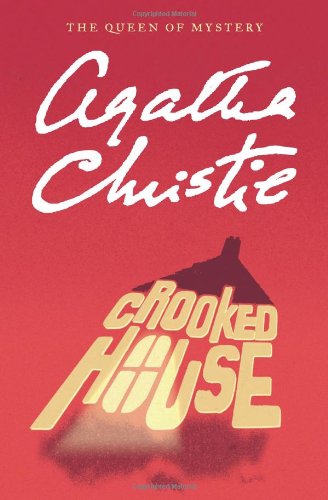
  1. A 20th Century Classic – My Antonia – Willa Cather
    [I read this in school and was, I must admit, bored. Too much description! Not enough action! My mother tells me I should give it another chance.]
  2. A 19th Century Classic – The Picture of Dorian Gray – Oscar Wilde
  3. A Classic by a Woman Author – something by Jane Austen for a book club–we haven’t picked one yet, so I’ll update when I know what we’re reading
    ***we’re reading Emma!***
  4. A Classic in Translation – The Brothers Karamazov – Fyodor Dostoevsky (Pevear/Volokhonsky translation).
    [I have tried to read this twice, and got bogged down, last time during the life story of the monk whose name I forget — I’m going to start with this book in January because A) I think Russian novels ought to be read in the winter and B) I want to start while I’m still enthusiastic about this challenge.]
  5. A Wartime Classic – War of the Worlds – H.G. Wells
  6. A Classic by an Author Who Is New To You – Fahrenheit 451 – Ray Bradbury
    [I missed this one in school, somehow. Guess you can’t read everything.]
Optional Categories:
  1. An American Classic – Still thinking about this one. Suggestions welcome.
  2. A Classic Mystery, Suspense or Thriller – The Man Who Was Thursday – G.K. Chesterton
    [I got this for Christmas 2 years ago and it’s been sitting on my nightstand. It is time.]
  3. A Historical Fiction Classic –  A Tale of Two Cities – Charles Dickens??
    Suggestions welcome here too. I’m having a hard time thinking of a classic that’s historical fiction.
  4. A Classic That’s Been Adapted Into a Movie or TV Series –  North & South – Elizabeth Gaskell??
    Also subject to change.
  5. Extra Fun Category:  Write a Review of the Movie or TV Series adapted from Optional Category #4 –North & South, or whatever I end up choosing.
    [The 2004 version of North & South reminds me that Richard Armitage is actually pretty tall in real life, unlike his recent role.]

Anyone want to join me in the challenge?

Malapropisms

Yesterday while driving to work I turned on the radio and a woman was being interviewed about herbal remedies for winter ailments. She first said that there was a new herb shop about to open and they were going to interview the proprietor in a moment, but first she mentioned the name of the establishment: The Elderberry.

“Speaking of elderberry,” she said, “it is the Magna Carta of cold remedies.”

Wait a moment. The Magna Carta?

I think that’s probably only for British colds. And I have no idea why an herbal remedy would be reading an ailment its rights. I mean, I think that’s probably something the white blood cells do–right before they attack a virus. So maybe herbal remedies deliver it to the white blood cells?

Ok, there’s no need to anthropomorphize blood cells and herbs. I think she probably meant to say “it’s the Holy Grail of herbal cold remedies,” but Magna Carta is pretty funny.

I have no idea what else happened in the conversation, and I hope the store owner is slightly more knowledgeable, but that snippet of conversation make me laugh the rest of the way to work, and I decided the humor needed to be shared with the world. I hope you enjoy.

A Collection from the Interwebs

I should probably post more content before I post a collection of things I found on the internet, but my little list has been sitting around since…maybe July. That’s embarrassing. It’s time to post them somewhere. I’ll write something real soon.

I have added a couple more recent things, but, in all their dated glory, here they are:

  • Glass-making is fascinating, just like this fun video. Apparently it won an Oscar in 1959 in the short documentary category.
  • This summer Joss Whedon’s “Much Ado About Nothing” came out, and I obviously watched it….And then got this song stuck in my head for 2 weeks. Tell me if that happens to you too.
  • A college friend is now a professional photographer, and he documented the engagement and wedding of a sci-fi obsessed couple. The theme: Dr Who. That’s right, the bride’s father built them a Tardis for the occasion. Nerdtastic!
  • A Van Gogh painting was found in someone’s attic. No big deal.
  • Anyone who plans on writing non-fiction (especially academic works) needs to read this. It’s called “10 Tips on How to Write Less Badly.” Excellence in writing should not be the sole property of novelists. I feel very strongly about this, as one who has had to read non-fiction. If you can’t write well, I take your ideas less seriously. At least learn to write less badly.
  • My talented cousin Jonathan gave a piano recital last fall, and put his performance on YouTube. Playing Bach on the piano (or on any instrument, for that matter) makes one a real musician.
  • The British phrase translator! I love it. I think my favorite is this one: “What the British Say: ‘Oh, incidentally/by the way…’ What the British Mean: ‘The primary purpose of our discussion is…'” or else maybe this one: “What the British Say: ‘Very interesting.’ What the British Mean: ‘That is clearly nonsense.'”
  • And finally, comedy duo Key & Peele show their take on Les Miserables. I have no idea why Hopper didn’t include this song in his version.

Enjoy!

A Note on Dates

A few years ago I realized I preferred the European style of writing out the date. To those of you who know I’m a bit of an Anglophile, this will come as no surprise. At the beginning I wrote with the day first, then month, then year just because it was a little fun and different, but, of course, I had to analyze why I liked it more than the typical American method of writing out the date.

For some reason, it seemed to make more sense, and here is why: The European way of writing the date looks like this:

25 August, 2013 (day, month, year)

The American way looks like this:

August 25, 2013 (month, day, year)

The American way doesn’t make logical sense to me. Why would you start with the month, then proceed to the day, and then move to the year? The European way starts with the day (the smallest increment of time), then it moves to the month, and then the year (larger increments of time). It proceeds in an orderly, logical manner, while the American way zigzags between larger and smaller increments of time.

Who designed or standardized these systems?

I understand that one might also wish to go from largest to smallest increment of time: year, month, day (2013-08-25), and that is fine with me. We write out time that way: 8:33:25 (hours, minutes, seconds), so it might be more consistent to also proceed in that order with dates.

I will continue with my logical notation of date, but I won’t be offended if you choose not to do so yourself.