Books Read in April 2025

The Sabbath, by Abraham Joshua Heschel 

Published 1951
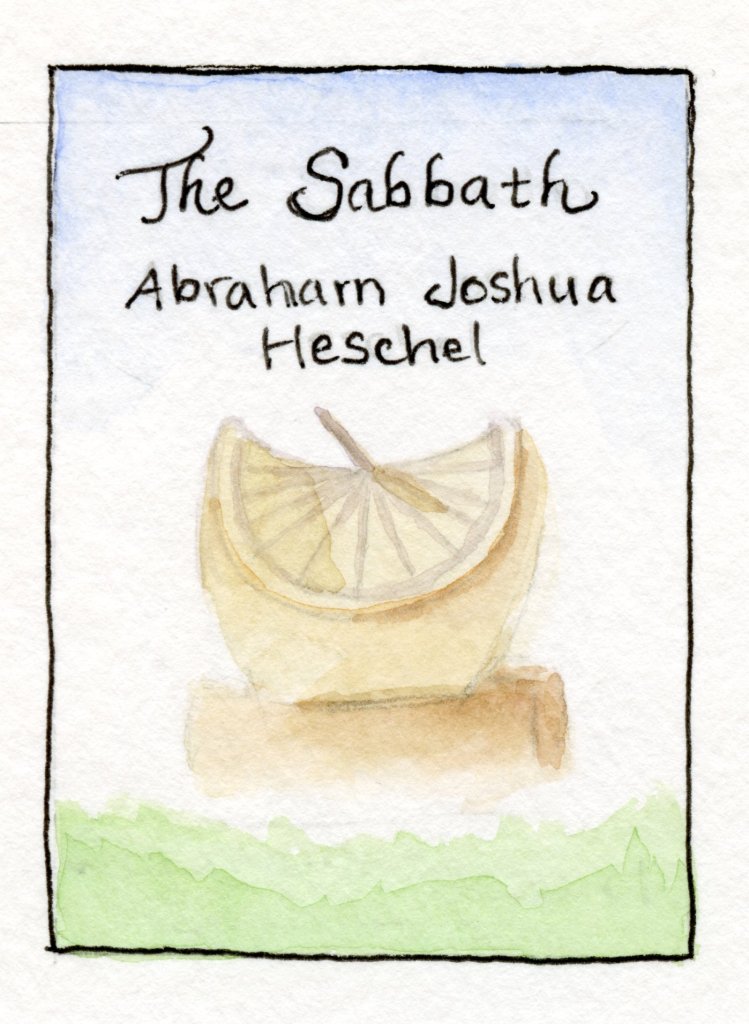
This is a book I’ve heard referenced several times, often by people who seem pretty smart/ able to handle academic treatises well, so I assumed this would be a 500 page tome that I would crawl halfway through and hope to glean some wisdom from the pages I could handle. 

I bought the book and was surprised to see that it is only 100 pages! But reports of the wisdom and poetry of this slim volume on the Sabbath were not over-hyped. 

While I am not Jewish and some of Heschel’s interactions with other rabbis and a chapter that is an extended parable went above my head, his meditations on the meaning of the Sabbath day were both beautiful and profound. 

“The Sabbath…is not for recovering one’s lost strength and becoming fit for the coming labor. The Sabbath is a day for the sake of life. Man is not a beast of burden, and the Sabbath is not for the purpose of enhancing the efficiency of his work.

“The Sabbath is not for the sake of the weekdays; the weekdays are for the sake of the Sabbath. It is not an interlude but the climax of living.”

I grew up and am in a Christian tradition that has a somewhat uneasy relationship with the Sabbath: as Christians, our holy day is Sunday, not Saturday, and while the other 9 of the 10 Commandments are treated as rules one should follow, remembering the sabbath day to keep it holy is treated more as a suggestion. There are all kinds of complicated reasons, historical and practical and cultural, and I don’t pretend to be any kind of expert. But we could learn a lot from Heschel and his meditations on the holiness of time. 

He says “[The Bible’s] premise [is] that time has a meaning for life which is at least equal to that of space…. Judaism is a religion of time aiming at the sanctification of time. Unlike the space-minded man to whom time is unvaried, iterative, homogenous, to whom all hours are like, qualitiless, empty shells, the Bible senses the diversified character of time.” 

This book is beautiful and thought-provoking, and there are portions that I didn’t understand at all, especially parts where he is clearly in conversation with other rabbis and I’m missing a lot of context. But his insistence that the Sabbath is supposed to be a gift and an invitation into holy time is really lovely and something for me to think about. 

Part of what is difficult is that for observant Jews, Sabbath is an agreed-upon communal different (holy) time. Protestant Christians do not have a similar agreed upon view of Sundays, and it is difficult to Sabbath alone. Not impossible, perhaps, but certainly not the same. 

There is more to say, but I am sure I will come back to this book to try to absorb more of its wisdom. 

Careless People, by Sarah Wynn-Williams

Published 2025

Whew, this book was a ride! This was a tell-all memoir about one of the biggest tech companies in the United States, and I’m sure Facebook/Meta is trying desperately to sue the author for all she’s worth because this was not a flattering portrait. 

Sarah Wynn-Williams worked at Facebook in their global policy department, a job that she basically invented because she saw that as it became a global company Facebook could shape global discourse and would need a team to think about how to interact with other countries, not just the United States. 

I already had a fairly low opinion of Facebook and its founders and leaders, and Wynn-Williams does not hold back in her critiques via stories of how clueless and careless they are. Tech start-up culture also sounds terrible and all-consuming. To “succeed” in that world, you sacrifice everything: your time, relationships, other interests, to work all hours and be available at any time. This is not completely unusual, especially for American tech companies.

The work culture was interesting when compared with my last read: The Sabbath

There were so many stories about interactions Wynn-Williams had with leadership where she advocated from a public policy background trying to encourage the leaders of Facebook that they could do so much good in the world connecting people, and the leaders just…didn’t care. They didn’t get it or understand what they might do as creators of something with moral implications. They were not curious about other countries, or other ways of life.

They saw their creation as a tech product and payday. Unending growth and unending wealth were the goals, and any other expectations were secondary. Sacrificing so much of oneself to unfettered growth and money-making does not leave a lot of room for personal growth, reflection, or thoughtfulness. Commitment to profits alone means moral equivocations, if indeed morals matter at all. 

Working in such an environment meant that Wynn-Williams herself made moral choices that I disagree with, and while she definitely stayed much longer at the company than she should have, she seems to still have a somewhat working moral compass. Enough to write a book pointing out that we have all opted into social media platforms created by people who do not care about us, especially if we are not wealthy or powerful enough to offer them something they want. People are expendable to them, dollar signs to exploit. 

How can social media be a public good when the creators do not care about public good in any way? How can a platform really work to connect people when its creators do not care about other people?

There were definitely some shocking stories, and I am even more convinced that there are levels of fame and wealth that are extremely corrosive to the soul. We all think we want to be rich, and certainly there is a level of wealth that will solve problems and create comfort, but beyond that, it shackles the wealthy, blunts creativity, creates moral wasting. 

Reading this book was like watching a train wreck I couldn’t look away from. Fascinating, maddening, and worrying when I think about all the ways that social media is tearing us apart and magnifying the dysfunction in our relationships with one another. 

I listened to the audio version of this book, which is read by the author in her delightful New Zealand accent, so I recommend that if you enjoy audiobooks.

Books Read in January 2025

After a slower year of reading in 2024 (due to taking classes + work stress), I am hoping to read more this year. Here are the four books I read and finished in January:

Spark of the Everflame, by Penn Cole

Published 2024.

This is a fantasy romance book that I’d call it a “popcorn” book: fun to read, interesting magic system, plot-focused, fairly two-dimensional characters, not necessarily a book future generations will read. I enjoyed it, but I do not anticipate revisiting it. An entertaining story, but nothing profound. That is ok—I needed something light hearted while I had a lot of feelings around quitting my job of the past fourteen years. 

Our protagonist, Diem, is a young woman who lives in a world where there are Mortals and Descended, who are magic-wielders. The Descended rule over the mortals, and try to protect their bloodline and therefore their magic and power. Diem has grown up as a scrappy mortal who works both as a healer and also knows fighting tactics because this is a fantasy adventure book. Her mother warned her against the Descended, but after her mother disappears, Diem helps as a palace healer and meets a handsome broody prince (which could be tricky since she has a childhood sweetheart…), and Mortal/Descended fighting shenanigans ensue. 

The magic and world building structure was interesting and kept me reading even when I rolled my eyes a little bit at the love triangle and some of the pretty obvious plot points. 

The Fellowship of the Ring, by J. R. R. Tolkien

Published 1954.

This is also a fantasy book, but is very different in style and tone! I read for my 50 Classics challenge, which I’m basically resurrecting this year, as I didn’t read many classics last year (well, except I read a bunch of Agatha Christie books in the fall–those are definitely classic mysteries, so…partial credit to me). It will get its own post. 

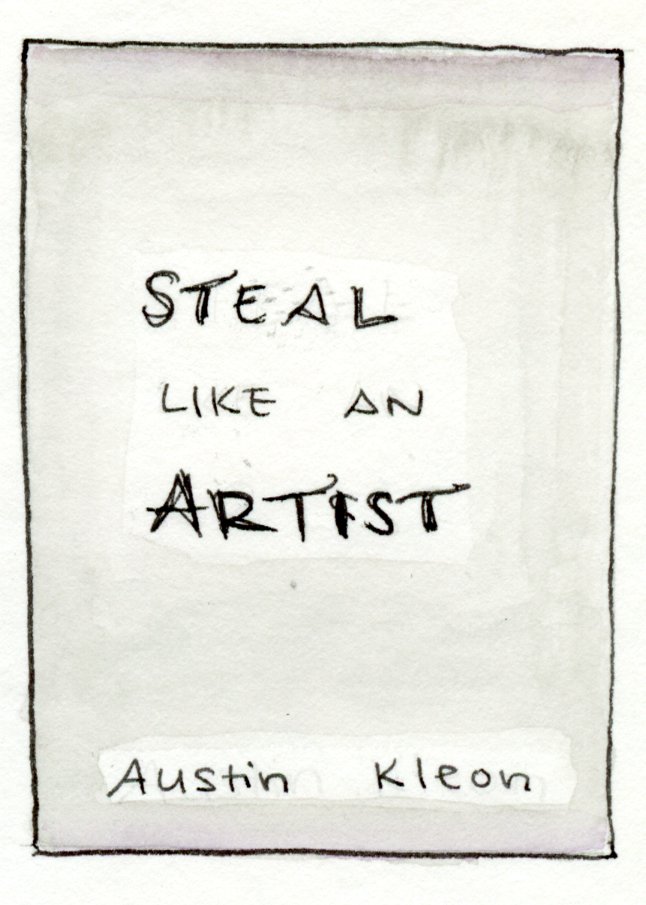
Steal Like an Artist, by Austin Kleon

Published 2012.

This little book is full of encouragement and good advice for being creative. It is specifically geared toward people who are artists and/or identify as “creative,” but really, it’s excellent advice for everyone (the author agrees and says there are many ways of being creative, many of which are not explicitly labeled as such). 

I really appreciated the advice about not necessarily making art a job, especially when starting out. Obviously, I support anyone who wants to be a full-time artist! But for many of us, that is putting too high a burden on our creativity, and having a job to pay the bills and allow creative outlets on the side is a good way to balance our lives (she says while currently on a sabbatical…but my plan is to find a day job eventually once I’ve caught my breath, recovered, and figured out what I want to do next). 

Glow of the Everflame, by Penn Cole

Published 2024.

Book two of the Everflame series (quadrilogy? I’m not convinced that’s a word but it’s a four-book series). 

It’s hard to review a subsequent book without spoilers for the first book, but the journey of our plucky heroine continues. In book one, she was completely on the side of the mortals, but in book two, she meets more of the descended and realizes that they are also people who do not deserve to die. Many of them just don’t know about the misery of the mortals, and they aren’t all evil, just sheltered. 

The love triangle continues to be annoying, mostly because it’s pretty clear that Diem likes one more than the other, and also that guy is committed to protecting her, while the other guy is pretty flaky. But the author committed to the triangle, so the drama continues. 

I want to find out what happens and learn more about the other realms and their magic, so I plan to continue the series, but I’m much less invested in the romantic plot than the world building. 

2024 Reading Year In Review

Welcome to 2025. 2024 was a difficult year for me personally. My work-life was challenging, I was (and still am) studying for the Certified Financial Planner certification, and there were some other difficult things going on that I’m not going to get into here. 

My reading-for-pleasure life was pretty minimal last year as a result. I did read some good books, and in the fall I read a lot of Agatha Christie, which was lovely and about all I could handle between studying, working, and trying to occasionally hang out with people. 

I did read a lot of words last year, but most of them were for class. Outside of class, I read 23 books last year. 

Top 3 books from 2024: 

“The Kingdom, the Power, and the Glory,” by Tim Alberta. A fascinating look at where and how white evangelicals got to the place they are politically. Alberta is a Christian and a journalist, so he has an interesting perspective. He is pretty clear that he thinks many Christians have exchanged their values for political power. This is nothing new (“Again, the devil took him to a very high mountain and showed him all the kingdoms of the world and their splendor. ‘All this I will give you,’ he said, ‘if you will bow down and worship me.’” -Matthew 4:8-9), it’s just the most recent iteration of this temptation. 

“Ghosted,” by Nancy French. A memoir of someone who has survived a tough life so far, and someone who got on the “wrong side” of right-wing American politics and has seen how vicious it can be. Clearly, this has been a reading theme over the past few years. French is a good writer and great story-teller, and I couldn’t put this down. 

“Middlemarch,” by George Eliot. This book deserves its place in the canon of great works of literature in the English language. It is about life in 19th century England in a small town, full of normal people living their normal lives, but also giving such interior descriptions that you recognize the hopes, fears, actions, inactions of the characters. At its core it looks at three relationships, and peels back layers to see the ways people misunderstand one another and how a good marriage can help you succeed as a human (which may or may not impact you financially, but certainly impacts you morally) and a bad marriage can ruin your life. 

This year, I am still studying, but I’m hoping that I will pass the exam in July and then be free from the burden of study for a while. That should give me some more space to read other things! 

2022 Reading Year In Review

For some unknown reason, I did not click “publish” on this two years ago. Hilarious. Well, here are some great books I read a couple years ago (spoiler from the future: 2023-2024 were also not great reading years, alas).

2022 was a difficult year in many ways, though there were some great bright spots as well (my youngest brother got married!). I slacked off on documenting my reading journey here so hopefully 2023 will be less intense and I will be a little more consistent.

I still read a lot of good books in 2022, and re-read some comfort books. My total count was forty-eight (48) books read, though only two were for my 50 Classics in 5 Years project. Obviously I’m planning to increase that classics-read number this year, and I’m extending my deadline for the project.

I would also like to read more nonfiction this year. I sometimes have a difficult time with nonfiction if the idea was better than the execution, or if the subject matter does not require as many pages as the book possesses. I am open to suggestions for great nonfiction!

Overall, I am pleased with my 2022 reading life. Keeping track of what I am reading has really helped me read more and it has been a good reference for what I read in what year (it’s amazing how quickly I forget what year I read something unless I have a list telling me). I entered most of the books I read in 2022 on Goodreads (though I appear to be missing a few books and decided I’m too lazy to go back and figure it out–I’m going to start fresh in 2023!), and I’m going to try to use it more consistently this year. We will see if that sticks.

Top 10 Books of 2022

Everyone likes a top-ten list, so here is mine for the year:

  1. David Copperfield, by Charles Dickens
  2. The Goblin Emperor, by Katherine Addison
  3. Persuasion, by Jane Austen
  4. Elder Race, by Adrian Tchaikovsky
  5. Death on the Nile, by Agatha Christie
  6. The Golden Enclaves, by Naomi Novik
  7. The Binti novella trilogy, by Nnedi Okorafor
  8. The Relentless Moon, by Mary Robinette Kowal
  9. The Thief, by Megan Whalen Turner
  10. The Murderbot Diaries series, by Martha Wells
  11. Honorable mention: A Wizard’s Guide to Defensive Baking, by T. Kingfisher

If you just wanted the Top Ten list, there you have it, Happy New Year and happy reading. I hope 2023 is a good year of reading excellent and thought-provoking books!