J. R. R. Tolkien published this book in 1954, and his imagination has fascinated several generations of readers.
“‘I am not made for perilous quests. I wish I had never seen the Ring! Why did it come to me? Why was I chosen?’ [cried Frodo].”
“‘Such questions cannot be answered,’ said Gandalf. ‘You may be sure that it was not for any merit that others do not possess: not for power or wisdom, at any rate. But you have been chosen, and you must therefore use such strength and heart and wits as you have.’”
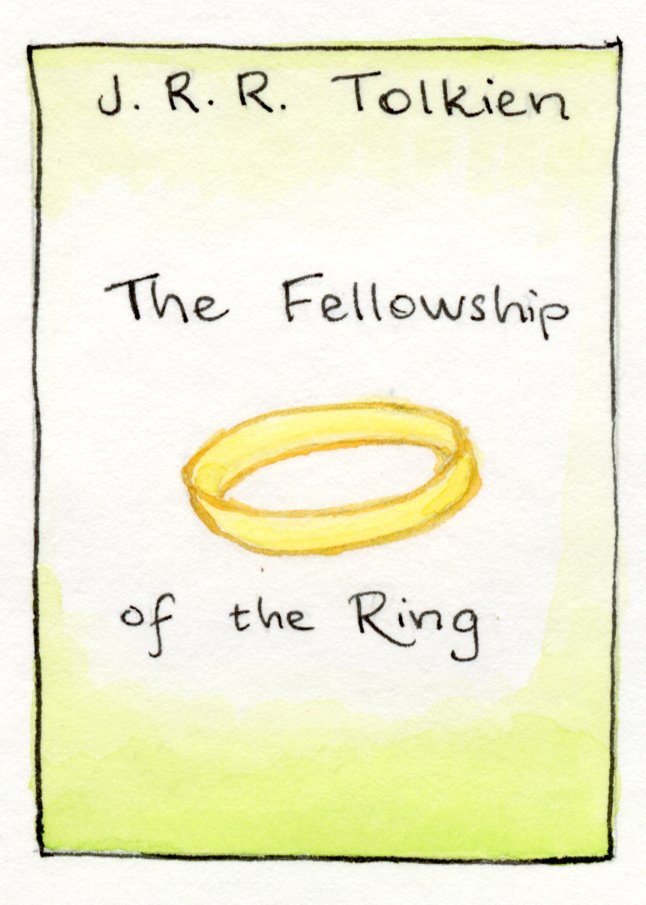
Tolkien’s epic adventure is a classic for a reason.
Frodo Baggins is a peace-loving hobbit who is bequeathed a magic ring of enormous power, which brings danger to him and his closest friends. He must embark on a quest to rid the world of the evil the powerful ring and its master are wreaking on Middle Earth.
Tolkien’s Middle Earth is the gold standard by which future high fantasy is measured. His imagination was incredible, and his attention to the detail of the world makes it feel so real. The pace is slower and the journey meanders in a way that does not feel quite modern, but the characters are interesting, the world fascinating, and Tolkien’s descriptive language is beautiful. He obviously cares about trees and growing things, and his best characters blend love of earth and love of people, while the villains despoil landscape and culture.
Some readers will be annoyed by digressions into Shire life and the strangeness of Tom Bombadil, wanting to get on with the quest, while other readers are inspired to write fan fiction about them.
The themes of this story, of good vs. evil, of fascinating creatures and a complex and beautiful world, make it enduring.
“‘But the only measure that [Sauron] knows is desire, desire for power; and so he judges all hearts. Into his heart the thought will not enter that any will refuse it, that having the Ring we may seek to destroy it.’”
We all bring our own perspectives to any reading, and the (long) chapter “The Council of Elrond” is a great example of arguments about what to do with something that could give you great power. There is wisdom here for our current time.
There isn’t really anything new I can say about this book, but it was so fun to revisit Middle Earth after a few years. There were many delightful details I had forgotten. For example, after Bilbo’s party where he disappears and leaves the ring to Frodo, seventeen years pass before Frodo leaves the Shire at Gandalf’s urging, to take the ring away to a safer location. Also, if you have never read the bit about Bilbo leaving pointed gifts to his various neighbors and relations, that section is hilarious (he leaves stationery to someone who never writes back; he leaves an umbrella to someone who always borrows from others, etc.). It is a great little portrait of the joys and trials of ordinary life.
I listed to the audio version read by Andy Serkis, and his commitment to the story and the characters is impressive and immersive. He sings all the songs and his character voices are distinct. What a joy to hear.
I look forward to continuing the adventure in The Two Towers.
★ ★ ★ ★ ★
 Once again, I’m embarking on a book reading challenge that I may (or may not–but let’s stay optimistic here!) complete. I’ve read some interesting books this year, but I also want to sprinkle in some more classics, and I want a moderate degree of accountability to read some books on my “I really should get around to reading this–it’s a classic!” list.