Books Read in April 2026

The Magician’s Nephew 

by C. S. Lewis, published 1955

Two children are sent to another world by magic. They witness the creation of the land of Narnia, where animals can talk and the great lion Aslan watches over its fate. A lovely creation myth. While this is the first in the Chronicles of Narnia chronologically, it is really a prequel and not the best introduction to the series. 

Because I was listening to the audio book, I listened in chronological order but I will die (maybe not literally?) on the hill that for first-time readers you really should start with the first published book, The Lion, the Witch and the Wardrobe

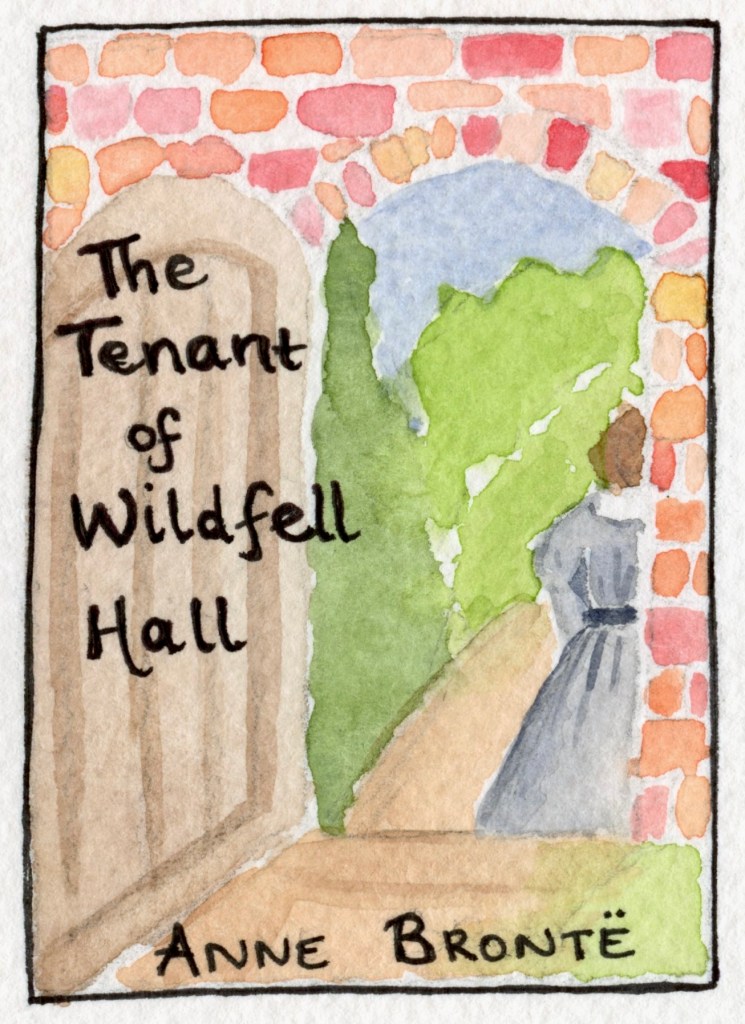
The Tenant of Wildfell Hall 

by Anne Brontë, published 1848

The final installment in my Brontë book club! Don’t sleep on this one: it is such an interesting exploration of marriage and female interior life (for the upper middle class anyway) in 19th century England. 

The structure of this is interesting: it starts as a letter from a young man, Gilbert Markham, to his brother-in-law, looking back on when he met the titular tenant. We then transition to Helen (said tenant) and hear about her life from her diaries, which she shares with Gilbert. 

Helen is an early “I can fix him!” girl. She married a young man who was young, exciting, and attractive (as opposed to the old, boring, but wealthy men with whom her aunt tries to set her up). However, she discovers that when it comes to character and virtue, these attributes are important and non-transferable. 

She perseveres, but for the sake of her young son, whom she does not want to see corrupted, she decides she needs to leave. Women in the 19th century did not have rights to their own property or children, so she needs to flee in secret and go into hiding.

This is an exploration of relationships, moral character (and lack thereof), and is (as someone pointed out in our book club) more of a story of manners a la Jane Austen (though tonally quite different) than either Wuthering Heights or Jane Eyre. We get a glimpse of a section of society and the ways that humans fail or help each other. 

The Lion, the Witch and the Wardrobe

by C. S. Lewis, published 1950

The proper introduction to Narnia, a magical world that certainly captured my imagination as a child. Lewis is a good storyteller, and I enjoyed wandering back into that world. 

Lucy walks through a wardrobe into the land of Narnia, where she and her siblings are immediately drawn into a power struggle for the fate of this magical world. Features poor choices in desserts, the most charming beaver couple, and descriptions that make you long to walk through a wardrobe yourself to visit a magical place.

This might be my favorite of the Narnia books? I’ll check back in on that once I finish them all. 

The Horse and His Boy

by C. S. Lewis, published 1954

Two children and two talking horses set off on an escape to Narnia. Chases, disguises, mistaken identities, and fighting ensues. While there are Eastern stereotypes at play that don’t all age well, this is still a great adventure tale. 

Might start addressing my Mom like the Calormen do: “Oh my mother and oh the delight of my eyes….” Should have made that my Mother’s Day greeting. Maybe next year.

Books Read in First Quarter 2026 (Tiny Reviews)

Mr. Penumbra’s 24-Hour Bookstore 

by Robin Sloan, published 2012

A young man goes on a quest to discover the truth behind the strange bookstore where he works. An optimistic story with very early-aught tech vibes. 

Sad Cypress 

by Agatha Christie, published 1940

Bookended by a trial for murder, most of the action takes place in the recent past, with Hercule Poirot investigating in the present to discover if the woman on trial really poisoned her romantic rival (and maybe her rich elderly aunt for money?). 

Cat Among the Pigeons 

by Agatha Christie, published 1959

Set at a girls’ school, Hercule Poirot is not called in until late in the story. Most of the story is the headmistress of the school trying to keep it all together in the face of murder. 

A Drop of Corruption 

by Robert Jackson Bennett, published 2025

Second in a series, it is a murder mystery set in a fantasy world, raising questions about empire-building, identity, and allegiance along the way. It’s a murder mystery first, just with a fantasy overlay. 

Mrs. McGinty’s Dead 

By Agatha Christie, published 1952

A young man supposedly murdered his landlady for a few pounds, but the investigating police officer is not so sure. With a dearth of suspects, he calls in his old friend, Hercule Poirot, to investigate the village for the true murderer. 

Persuasion 

By Jane Austen, published 1818

Eight years ago, Anne Eliot and Frederick Wentworth broke off their engagement. Now they meet again, but will they work things out this time or go in different directions? One of Austen’s most restrained heroines is overlooked and undervalued by her family, though appreciated by people of sense and taste.

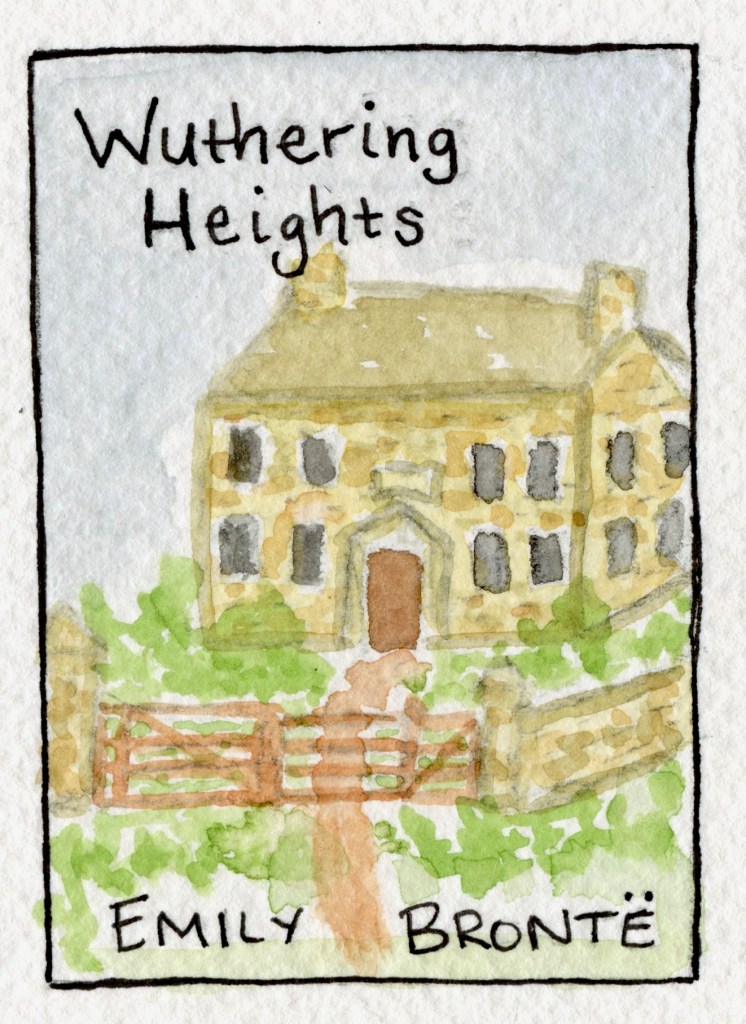
Wuthering Heights 

By Emily Brontë, published 1847

19th century claustrophobic angst, obsession, and generational trauma! Most screen adaptations leave out the second half of the novel, which is about the next generation dealing with their parents’ bad choices. Not a super fun hang, but plenty of meat on the bone to discuss. 

Miss Marple: The Complete Short Stories

by Agatha Christie, compilation; stories published between 1932-1979

Miss Marple really shines as a detective in short stories. She leans into her reputation as a village gossip and keen observer of human nature, and gets to the bottom of mysterious events with a devastating knack. She pushes aside the superfluous to get to the truth. Favorite story: The Herb of Death. 

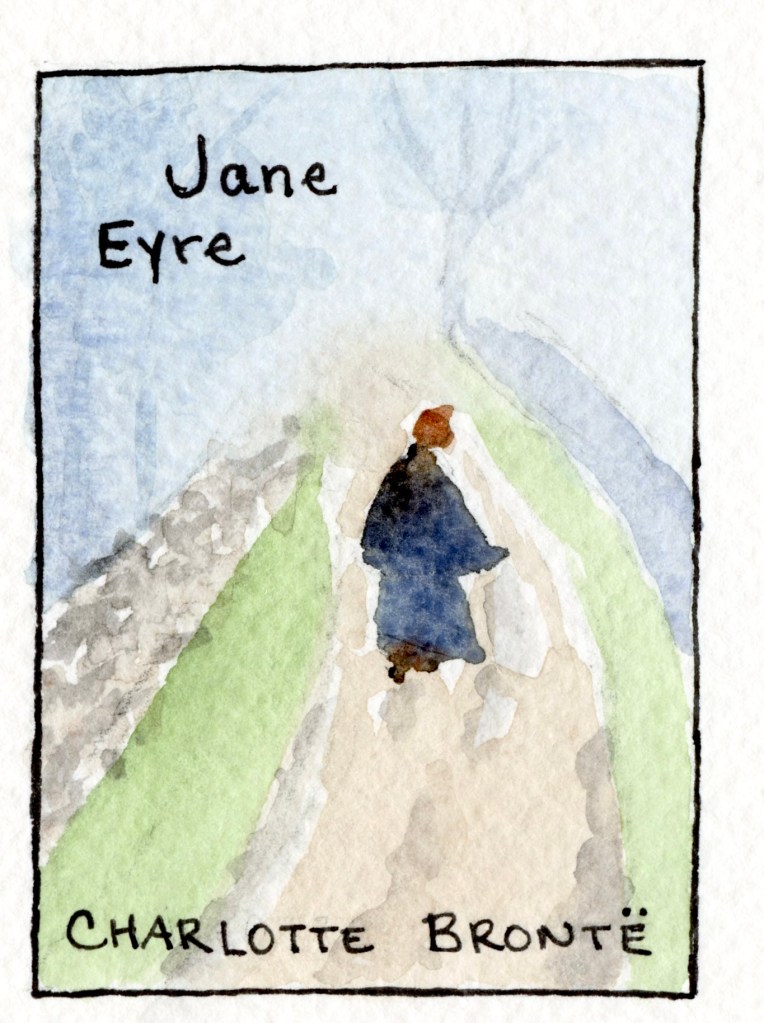
Jane Eyre 

by Charlotte Brontë, published 1847

“Do you think, because I am poor, obscure, plain, and little, I am soulless and heartless? You think wrong!—I have as much soul as you,—and full as much heart!… It is my spirit that addresses your spirit; just as if both had passed through the grave, and we stood at God’s feet, equal,—as we are!”

Jane demands to be taken seriously, and stays true to herself and her moral compass throughout, starting as an unloved orphan, through her time as a governess and beyond. I loved this as a teenager and love it still. 

The Second Estate: How the Tax Code Made an American Aristocracy

by Ray M. Madoff, published 2025

“For many wealthy Americans, taxable income has become a matter of choice.”

Professor Madoff outlines the way that a combination of wealthy Americans exploiting tax loopholes and Congress failing to continue to reform tax law in a way that meaningfully closes those loopholes has led to our current tax situation where the middle class and upper middle class pay most of the taxes and the very wealthy just opt out. 

She outlines the loopholes, makes clear the way that the public has been deceived into thinking the system is fairer than it is, and proposes some solutions for making the tax code actually fairer (repealing the estate tax, make inheritance and investment income the same as all other income, tax unrealized gains upon the death of the original owner, and reform rules about donor-advised funds and family foundations). 

This book is only 175 pages, and while there is some technical language, it is more readable than I expected. Also, it’s infuriating that the wealthiest Americans do not support our country while reaping the benefits of living, working, and extracting wealth from America. 

Dead Man’s Folly

by Agatha Christie, published 1956

Poirot is called in by his novelist friend, Ariadne Oliver, because she’s organized a murder hunt and the vibes are off. When the fake murder victim is actually murdered, and the lady of the house disappears, Poirot must unravel the mystery. I always enjoy Christie, but I wouldn’t say this is top-tier. 

Books Read in October 2025

Gaudy Night, by Dorothy Sayers 

Published 1935

This is one of my all-time favorites, so it’s difficult to review it and not just encourage you to read it! 

Ostensibly a Lord Peter Wimsey mystery, this book is written primarily from another character, Harriet Vane’s, point of view, and she is really the main character for a change. While the is a mystery (and Lord Peter gets to the bottom of it), this book is more interested in exploring human relationships and vocations. 

Harriet Vane agrees to attend a gaudy (a reunion weekend, for those of us not part of the British education system) at her (fictional) Oxford college, Shrewsbury, one of the first women’s colleges at Oxford. She discovers that someone is sending poison pen letters and occasionally destroying college property and generally making an embarrassing mess that the college is trying to shield from view by handling internally. Harriet’s old college friends ask her to investigate, fearing that calling in the police would reflect negatively on the project of educating women, already precarious. 

Harriet temporarily relocates to Shrewsbury College, enjoying the peace and quiet of working in an academic atmosphere, and contemplates her writing and her life generally. This opportunity to reflect on the work she feels called and gifted to do, versus doing work that may be noble but she doesn’t feel is “hers” to do. It also gives her an opportunity to reflect on her relationship with Lord Peter and the way she is both attracted to and afraid of the idea of marriage. 

After a failed relationship and a murder trial, she was naturally skittish about Lord Peter’s proposal, but as time as passed, she feels differently. 

The poison pen letters and her conversations with the single and married women around the college make her think about her feelings about romantic attachments. It is especially tricky for intellectual women, as expectations about how marriage should be and expectations about women’s roles complicate the question. 

While things have changed to some extent (female professors and professionals are not expected to be single now), questions of “the role of women” or “a woman’s place” and a suspicion in some quarters of women in intellectual and/or authoritative spaces are still contested, and figuring out a marriage of equals is still fraught today. 

Birds of a Feather, by Jacquline Winspear

Published 2004

This is the second in the Maisie Dobbs mystery series. I enjoyed the historical setting (set in London after World War I; Maisie was a nurse in the war), and the books definitely fit in the “cozy without being ridiculous” side of the mystery genre. 

In this installment, Maisie has an office and an assistant, Billy. Maisie is called in my a wealthy businessman to find his adult daughter, who has disappeared. As the case unfolds, Maisie begins to suspect that the disappearance is related to the murders of several women—and the girl who vanished knew them all. 

Maisie presents herself as a “psychologist and investigator,” and she often tries to imagine herself in the place of a person she investigates or works for. It’s sort of “I’m really great at picking up vibes,” and these hunches are taken as accurate. It reminds me of Sherlock Holmes, except she’s supposed to “read the room” instead of being hyper-observant and making deductive leaps like Holmes. If that bothers you, move along, but if the occasional psychological reading doesn’t bother you, carry on. 

The mystery is interesting, but also interesting was the setting and I appreciated the depiction of life after a devastating war that left society dealing collectively and individually with many losses and the trauma attached to a post-war era. 

Maisie herself started as a maid to a wealthy family who saw her potential and had her educated, so the slightly fluid social environment is also interesting (if slightly unbelievable). 

I enjoyed the characters and the mystery and recommend it for fans of the cozy mystery genre who don’t want explicit details but want a satisfying ending. 

Enshittification, by Cory Doctorow

Published 2025

While the title of this book is, ahem, colorful, the concept is one that makes sense. You may have come across this term if you’ve read any of Doctorow’s essays or read other critiques of the way the internet (particularly social media) seems to work now.

Doctorow points out that most of us are unhappy with the way we experience using internet platforms and technology, and it is spreading out into our “real” (offline) lives too. 

He describes the enshittification process of some of the biggest name social media/ tech companies as this: 

  1. “First, platforms are good to their users
  2. “Then they abuse their users to make things better for their business customers
  3. “Next, they abuse those business customers to claw back all the value for themselves
  4. “Finally, they have become a giant pile of shit.”

Doctorow explores these phases by looking at Facebook, Amazon, Twitter, the iPhone, and I’m sure you can think of other platforms and services that you once enjoyed but now grudgingly use because they reached Stage 4 of this process. 

It’s not just things on the internet: it is also many companies that go through this process, or companies that are acquired by big companies or venture capital that make programs, platforms, and services worse (this extends to restaurants as well; the problem is pernicious). 

After diagnosing the problem, laying out the ways that the death of competition and regulation have accelerated the problem, Doctorow does give some ideas for a way out of our rest seeking and techno-feudalist problem. His four forces pushing against enshittification are: 

  1. Competition (real competition, not just buying your opponent)
  2. Regulation (tech especially as avoided antitrust laws because the sector is new, complex, and evolving and regulators are slow and the average age of our legislators is…high)
  3. Interoperability (allowing repairs by third parties and allowing things to work with other things—for example, this would mean Apple devices allowing non-Apple third parties to repair phones without voiding warranty, etc.) 
  4. Tech worker power (I think this could be expanded to other industries; America has a terrible recent track record with unions, which I think is a huge problem. When the bosses are the only ones with power, we’re in trouble)

Doctorow says there are reasons to hope, all is not lost, and we can work together to raise awareness and demand change so the internet—and other real-life companies—must take notice. 

Various other countries are also passing regulations that gradually are trying to reign in tech companies. The Biden administration was unpopular with tech in part because Lina Khan (I’m a big fan) and others stood up to them. 

My personal theory about why so many younger people are so down on “capitalism” is that what we are living through right now is not strictly speaking, capitalism. Ostensibly, yes, but really it’s more of a techno-feudal society that has sprung up under the guise of capitalism. This is not to say that I think unfettered capitalism is great, but I think our economic structure right now has shifted quietly (see page 194 and following in the book for more details). 

I have so many thoughts on this book, and I think it is an incredibly helpful frame for considering why we have a lot of discontent about our lives and feel uneasily that they have gotten worse/ harder despite having access to so much. 

While we do have access to quantity, the quality has gone down and we feel trapped in systems and using products where true competition and customer protection have been sidelined for years, allowing greed and anti-competition to win the day. 

I would love to be part of the movement that unsticks us from the current enshittifying trajectory! Surely we can find a peaceful way to take our power back and move into a new era of small business innovation and freedom. 
Books Read in August 2025, part 1

The Man in the Brown Suit, by Agatha Christie

Published 1924

Anne Beddingfield is at a loose end after the death of her father, an impecunious academic. She goes to London to look for work and adventure, and one day witnesses a man’s death at a Tube station (London’s underground train transport system). 

She decides to investigate, and this leads to her taking a cabin on a ship sailing for South Africa to find out more about the man’s death, which she thinks may also be connected to another death in a country house. Shenanigans ensue, of course. 

The spine of this book said it was first in the “Colonel Race” mysteries by Christie, and Colonel Race is a character in this book, but not in the way Poirot or Miss Marple are the main detectives in their stories. Miss Beddingfield is the main character in the book, and it’s a standalone story in which Col. Race appears as a background character. 

I appreciate that Christie was experimenting with style here—after two Poirot mysteries and a Tommy & Tuppence mystery, she moved on to try something else. However, I am not sure this effort at a thriller was completely successful. 

Anne is interesting, but she is attracted to men who are a bit brutal and harsh. She rejects a man who respects and admires her and instead is interested in someone who yells at her and orders her around. This preference was off-putting and I understand why this has not made any “best of” lists. There is a lot of Agatha Christie material out there, and I recommend starting elsewhere (The Murder of Roger Ackroyd, Death on the Nile, And Then There Were None, and The Body in the Library, and Murder on the Orient Express are well known for a reason. I also have a soft spot for Dumb Witness—a cute dog! and Crooked House—if you want to try something not related to Poirot or Marple). 

Remarkably Bright Creatures, by Shelby Van Pelt

Published 2022

Despite opening from the point of view of Marcellus, a Giant Pacific Octopus who lives in an aquarium, this is not a sci fi book. All the other point-of-view characters are humans living normal human lives. 

The primary characters are Tova, a lonely older woman who cleans the aquarium and befriends Marcellus, and Cameron, a young man who can’t seem to hold a steady job and who is searching for his identity and some stability to escape his troubled past. 

Tova is considering retiring and moving to a retirement home as she has no one to care for her as she ages—she’s a widow whose only son tragically died many years ago when he was just eighteen. She is so focused on her lack of biological family that she overlooks the people already in her life. 

Cameron also thinks of his past as his destiny. His drug-addicted mother left him with his aunt and never told him who his father was. Cameron finds his father’s class ring and goes to search for someone to tell him who he is. 

Of course, eventually Tova and Cameron meet at the aquarium, and Marcellus helps them realize that their pasts may hold tragedy, but they can move forward together. 

While I occasionally wanted to shake some sense into the characters (especially Cameron), this was a sweet book about connection and identity and I enjoyed it. 

Books Read in June 2025

I made it through my 6-hour exam (hooray!), so I now turn my attention back to books I have read somewhat recently.

Unnatural Death, by Dorothy Sayers

Published 1927

At dinner one evening, Lord Peter Wimsey chats with a doctor who suspects that one of his patients was murdered, though he cannot prove it. She was an elderly woman with terminal cancer, so it is not unusual that she died, but in the doctor’s opinion it is unusual that she died so soon and suddenly near the end of the previous year. 

His speaking up caused a lot of fuss and led to his needing to move out of the area due to bad feeling against him in the village. Lord Peter decides to investigate, despite the doctor’s protests (wanting to leave well enough alone). 

More suspicious deaths assure Lord Peter that he is on the track of an unscrupulous killer, but with the murder method being extremely difficult to trace, it is a challenge for him to prove the connection. 

Another good mystery from Dorothy Sayers and an opportunity to spend time with the erudite Lord Peter and his friends. 

The Unpleasantness at the Bellona Club, by Dorothy Sayers

Published 1928

On Armistice Day, 90-year-old General Fentiman is found dead in the titular gentlemen’s club. He has been in poor health, so this is not unexpected, but there is something slightly strange about his body that Lord Peter notices. 

It is also reported that the General’s sister, Lady Dormer, died at almost the exact same time. Lady Dormer’s will leaves everything either to her brother, or, if her brother predeceases her, she leaves everything to her companion. 

It becomes important to establish who actually died first, and Lord Peter takes the case to establish if both deaths were natural and who predeceased whom. 

Another interesting mystery from Dorothy Sayers, and I also appreciated that it also addresses the internal psychological wounds that soldiers brought back from war. Lord Peter himself has what might be mild PTSD, and one of the General’s grandsons has major physical and psychological wounds from being exposed to chemical weapons. This makes his behavior seem more “suspicious,” and whether that means he is guilty of a crime or just suffering from the effects is unclear. These wounds affect all his relationships, from his relationship with his wife to his difficulty in holding a steady job, and I appreciated having this acknowledged though with a fairly light touch as part of the story. 

Strong Poison, by Dorothy Sayers

Published 1930

A young woman, Harriet Vane, is on trial for the murder (by poisoning, as the title suggests) of her ex-boyfriend. Lord Peter, attending the trial, is immediately struck by her and cannot believe that she is guilty. 

The jury cannot come to a verdict, so there is a delay while a new jury is selected and a new trial can begin. Lord Peter takes this chance to re-investigate the case in hopes that he can discover Miss Vane’s innocence…and possibly marry her after her acquittal. 

Unfortunately for Lord Peter, the case and Miss Vane both prove tricky. Discovering new evidence and even another motive for the crime is difficult, and Miss Vane, while not repulsed by Lord Peter, is not in a marrying frame of mind (being in prison and on trial). 

The introduction of Harriet Vane to the Lord Peter mysteries is a bright spot and a turning point for the detective’s character development. While the story does not end with them together (which I appreciate), it does end with her being freed from false accusation and the audience is interested to see what happens next.

Service Model, by Adrian Tchaikovsky

Published 2024

In a post-apocalyptic setting, a robot valet named Charles serves his elderly master faithfully day after day…until one day he murders him. 

Charles leaves his manor house and sets out toward the central robot Diagnostics facility so they can figure out what made him slit his master’s throat and solve the problem so Charles (now un-Charles, as he had to leave his name behind at the manor) can find other employment. 

As we follow un-Charles on his adventures, it becomes clear that civilization has completely collapsed and it is unclear if there are any humans left for un-Charles to serve, or if robots are all that remain as relics of time gone by. The robots un-Charles encounters are all trying to complete their programmed missions as efficiently as possible. Of course they don’t have feelings about the futility of trying to do all their human-centric jobs when there are no humans to benefit from these jobs, but if they did, they might be depressed.

Un-Charles, despite his one murderous episode, is a gentle narrator, which helps to lighten a pretty bleak landscape. He does make a friend, the Wonk, who accompanies him on many of his adventures, and who pushes un-Charles to be more than the sum of his programmed parts. 

This book gives a sharp critique of late-stage capitalism and joins many other works of art warning about over-reliance upon technology and its dehumanizing effects (as usual, it leads to the collapse of civilization). It is interesting and Tchaikovsky is an engaging writer, but it is certainly a cautionary tale and not just interesting science fiction. 

(Sorry for the dark cover image–the painting was very light so I needed to adjust it, but the results were not completely satisfactory.)

The Five Red Herrings, by Dorothy Sayers

Published 1931

Lord Peter, on holiday in Scotland in an artistic community, consults with the local police on the case of an artist found dead among the rocks. While initially thought to have fallen to his death while painting, Lord Peter finds evidence that all is not as it seems, and murder is indicated. 

This painter seemed to have provoked quarrels with basically every other artist in the area, so there is no shortage of suspects. 

I have slightly mixed feelings about this installment of Lord Peter’s adventures in detection because while the story is interesting, there is a lot (and I mean a lot) of discussion about railway timetables, and all the Scottish characters’ dialogue is written out phonetically, so we get the idea of what the Scottish brogue sounds like. 

This is charming for a few paragraphs, and then becomes difficult when it is clear that this will persist throughout the entire book. 

Between struggling through some of the dialogue and also not having personal familiarity with the British obsession with railway timetables, this one was a bit more difficult. I also could not stop thinking about the Monty Python railway timetable sketch, which I will link here in case you have not watched it. 

Not a bad mystery, but I would not put it in my top-tier list of Lord Peter’s adventures.