Well, one things I’ve noticed about this year is that I’ve found it more difficult to read books and keep my focus. So I only have two completed books to report for November….
The Invisible Life of Addie LaRue, by V. E. Schwab (2020)
Like Belle in Disney’s Beauty and the Beast, Adeline LaRue wants much more than her provincial life in a 17th c. French village. She’s an artist and a dreamer, and doesn’t want to marry a widower and raise his children. So she makes a deal with the god of darkness to live as long as she wants. He can have her soul when she’s finished with it.
As with all deals, the devil (so to speak) is in the details, and Addie is cursed to be forgotten by everyone. As soon as she is out of sight, everyone forgets her. She can make no mark upon the world, no writing, drawing, nothing to make people remember her.
But Addie is determined to live, to explore the world, and to leave a mark in some way. If people cannot remember her, perhaps she can inspire them.
After 300 years, Addie meets someone who does remember her! But why? And how long will it last?
The premise is interesting and the story goes back and forth in time, chronicling Addie’s 300 years of life. I was less interested in the story of the boy who remembers Addie, but this was still a fun story. It’s got more about Addie’s inner life and the loneliness of living (and she has a lot of one-night stands) than it does on details of magic and gods, more contemplative than adventure tale, so keep that in mind.
★ ★ ★ ★
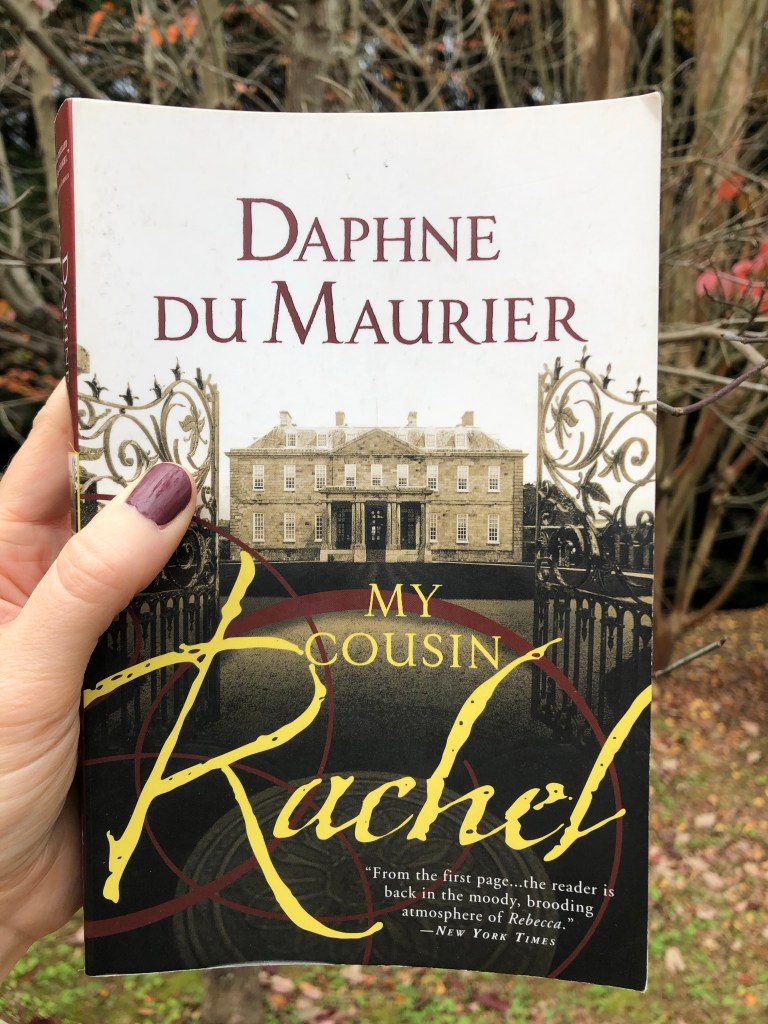
My Cousin Rachel, by Daphne du Maurier (1951)
This was for my 50 Classics list, so I’m giving it its own review post here.
It’s not really fall without one slightly creepy book, is it? Du Maurier is probably best known for her book Rebecca, but My Cousin Rachel is another story with a young, somewhat naive narrator who is overshadowed by a mysterious woman.
Philip Ashley has grown up under the tutelage of his cousin Ambrose, a bachelor, on the Ashley estate in Cornwall, England. When Ambrose goes abroad for his health, Philip runs things at home and is surprised to read in letters that Ambrose has married a woman named Rachel. Ambrose soon becomes ill and then paranoid that Rachel and her Italian financial advisor, Rainaldi, are poisoning him. Eventually, Abrose dies in Italy.
Philip is convinced that Rachel is a murderess, but his godfather thinks it a symptom of a hereditary brain tumor.
Rachel comes to visit…and Philip is smitten. Being 24 and never even having a crush on a girl, he doesn’t realize his unhealthy infatuation for a long time, though it’s obvious to his friends.
Since the book is written exclusively from Philip’s perspective, we are often left a little in doubt of others’ motivations and are left with his interpretations of events. Is Rachel a gold-digging widow come to get money out of a young, impressionable heir? Is she a murderer? Is she an impulsive pretty woman with uncertain (read: not English Protestant) morals? How does she really feel about…anything?
Part of what’s interesting about this story is that with the limited perspective, a lot is open to interpretation. I would love to read this with a group and hear multiple perspectives and theories about what really happened. Philip has his own views of what happened, but do they reflect reality?
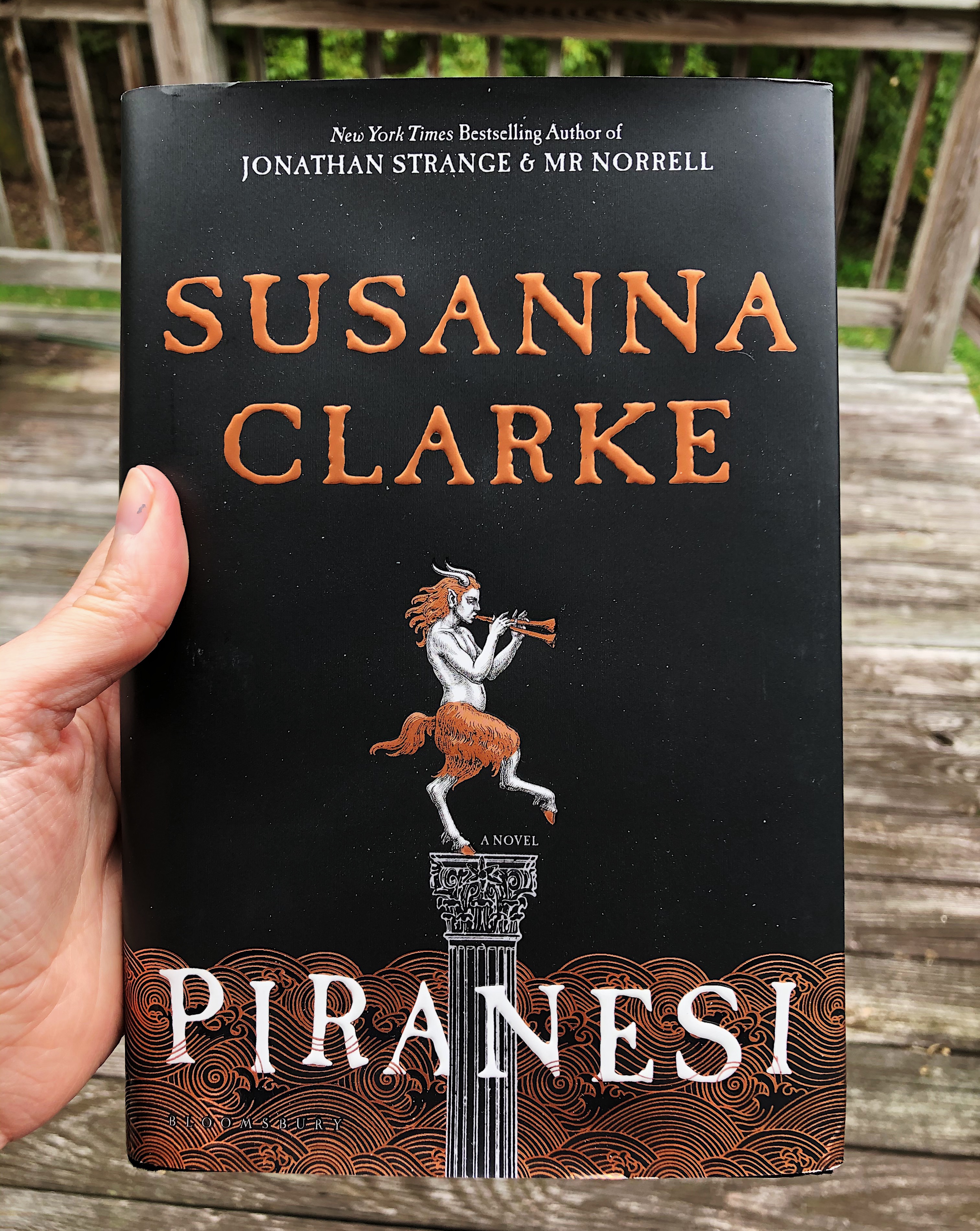
An atmosphere of melancholy pervades this book, mostly the journal entries of our narrator, Piranesi. He lives mostly alone in the World–or at least, in a large sprawling House of stone with statues and strange tides.
He visits twice a week with the Other, a man who comes to question Piranesi about the House and a secret knowledge which he’s sure they can discover if they keep looking for it (and by “they,” he means Piranesi).
It quickly becomes clear that Piranesi is an unreliable narrator (or maybe just a narrator with an extremely limited view) and that something is strange about the House with its innumerable halls, exquisite statues, and silence.
It’s hard to say much about the plot as the story takes some turns that the reader discovers with Piranesi.
Clarke has said that she was inspired by C.S. Lewis’s The Magician’s Nephew, and I can certainly draw connections between that book and this (there are a couple of direct references to the Narnia series, though they in no way detract from the story).
While Clarke’s first novel Jonathan Strange and Mr. Norrell is large and sprawling, a nineteenth century work written in the twenty-first century, this is a tighter, more contained world, like a little spiral seashell (it’s under 300 pages). Clarke’s writing still has that sense of loneliness, her characters have an undertone of melancholy, and while Piranesi may evoke pity, he never gives in to despair. There’s always a glimmer of hope.
This was a lovely meditation on loneliness, belonging, home, and safety.
★ ★ ★ ★ ★
Harry Potter & the Prisoner of Azkaban, by J.K. Rowling (1999)
After I listened to the first book in the Harry Potter series I thought it would be fun to continue…so I skipped to the third book. It’s not that I don’t like the second book, it’s just that 2020 has been tough and this is my reading life and I think Rowling’s writing took a big step up in book 3.
So. Harry and his friends are back at school, but this year’s threat comes from a convict, Sirius Black, who escaped from the wizard prison of–you guessed it–Azkaban. He might be trying to hunt down Harry, so everyone is a little on edge.
There’s a new professor, Remus Lupin, who bonds with Harry, which is a bright spot compared with the potions master, Snape, who is a terrible teacher as well as a garbage person. Lupin actually cares about his students and encourages them to learn. He pays special attention to some of the overlooked and bullied students (Neville), which I appreciated.
I know there are reasons Rowling wrote Snape as being so horrible, and part of it might be that as a kid things can feel more intense than they can feel to an adult, but there were definitely ways to write a character like Snape without making him quite so unforgivably terrible. He’s abusive, prejudiced, and while he personally may be good at potions, he has no idea how to teach anyone else and there is no excuse for him behaving as he does to children! And now I’m angry at Dumbledore for allowing him to teach at his school.
Anyway, pedagogical difficulties aside, I enjoyed this entry into the series. It’s got new characters and the world expands in new and interesting ways.
I listened to the audio book narrated by Stephen Fry, and he does a great job (note: the American audio version is read by Jim Dale, who probably also does a good job, but I’m sad Scholastic thought they needed to make a separate “translated” version for American).
It was nice to read some books lighter in tone during a year that is decidedly not light in tone.
★ ★ ★ ★
The Magician’s Nephew, by C. S. Lewis (1955)
Continuing the “read lighter books” theme, I went back to the source of Susanna Clarke’s inspiration. I read this one a chapter or two right before bed, which was a great call.
Digory Kirke and Polly Plummer and neighbors who stumble into the study of Digory’s Uncle Andrew and become experiments for his magical theories (Uncle Andrew’s theories, not Digory’s).
They discover a place that is a portal to many different worlds and explore two of them in the pages of the book. In the first, Charn, they accidentally wake a witch and in the second they arrive to see the creation of Narnia.
This is such a hopeful book. It’s about magic and uncertainty, mistakes, forgiveness, and new beginnings. There are warnings about the dangers (or at least, unpredictability) of magic and also a warning to those who think they are above the rules.
I also love that Aslan doesn’t just clap his paws together to solve all the problems. When Digory comes to ask for help for his dying mother, Aslan responds this way: “‘My son, my son,’ said Aslan. ‘I know. Grief is great. Only you and I in this land know that yet. Let us be good to one another.'” He weeps with Digory and is present with him, and then he sends him on a quest to protect Narnia from the witch Digory introduced into the new land.
He does return to Digory’s problem later. But he doesn’t rush to solve it immediately, nor does he downplay or say that his mother’s suffering is “for the best.” This beautiful theme of presence stood out to me in this reading, and I appreciated Lewis’s handling of it.
Harry Potter and the Philosopher’s Stone, by J.K. Rowling
I listened to this on Spotify, as they did a “Harry Potter at home” series with a different reader (or readers) for every chapter. It was fun to hear so many actors who portrayed various characters in the series read the book (and a few who didn’t get to be in the movies but are great readers). This exercise shows that not every actor is great at reading, but it was still fun to hear different voices and experience the story this way.
In case you need a brief refresher on the story… Harry Potter is an orphan who lives with his abusive aunt and uncle. When he turns eleven he discovers that 1. his parents were a witch and wizard 2. he’s been invited to attend a special school for witchcraft and wizardry because 3. he himself is a wizard.
Hijinks ensue! Harry makes friends (and enemies) at Hogwarts (the aforementioned school of witchcraft and wizardry), learns about his parents, learns about the evil wizard who killed them and who was unable to kill Harry as a baby, and starts his magical education.
It’s a boarding school adventure with a mystery to unravel, and Rowling’s world-building is pretty great. I think her writing got stronger as she continued the series, and listening to this book made me want to revisit the series. While there’s only the one book on Spotify (at least for now), we have the rest of the series, so look for more to pop up on my 2020 books….
Update: it looks like they’ve taken the episodes off Spotify?? You can find them on the Wizarding World website under “Harry Potter at Home,” but they have them in reverse chronological order and you have to register on the site (for free) to access them. THIS IS TERRIBLE; I’M SO SORRY EVERYONE!
★ ★ ★
Barchester Towers, by Anthony Trollope
As with others for my Classics Club list, I’ve reviewed this book on its own here.
★ ★ ★
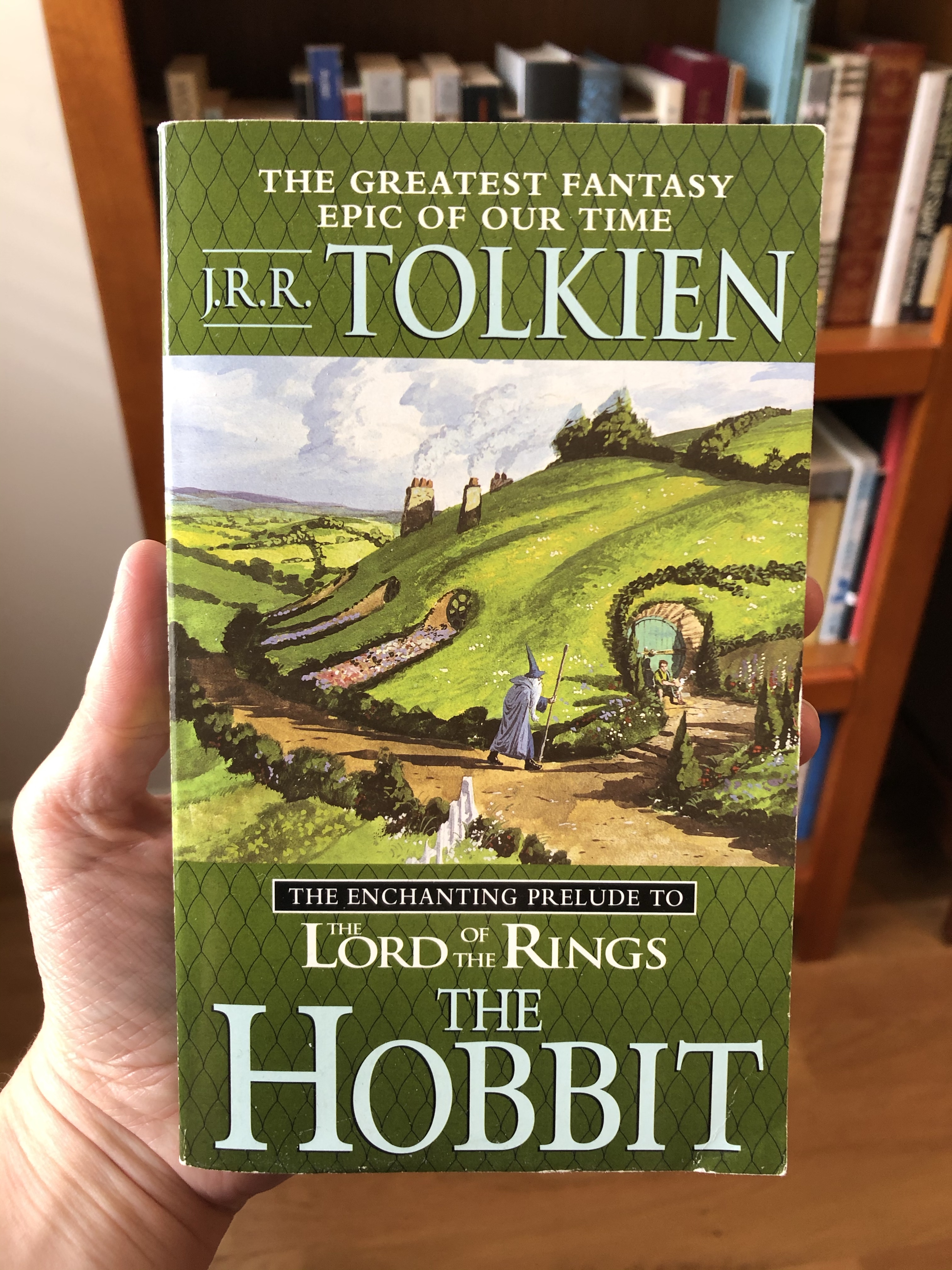
The Hobbit, by J.R.R. Tolkien
“In a hole in the ground there lived a hobbit.” This is an iconic first line, and it feels like wrapping myself in a warm blanket. It’s been a crazy year (understatement), so I’ve felt the pull of re-reading familiar books as a way of coping. This cozy adventure fits squarely in the biliotherapy category. I know the story so well, going back to when I was a child and my mother read it to us, and it’s always a delight to visit Middle Earth again.
Bilbo Baggins lives a slow agrarian life as a well-to-do hobbit, the picture of respectability in his fine home. But one morning Gandalf the wizard pays a visit and sets an adventure in motion. Soon Mr. Baggins finds himself out in the wide world with thirteen dwarves, camping in the rain, escaping from trolls and goblins, in a quest to recover the dwarves’ treasure from the dragon Smaug.
The story moves briskly but never rushes too much, and while there are too many dwarves for many of them to have a lot of characterization (also, there are no women in this story), Bilbo himself goes on quite the journey physically and internally.
Middle Earth is a fascinating world, and I’m always glad to visit. I especially wish I could visit Rivendell, the last homely house where trouble and care stay at the doorstep and one’s strength is replenished. And I would love to know more about Beorn, the skin changer who is both bear and man and who is gruff, but ultimately on the side of good. Especially if you tell him a good tale and earn a welcome. And Gandalf. We can always use more Gandalf, a stout companion on an adventure and useful in a tight spot.
Ah! I’m so far behind! Well, better late than never…here’s what I read in August.
Born a Crime, by Trevor Noah (2016)
I don’t read a lot of memoirs, but Trevor Noah’s stories of growing up in South Africa are gripping, humorous, poignant, horrifying.
Some of the experiences of racism sound similar to what I’ve heard and read about racism in America because while the culture is different, classifying people as “other” and “less than” is ugly everywhere. But other aspects are quite different–it is, after all, a different culture.
I listened to this as an audio book, and I’m so glad I did as Noah read the book himself. He’s a great performer and also it was helpful to hear the non-English words pronounced as they should be pronounced.
It’s also good to read about other cultures and their strengths and weaknesses. It gives a broader perspective and it’s helpful to remember that there are other cultures out there especially during a year in which many of us are at home, unable to experience travel in person. We need our vision broadened, our empathy increased.
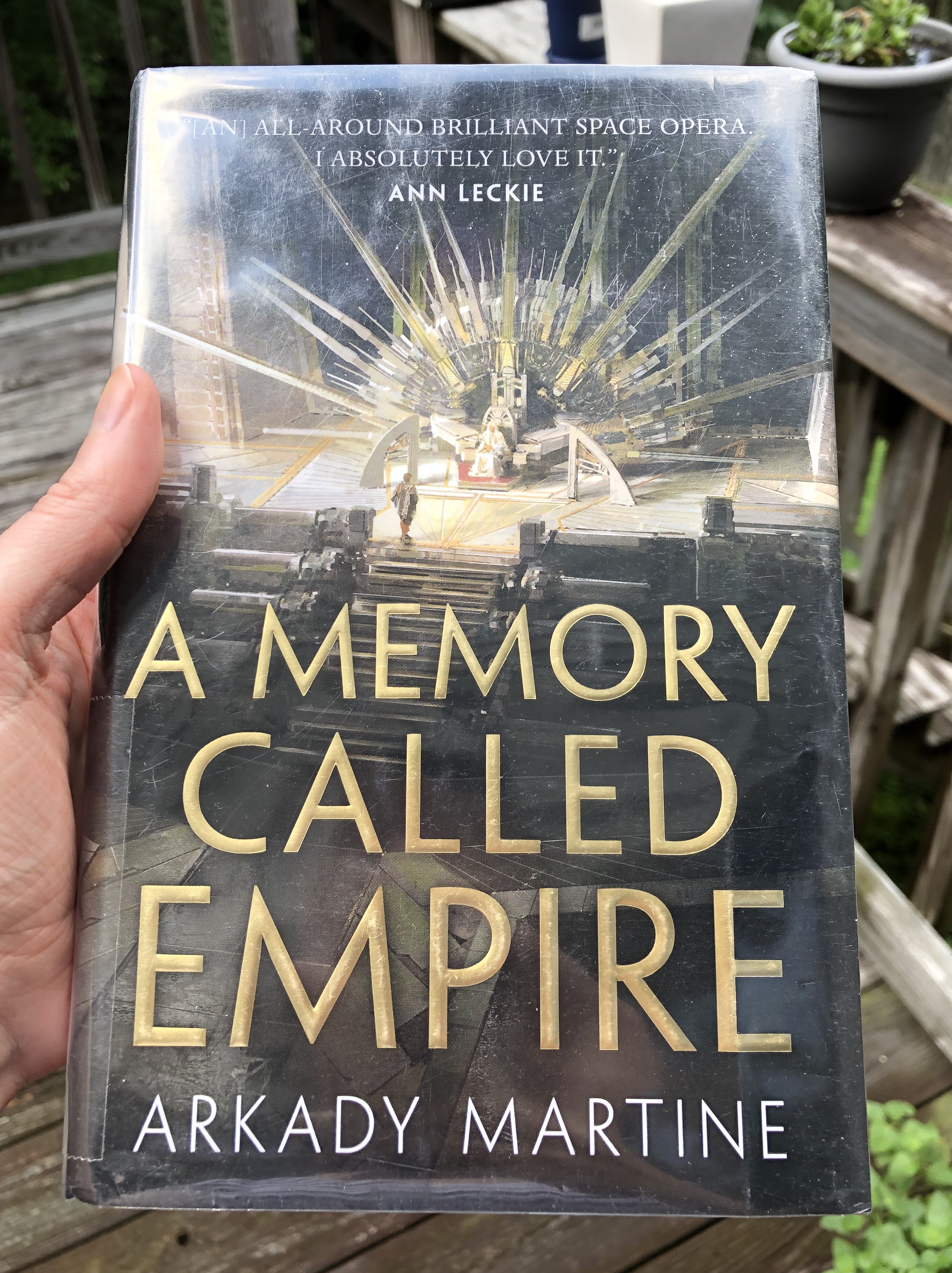
Mahit Dzmare is the new ambassador from a small, independent space station (Lsel) to the sprawling byzantine Teixcalaanli Empire. She’s coming to replace her predecessor, whose fate she discovers immediately upon arrival: possibly murder, though the official report says asphyxiation due to an allergic reaction.
She has one advantage: she carries in her mind the memories of her predecessor, Yskander, albeit memories from 15 years ago. Unfortunately, her memory machine malfunctions on the first day, leaving her alone in a strange culture amount a court full of political opportunists and a dizzying array of rules. She doesn’t know what Yskander was up to (that presumably got him killed), and she has no idea who (if anyone) she can trust.
The plot is intricate and the story propels you through Mahit’s misadventures as she tries to unravel the mystery and stay on mission to protect her station from annexation by a hungry empire.
While the book is science fiction (she’s from a space station! she has weird biometric tech!) it’s really more of a court-political thriller. All the characters are human, and almost all the action takes place on one planet.
I requested this book from the library and the day I picked it up I discovered it won the Hugo award! So that was fun. I’m impressed that this is Arkady’s debut novel, as I can see why it won awards. One of the strongest themes was Mahit’s obvious love for Teixcalaan and its culture, and the ways she longed to be a citizen to really belong while she still loved her own station and people. Her sense of wanting to but never quite forgetting she’s a barbarian was really well done. And the Teixcalaan naming system is great and hilarious. I won’t spoil it for you but I was quite entertained.
★ ★ ★ ★
Sex & Vanity, by Kevin Kwan (2020)
I didn’t go to the beach this year (2020 you’re the worst) but I did read a book I’d put squarely in the beach reads category. When I heard the author of the Crazy Rich Asians trilogy wrote A Room with a View but make it about Asians in the 21st century, I was sold.
If you know the plot of A Room with a View, then you know the plot of this novel–I was a little surprised at how well this book follows the beats of the Forster novel.
Lucie Churchill (half Chinese, half New York WASP) attends a friend’s over-the-top destination wedding in Capri, Italy where she meets George Zao and his flamboyant mother. George is attractive but he annoys Lucie because he’s so Chinese…until he doesn’t annoy her, but at the end of the week Lucie is whisked away by her protective cousin, Charlotte.
Five years later, George and the Capri adventure are firmly in Lucie’s past, and she’s moved on with someone who is new money but who will, she thinks, be good enough for the WASP side of her family.
This was a fun book, dipping slightly into issues of what it’s like to be half-Asian in an otherwise firmly Caucasian family, but mostly keeping the focus on haute couture, delicious food, and a few cameos from characters in previous Kwan books. There are also a few tongue-in-cheek references to the original novel and the (excellent) 1985 Merchant & Ivory adaptation.
Overall, I think the Crazy Rich Asians trilogy was stronger and while I appreciate a good modern retelling of a classic, nothing can quite live up to the original.