Back to the Classics Challenge 2017

Well, it’s that time of year again…I make reading goals that I may or may not complete.

Back to the Classics Challenge 2017

I’m going to try to read books from the categories in the Back to the Classics Challenge this year.

For the full rules, visit Karen’s Books and Chocolate blog to see what it’s all about and/or participate.

Here are the 12 categories, with my tentative book choices (I’ll update if I change my mind or pick titles for the categories I haven’t chosen a book for yet):

1. A 19th century classic – The Tenant of Wildfell Hall (A. Bronte)

2. A 20th century classic – TBD

3. A classic by a woman author – Lark Rise to Candleford (F. Thompson)

4. A classic in translation – something by A. Dumas…not sure which one yet.

5. A classic originally published before 1800 – Richard III? Henry IV? …one of the histories (W. Shakespeare)

6. A romance classic – Doctor Thorne (A. Trollope)

7. A Gothic or horror classic – Dracula (B. Stoker)

8. A classic with a number in the title – A Tale of Two Cities (C. Dickens) or The Two Towers (J. R. R. Tolkien)

9. A classic about an animal or which includes the name of an animal in the title – Animal Farm (G. Orwell)

10. A classic set in a place you’d like to visit – TBD…let’s be honest, it’ll probably be something else by a British author because I want to visit the UK next. 🙂

11. An award-winning classic – The Man in the High Castle (P. K. Dick)

12. A Russian classic – TBD

We’ll see how it goes this year! I’m a little over halfway through Dracula now, and I started Doctor Thorne, both of which I’m enjoying. More on those when I finish them.

Books (Re)Read: Persuasion

For #AusteninAugust (genius idea for an excuse to read or re-read some Jane Austen or Austen-inspired literature), I re-read Persuasion. I think this is probably my second favorite Jane Austen book. Well…it might be tied with Emma for that distinction.

Title & Author:

Persuasion, by Jane Austen (1818)

Persuasion by Jane Austen

Summary:

Anne Elliot, the daughter of a spendthrift baronet, is 28, unmarried, and without immediate prospects. She was engaged 8(?) years before the story opens to a young naval officer, Frederick Wentworth, but was persuaded by her almost-surrogate mother to break off the engagement as the young man was poor and unknown, and her rank should attract much better options.

When Anne’s family moves out of their house and rents it to his sister and brother-in-law, Captain Wentworth re-appears on the scene, but makes it clear that he no longer cares for Anne. It has been years since their engagement, and she knows everything is over between them.

They both make it quite clear that they have moved on. There’s no reason to suspect they might still like each other. Definitely not. Read this book and read how fine they are without each other. Nothing to see here.

Thoughts:

…Jane Austen puts all of this much more eloquently than my summary, which may have devolved a bit at the end.

I love the protagonist, Anne Elliot. I wish she was real so we could be friends. She is so sweet and patient and kind and overlooked, as such people can be. Thankfully, Austen gives her a few true friends who appreciate and value her, and she is generally liked because she treats everyone with such understanding and is a sympathetic listener. She is kind to everyone she meets, even if she does not particularly care for them. She tries to give them the benefit of the doubt, but she is a good observer and does not excuse bad behavior.

Anne is a clever, reading woman, and is loyal to a fault. She cares and looks after her family and bears with them and doesn’t often give way to frustration or anger. In a culture that tells you to leave behind anything or anyone that doesn’t promote your personal happiness, Anne’s story and choices are unusual.

This is sometimes called one of Austen’s “more mature works,” which means it isn’t quite so overtly witty as Pride & Prejudice, and has a more melancholy tone. Austen shows us how lonely life can be sometimes, and the ways in which our internal dialogue can lead us astray. We are not always truthful even with ourselves, and that is fascinating to observe. We sometimes lie to ourselves because we think it will make a painful situation easier, or because we do not want to admit how we really feel.

Of course, as always, the secondary cast is full of wonderful characters. By “wonderful” I mean they are sharply drawn characters who are often ridiculous and hilarious, especially Anne’s vain father and attention-seeking youngest sister.

Maybe later I will write a post about my favorite Jane Austen secondary characters. There are so many to love and some I love to hate.

As always, I enjoyed this book immensely, and feel even more convinced that any Austen novel richly rewards the careful reader.

Rating:

★ ★ ★ ★ ★

Bronte vs. Austen, Continued

In an earlier post I started talking about how I’ve seen strong feelings about (see this Goodreads thread for just one example)

Charlotte Bronte (specifically, Jane Eyre)

JaneEyre

vs. Jane Austen (probably more specifically, Pride & Prejudice)

JaneAusten

Many people feel a stronger affinity for one or the other of the Janes, and do not care as much for the other. Bronte fans complain that they just can’t “get into” Austen, and Austen fans say the same about Bronte.

It is true that Austen and Bronte have quite different styles, and very different heroines (though both have strong female protagonists).

People tend to gravitate toward either the darker tone of the gothic-esque Jane Eyre, or they prefer the lighter tone of Pride and Prejudice (and the other Austen novels). Are you more drawn in by the passionate emotions of Jane Eyre, or by the wit and sparkle of Elizabeth Bennet?

Personally, I love both Jane Eyre and Pride and Prejudice, and have loved them both since I read them in high school. I love them for different reasons, but I generally hear of people connecting with one and not the other.

Some think that comparing the two authors is like comparing apples to oranges. While I agree that they are different, I think certainly some comparisons can be made, and of course, some room will have to be left for personal taste. I think a commenter on a Goodreads thread put it well:

“I always say that they’re like Bach and Beethoven. Jane Austen’s the better prose stylist, but Bronte has the power and passion.”

I too like them for different reasons, and appreciate them in different moods, just as I do with Bach and Beethoven. Bronte is able to capture emotion and drama and the wild passion and sometimes the creepy (what is the deal with Grace Poole??). Austen has more lightness and order, an understated style (for example, this gem: “Emma was not required, by any subsequent discovery, to retract her ill opinion of Mrs. Elton.”), and is able to capture a portrait of society and paints hilarious caricatures of people living in that society. In some ways, Bronte appeals to emotion and Austen to reason, though that is too simplistic; both have elements of each.

Austen has moments of passion (read Sense and Sensibility for its characterization of Marianne Dashwood; or read closely into the actions of Lydia Bennet). Nor is Bronte only wild, dark, and humorless (in one chapter of Jane Eyre, Mr. Rochester dresses up like a gypsy woman – while it’s slightly…offensive, he uses his disguise to poke fun at everyone). There are distinct differences between the two authors though, and there are generalities to make about their works. Art needs both of these ends of the spectrum (and others besides).

My goal here is to try to persuade those who only love one or the other of these great literary ladies to give the other a chance. And if you want a cheerleader for one of them, come talk to me. I’m happy to discuss their merits any time.

This post is getting too long, so I’ll save my suggestions for optimal reading conditions for another time. But I do think when and where you read makes a difference. More on that later….

Photos by Val used under Flickr Creative Commons license. 

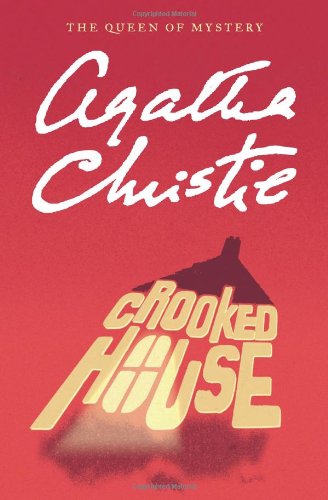
Books Read: Crooked House

The list of Agatha Christie books I have not read is dwindling. Christie said that this was one of her favorites to write.

Crooked House, by Agatha Christie

Title & Author

Crooked House, by Agatha Christie (1949)

Summary & Thoughts

After meeting Sophia Leonides abroad and falling in love, Charles Hayward (the narrator) visits her back home in England to properly ask her to marry him. She says she can’t marry him because her grandfather has been murdered (she fears it might be one of the family), and until that is cleared up, she cannot start a new life with anyone. As his father conveniently works with the police (or Scotland Yard? I’m already forgetting which investigative branch he works for), Charles joins the investigation to discover the murderer and clear the air.

And so begin the twists and turns of interviewing the family and staff and looking for clues. Agatha Christie doesn’t disappoint with her usual style of red herrings and confused investigators, and she continues her theme of drawing upon nursery rhymes for titles.

If you haven’t read much Christie, some of my favorites are “Murder on the Orient Express,” “And Then There Were None,” “Cards on the Table,” and “The Murder of Roger Ackroyd.” Though maybe you shouldn’t start with those, as they are some of her best, and you may be disappointed if you read all the best first. Maybe sprinkle them throughout your reading.

Rating

★ ★ ★

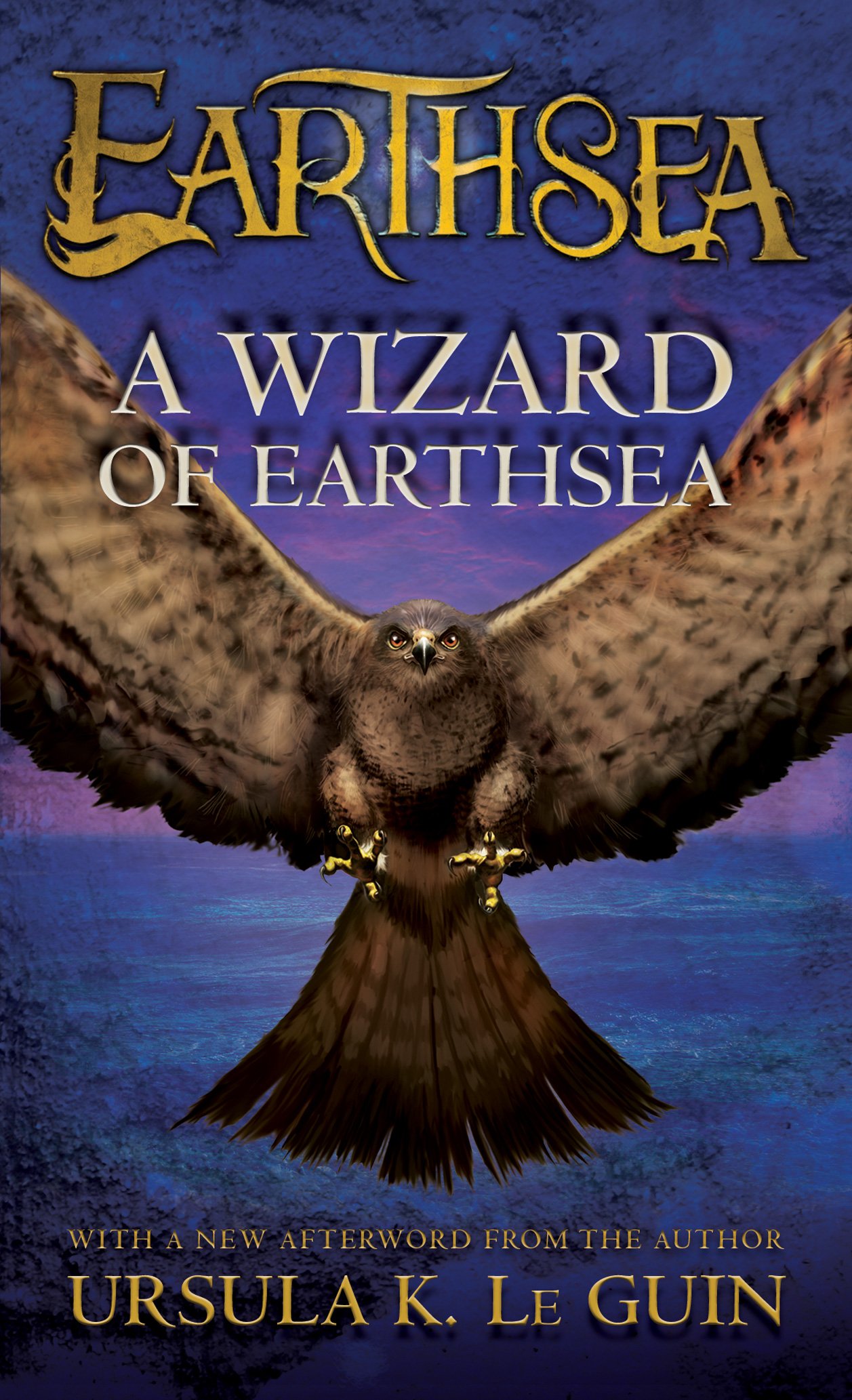
Books Read: A Wizard of Earthsea

I started reading this book on the car ride back from the beach. It was hard to stop so I could take my turn driving the last bit of the trip home.

A Wizard of Earthsea, by Ursula K. Le Guin

Title & Author

A Wizard of Earthsea, by Ursula K. Le Guin (1968)

Summary & Thoughts

We meet our hero as a lowly goatherd on a small island, where he is not very prepossessing, but we discover he has magic powers. This is a coming-of-age tale, and an introduction to a fascinating world created by a great imagination. Duny Ged/Sparrowhawk leaves his goats and his family, receives training in wizardry, and sets off on a mission to undo an evil he himself created.

Guys, why has no one told me to read this book before now?? I’ve heard of Ursula K. Le Guin before, but I think I thought this book would be more… science-fictiony? I have no idea why. The book has “wizard” in the title, which should have made me think fantasy, but for whatever reason, I had no idea what to expect.

…And I loved it. I love the world Le Guin created so intricately, and I love the characters and the ways she points to them having other adventures besides just the one she is telling. The book read a little like a myth, but maybe it’s just been a while since I’ve read any fantasy and have forgotten some of it works.

I like a good coming-of-age tale, and a book in which the character comes to know himself better and gains wisdom through experience. I also love world-building, and this book has that in spades. It’s billed as a Young Adult book, and I found it in the “juvenile” section of my public library, but don’t let the shelf names deter you if you’re looking for a good fantasy summer read. I’ve already read the second book in the Earthsea series, The Tombs of Atuan, and have started the third book, The Farthest Shore.

Also, I get the feeling that a lot of people instrumental in creating D&D (dungeons & dragons) really liked this book too…. Could you play Ged’s Earthsea adventures as a campaign? I think yes.

Rating

★ ★ ★ ★