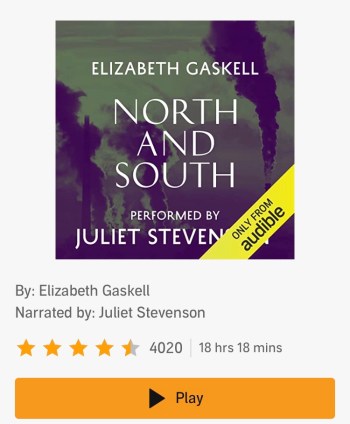
North & South Review

Author: Elizabeth Gaskell

Publication date: 1855

19th century British writing is one of my sweet spots, so obviously I enjoyed North and South.

I think I discovered Gaskell from the Modern Mrs. Darcy blog as “what to read when you’ve read all of Jane Austen.” While I think this is accurate, I also think Gaskell was interesting in using her novel to explore the plight of the workers in manufacturing towns who could barely feed their families. Though this story was not completely about this, it was certainly a prominent theme and discussed at length by various characters.

Margaret Hale, the protagonist, goes back to live with her parents in a Southern English parish after living in London with her aunt and cousin. Margaret’s father soon leaves the church as a dissenter, and moves his family to the Northern town of Milton.

There Margaret sees the contrast between her previous rural, out-of-doors life and her new life in a smoky, bustling, industrious town. She befriends a working-class family and clashes with her father’s pupil the manufacturer Mr. Thornton. Obviously repressed British emotion ensues!

There’s a lot of talk of putting on a brave face and bearing up under difficulty, and Margaret does experience tragedy. It cam be a bit melodramatic at times, but this is still a lovely story that I enjoyed.

I’ve heard North & South compared to Pride & Prejudice as “Lizzy and Darcy but in a manufacturing town!” and it is an opposites-attract story. While Pride & Prejudice is lighter with more witty/ ridiculous characters, North & South has more earnest discussion of strikes and working conditions and the struggle and occupation of life, but in both stories the main characters come to realize their first impressions might have been hastily formed and someone who they first dismissed might actually be someone who could help them grow and become happy.

★ ★ ★ ★ ★

Barchester Towers review

Barchester Towers, by Anthony Trollope

Published in 1857, this is book 2 of Trollope’s Barchester series, but I thought it stood alone pretty well. I’m sure I would have had a deeper appreciation for the characters if I’d read The Warden first, but here we are.

This is a book about local church politics in 19th century England. We open on the deathbed of the bishop of Barchester, attended by his son and his son’s father-in-law (both also clergymen).

The bishop’s son, Dr. Grantly, is not made bishop upon his father’s demise (he doesn’t know the right people in government at the time), so we meet Dr. Proudie, the new bishop, who arrives with his ambitious wife and extra-ambitious personal Chaplain Mr. Slope.

The new bishop, his wife, and Mr. Slope immediately stir the clerical pot at Barchester when there are clerical appointments with comfortable incomes to fill and numerous clergy about, all circling these positions.

There are political machinations, betrayals, misunderstandings, proposals, and comedy all at play in this book.

Trollope has a habit of spending a chapter introducing each new character or family, which is helpful on the one hand and delays the story on the other.

While there are characters to root for–and some who grew on me by the end–there are many characters who are either slimy (Mr. Slope is apparently literally so as several characters go out of their way to avoid touching his moist hand), over-ambitious (Mrs. Proudie rules the roost as behind-the-scenes bishopess), completely mercenary (the Stanhope family), or who are just barely on this side of likable (Mr. Grantly, who recruits actively against Mr. Slope and who misunderstands his sister-in-law Eleanor). Even the attractive widow, Eleanor Bold, whom the narrator obviously favors, is not completely without her faults, which I appreciated.

The church politics may be a bit confusing at times and the pacing a bit uneven, but the characters in this book are great fun and I enjoyed this foray into the fictional county of Barchester. Does one county require quite so many clergymen though?

Read for my 50 Classics project and the Classics Club Spin #24

July 2020 Books

Gods of Jade and Shadow, by Silvia Moreno-Garcia (2019)

Our heroine, Casiopea Tun, starts the book as a Cinderella-type figure: the lowliest relative who does menial tasks for her grandfather, aunts, and spoiled cousin, Martín.

One day she opens a chest in her grandfather’s room and frees the imprisoned god of death. This leads to an adventure fetch quest to help the god regain his power and throne.

I don’t know much about Mayan mythology, so it was fascinating to get a glimpse of another culture’s mythology and the twin gods of death, Hun-Kamé and Vicub-Kamé, and their vast realm Xibalba.

This was a fun summer read with a plucky heroine who longs for adventure, magic, mythology, a 1920’s setting, and a dash of romance thrown in for good measure. There are also several twins or matched pairs, and the tension ratchets up to the final challenge, the final choice Casiopea makes. I appreciated that at the end it is her choices that matter and drive the outcome, reminding us that we lay the foundation for the next choice on the back of our previous choices.

★ ★ ★ ★

The Night Circus, by Erin Morgenstern (2011)
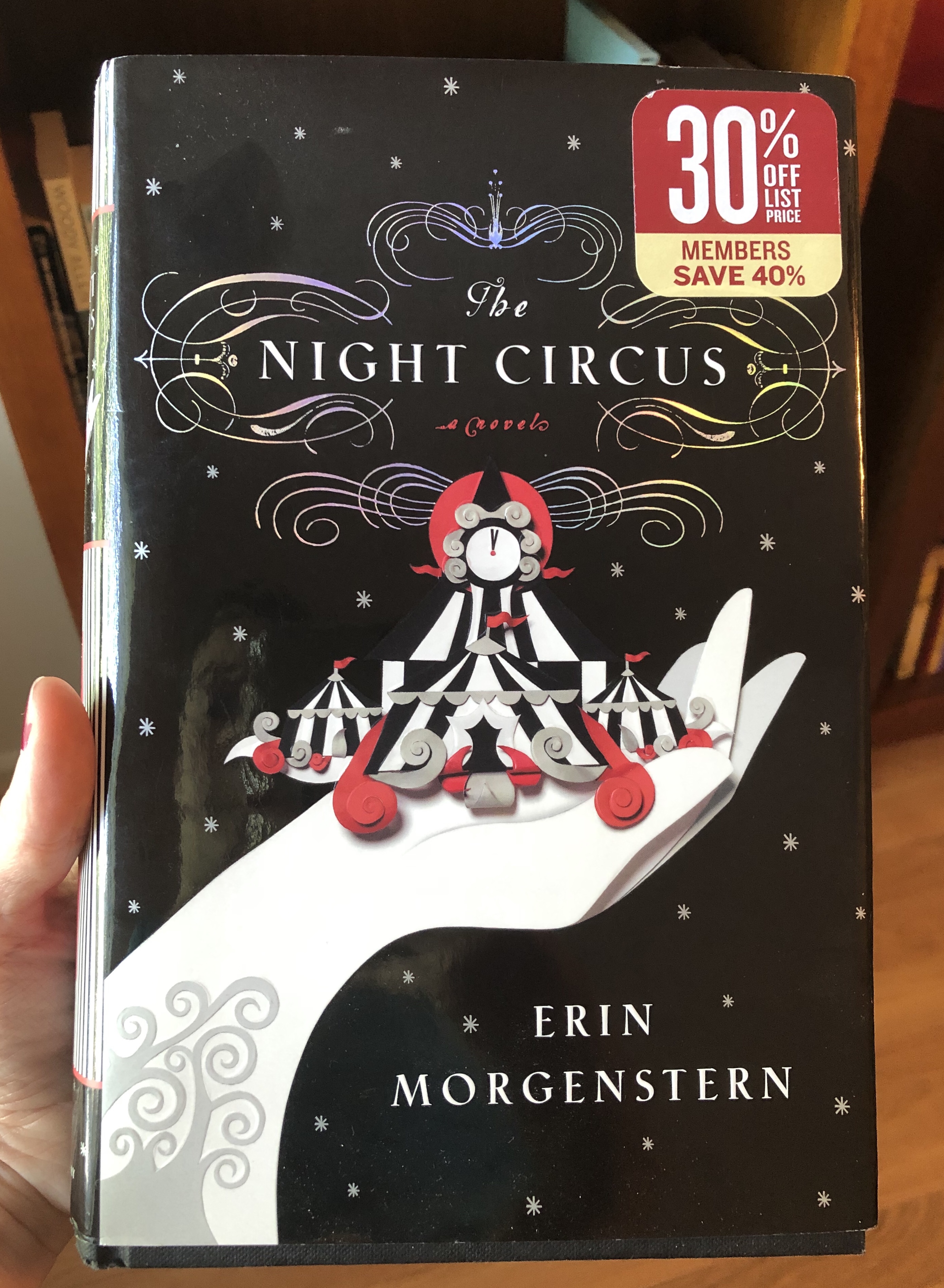
Two magicians (yes, I stumbled into another book about magicians!) have competing methods of doing magic, so they have a competition: each chooses a student and then the students compete against each other in elaborate competitions. The current competition takes place in the titular circus.

Celia and Marco are trained from childhood to be magicians, but they only know that there will be a competition, not what the rules are, and in fact, they don’t even know who they’re up against until they discover it in the middle of the competition. While they are supposed to be fierce rivals, they each find themselves attracted to the other… which is not what their mentors had in mind at all.

This seems to be a book people either rave about or it wasn’t for them. I think I fall in the middle of these two perspectives. There were parts of it I really enjoyed and thought were effective, and parts I thought were a little disappointing.

The descriptions of the circus and the tents were beautiful and magical. I didn’t love that the chapters moved back and forth in time, though I understand it was to introduce characters who would be important later but who would feel shoehorned in if the story was strictly linear.

I also found the competition needlessly obscure. Why are the rules a mystery? Why keep the identity of the other competitor a secret for so long? Also, I liked the circus, but I wanted to know a little more about the two different systems of magic. We get glimpses, but I wanted to know more.

Part of the problem was probably that I’d recently finished Jonathan Strange and Mr. Norrell, and that was so amazing that it overshadowed The Night Circus.

★ ★ ★

Why We Can’t Sleep, by Ada Calhoun (2020)

I’m only giving myself half credit for this one because I read part of it and then skimmed the rest. It wasn’t that it wasn’t interesting, just that I get bogged down so often in non-fiction books when there are lots of examples. I get the point and want fewer examples.

This is written by a Gen-X woman who sets forth the difficulties facing women today, especially as Gen-X women slide into middle age. Technically I’m a Millennial (cue avocado toast jokes), but I imagine many women of my generation will face similar challenges.

Calhoun sets the stage here: Gen X women grew up hearing they could have it all, could do anything they wanted, and were encouraged to pursue career and family, but with little support on how to sustain both full-time. What happens when a generation pushed to aim high reaches middle age and finds they are squeezed tight on all fronts? What happens when they feel they’ve “done it wrong” or their relationships are falling apart or they don’t have much saved for retirement? The sheen of youth has worn off, and women over age 40 are encouraged to be invisible (but still productive).

Basically, Calhoun says we’re expecting too much of ourselves. She suggests lowering expectations a bit and being more present in the moment. She also notes that like other phases of life, the middle age malaise might be a phase–the feelings might not last forever.

★ ★ ★
June 2020 Books

Again, I’m behind, but I’m trying to catch up on posting my summer reads….

I’m Still Here: Black Dignity in a World Made for Whiteness, by Austin Channing Brown

As an aside, this is a book written by another woman named Austin. Obviously I’m here for this.

I’m definitely going to need to revisit this book as it evoked a lot of emotions: sorrow, anger, shame, compassion, hope, disappointment, defensiveness….

Books like this show me what it’s like to be a minority in a majority culture, and helps illuminate the way that religion and culture are intertwined. Of course I know that church and culture have a lot to say to one another and they influence one another, but whew–it sounds exhausting to be in a predominantly culturally white space and look different.

Standing out is always tiring, and if the reason you stand out is your skin color, that’s not something you can just set aside when you want a break. We need to listen to our brothers and sisters and their experiences and learn how to go forward together, not just building together if their ideas sound like comfortable, easy things we could do that don’t challenge us.

There’s so much I don’t know, and I want to keep learning.

★ ★ ★ ★ ★

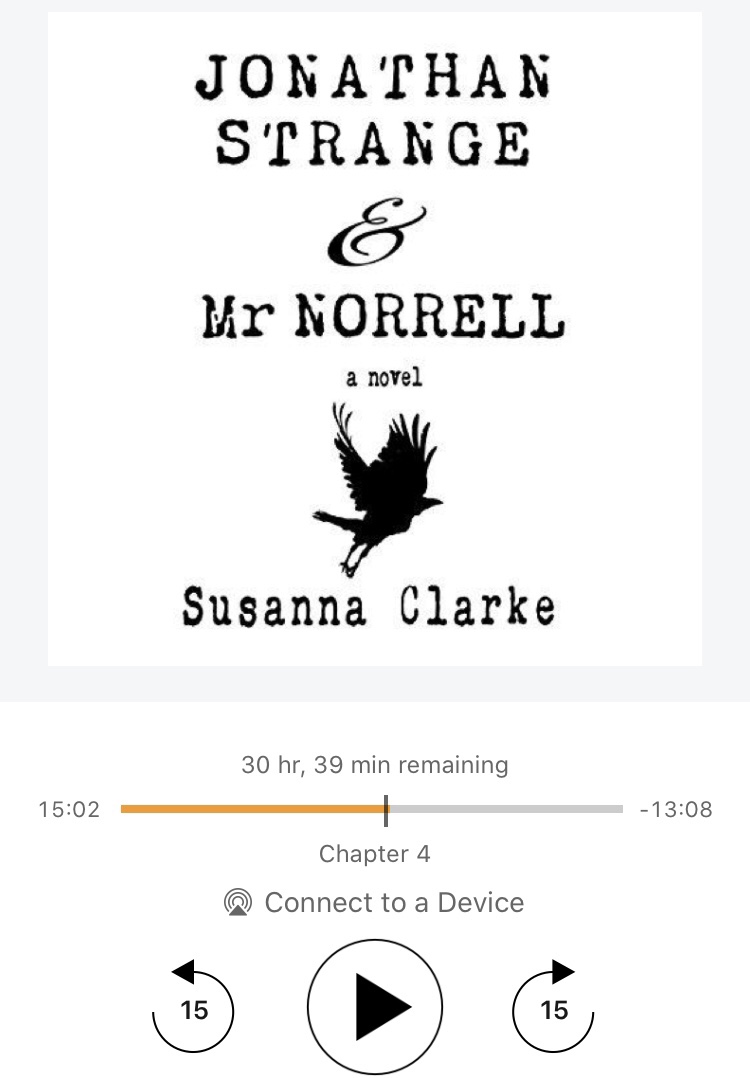
Jonathan Strange and Mr. Norrell, by Susanna Clarke

I’ve heard a podcaster talk about something that was “made specifically to delight [her].” In book form, this is that thing for me. Why didn’t everyone tell me how amazing this book is? (In fairness, my brother did recommend it to me, so….)

How to describe this book? It’s an alternate history, which is something I love when done well. It’s got shades of Jane Austen and Charles Dickens (you’d swear the characters Drawlight and Lascelles meandered in from a Dickens novel), and moments in the Napoleonic War sections that felt a little War and Peace-esque. It’s also a long book, and I do love a good long book I can sink into; this one is immersive.

We open in the early 19th century in England, where a society of theoretical magicians are meeting. There are few practical magicians left in England, though a new member of the society does dig one up: Mr. Norrell.

Mr. Norrell purports to want to bring magic back to England, but he’s a miserly, timid soul, and spends most of his time stopping theoretical magicians instead of forwarding the cause.

About a quarter of the way through the book, we finally meet a second practical magician: the titular Jonathan Strange. Mr. Norrell eventually agrees to teach Mr. Strange, but the two have very different styles, which aren’t always compatible.

The world-building is exquisite, the fairies are otherworldly and cruel, and the story takes some turns I didn’t expect. It’s got a melancholy atmosphere, but it never gets too dark.

This book also has top-notch footnotes, which flesh out the world, the mysterious Raven King who ruled Northern England (I’d love to read more about him), and generally add to the overall impression of an intricate magical real co-existing with the mundane one.

While the story is about magicians, it’s not really a “grown-up Harry Potter”–it’s a more complicated, twisty magical story and I was sad when I reached the end and left the characters behind. This may just edge out A Gentleman in Moscow for my favorite book of 2020 so far. I’d love to talk about this book — let me know if you want to hear more or if you’ve read it, I’d love to hear your thoughts!

★ ★ ★ ★ ★

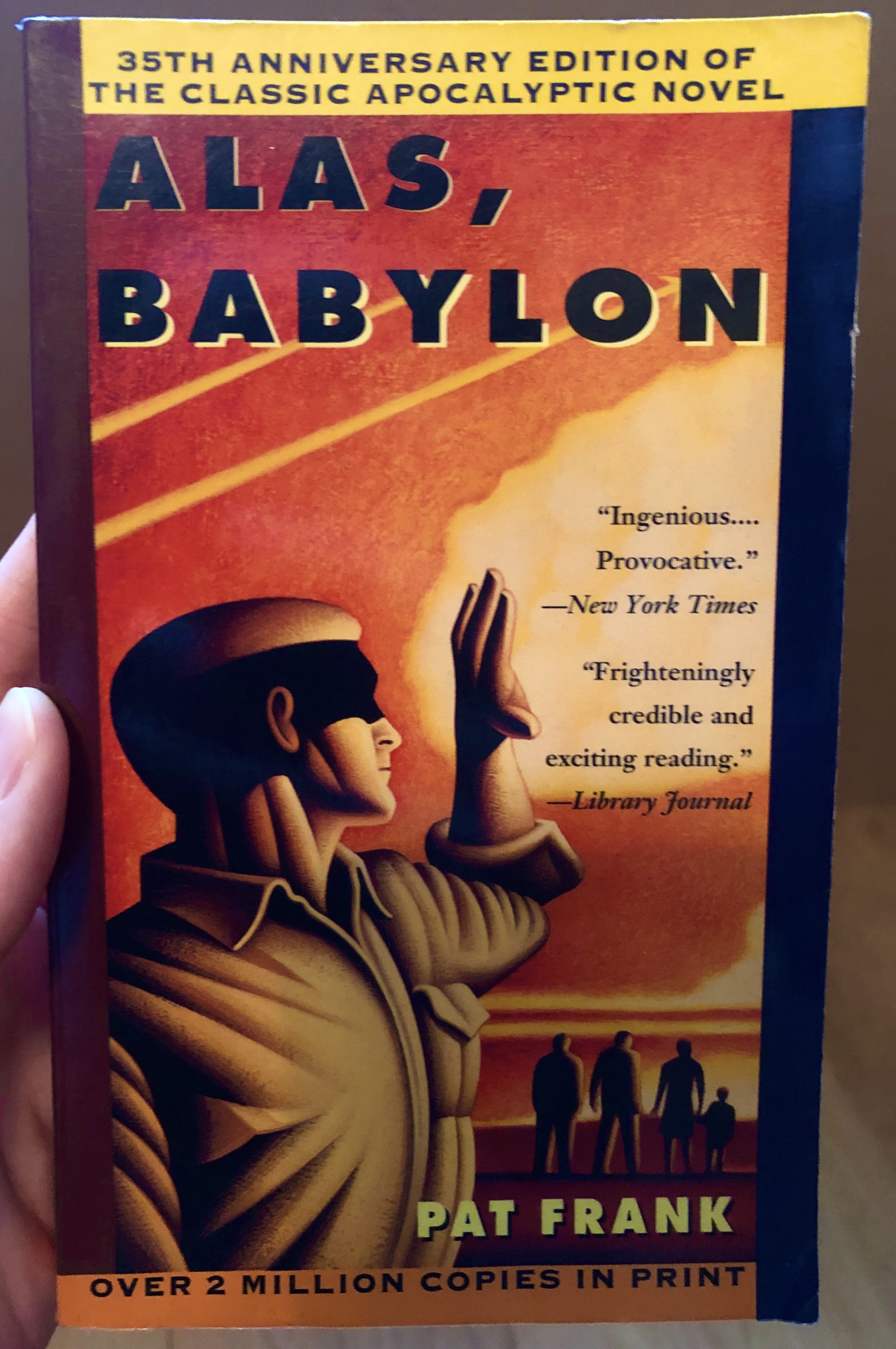
Alas, Babylon, by Pat Frank

As this was for my classics project, it gets its own review here.

★ ★ ★

Alas, Babylon review

Alas, Babylon, by Pat Frank

I first read this book in high school, and remembered enjoying it, though the details were fuzzy.

It was published in 1959 during the Cold War, and is set in a small central Florida town. Life is proceeding as usual when a young American pilot follows a Russian aircraft out of American airspace and shoots it down. Russia responds by firing nuclear weapons at American cities and presumably America responds in kind. Our characters don’t know what happened for a long time as nearby cities are obliterated, electricity and infrastructure knocked out, and travel impossible.

This becomes a tale of survival for the Bragg, Henry, and McGovern families and their neighbors. They have to figure out how to feed themselves, get water, cope without news of the wider wold, and fend off looting highwaymen.

It was interesting to read about this kind of disaster while living through another different kind, and I’m so glad not to be foraging for food right now or trying to make trades with my neighbors so we can all survive.

While I enjoyed this book, it’s definitely a product of its time; the Henrys are a black family, and as such, are looked down on by most of the white society (until everything falls apart and they’re actually the most prepared). It’s an uncomfortable reminder that “all men are created equal” in our founding documents is something we still need to strive toward. Frank’s main character, Randy, also thinks at one point, “The more [I] learned about women the more there was to learn except that [I] had learned this: they needed a man around.” I rolled my eyes pretty hard at that one.

Also, we really don’t want a nuclear holocaust. This book shows how hard it would be to survive even if you were in a pocket spared by radiation. Living only a couple hours south of Washington DC, I’m pretty sure I wouldn’t make it in such a scenario. So let’s all keep our fingers off those launch buttons please and thank you.

★ ★ ★