May 2020 Books

I’m way behind on posting books here, but here are the books I read in May.

The Martian, by Andy Weir

I’ve read this book before (at the beach maybe 4-5 years ago), but I saw that there’s an Audible version read by Wil Wheaton, and I thought it was time for a good man-overcomes-tremendous-odds-to-survive book. I don’t know why Barnes & Noble doesn’t put that description on an endcap display.

The plot: Mark Watney is part of a manned mission to Mars. He and his crewmates are only a few days into their mission on the surface when there’s a giant storm and they have to scrub the mission. Mark is injured and, after the crew can’t locate him in time, presumed dead.

Mark is much less dead than assumed, and he patches himself and applies himself to the business of survival alone on a hostile planet–the slightest mistake could cost him his life. Thankfully for Mark, he is exceedingly resourceful.

NASA eventually realizes Mark is alive and they put their best minds to work to rescue him.

This is a fun, funny, hopeful adventure tale. There’s a good bit of math that’s kind of tough to just hear, but Wheaton does his best and expresses Mark’s sense of humor well.

The movie version of The Martian is quite good as well, so I recommend both.

(Language warning if that bothers you.)

★ ★ ★ ★

A Room with a View, by E. M. Forster

This gets its own review as it’s for my 50 Classics project. You can see the review here. (tldr: I enjoyed it)

★ ★ ★ ★

The Princess Bride, by William Goldman
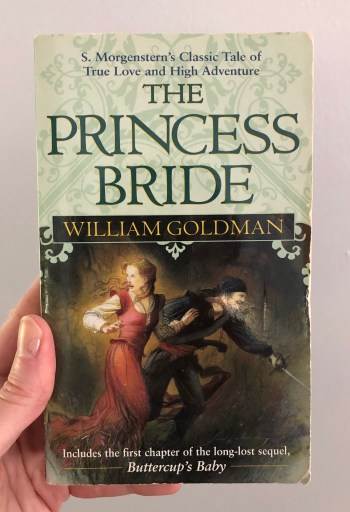
I usually skip introductions in fiction books, because it might be an essay that spoils the ending and assumes you too are an academic reading this for the nth time. This introduction is very much not that, and Ben, who knows I hate intros, told me I had to read it. So I did, and it was great.

The conceit of this book is that Goldman, the author, is abridging and re-telling The Princess Bride, a book written by S. Morgenstern. Goldman says his father read him “the good parts” of the story, and now he’s trying to do the same for a new generation of readers. What a great and hilarious idea! So Goldman periodically interrupts the story to tell us that at this point, he cut 20 pages of Florinese history–you’re welcome–and ok back to Westley and Buttercup and their adventures.

I’ve seen the movie dozens of times, but had never read the book, and May 2020 seemed like a great time for something fun and light to read. The book has plenty of adventure and was great for a time when it was hard to focus and I didn’t want anything bleaker than the news.

★ ★ ★ ★

From a Certain Point of View, short stories by various authors

These short stories were great fun. For the 40th anniversary of the original Star Wars movie, a bunch of authors wrote short stories exploring minor characters or small moments from…a different point of view.

Some of these stories worked better than others, but it’s fascinating to see how a whole story can be made of something that’s a tiny tiny moment in the movie. Small characters are given whole backstories, villains are humanized or made more villainous, and the Star Wars universe expands a little further.

One of my favorites was the most entertaining few pages about paperwork I’ve ever read, so that’s a feat.

★ ★ ★

A Room with a View

I. Lucy Honeychurch and her cousin companion, Miss Charlotte Bartlett, travel to Italy where they stay in a British pension with other Brits and want to properly appreciate the sights with other proper tourists. There they meet the Emersons, a father and son who are more free spirited, and thus viewed with mild suspicion by the other tourists. Lucy likes them, though she’s torn between her feelings and her sense of what proper, refined people think and believe. These warring desires are brought to a head by a Slightly Dramatic Event (these are Edwardians, after all; we can’t get too crazy here)….

II. Back in England after her adventure, Lucy has one more chance to decide whether she wants a life based on Societal Expectations (her fiance is a too stuffy for even her own family) or whether she’ll follow desires she’s pushed deep down.

The book meditates on the difference between desires and expectations, and also highlights how in Proper society, emotion is a hindrance and ought to be repressed.

Lucy’s perception of what her family wants and expects is not exactly what they do want for her, and she gets tangled up in her mind trying to fulfill expectations that actually bore her. Her deep desires aren’t even to be a rebel, they just aren’t to be a stuffy society lady, which is what she thinks she ought to want.

I enjoyed this book and recommend it as it is a pretty slim classic, and it’s not a difficult read.

There’s also an excellent 1986 film version with a tiny Helena Bonham-Carter as Lucy. The pace is deliberate, but I think it captures the spirit of the book well; the acting is excellent (Judi Dench! Maggie Smith! Daniel Day-Lewis as THE stuffiest British person you can imagine!) and allows the story to unfold.

★ ★ ★ ★

Next On the List – Classics Club Spin 24

It’s been so long since I’ve updated here; it was hard to read and focus at the beginning of the pandemic, and while that’s still somewhat the case, human beings are fairly adaptable, and I’ve been able to read a few books over the past couple months. I’ll post separately about what I read the past few months. On to what I’m reading next!

The Classics Club is doing another “spin,” which is basically where you make a list of books you’re thinking about reading next from your list, number them, and they choose a number. That chooses the next book for you. As I’m being indecisive about what classic to pick next, this is perfect. Here’s my list:

  1. Pride & Prejudice, by Jane Austen
  2. The Pickwick Papers, by Charles Dickens
  3. A Prayer for Owen Meany, by John Irving
  4. The Spy Who Came In From the Cold, by John le Carre
  5. Many Waters, by Madeline L’Engle
  6. An Acceptable Time, by Madeline L’Engle
  7. Gaudy Night, by Dorothy Sayers
  8. Barchester Towers, by Anthony Trollope
  9. Richard II, by William Shakespeare
  10. Meditations, by Marcus Aurelius
  11. Emma, by Jane Austen
  12. The Pickwick Papers, by Charles Dickens
  13. A Prayer for Owen Meany, by John Irving
  14. The Spy Who Came In From the Cold, by John le Carre
  15. Many Waters, by Madeline L’Engle
  16. An Acceptable Time, by Madeline L’Engle
  17. Gaudy Night, by Dorothy Sayers
  18. Barchester Towers, by Anthony Trollope
  19. Richard II, by William Shakespeare
  20. Meditations, by Marcus Aurelius

Yes, I know I listed most of these twice. I have enough books on my classics list to fill the slots, but I’m not ready to dive into a Russian classic just yet (it’s not cold enough!), so this is my list. There are some perks to being an adult and making up some of my own rules….

Update: I’ll be reading #18, Barchester Towers, next. I’m trying to decide if I want to read the physical book or listen to an audiobook version. To be determined (advice welcome)!

April 2020 Books

Steal Like an Artist, by Austin Kleon

This is a fun series of books/ collages about art, being creative, and an affirmation that artists steal stuff from influences they love, then remix them in ways unique to themselves. Basically, it’s trying to let you off the hook from thinking you need to be “completely original” to matter. Artists steal inspiration from everywhere (not to be confused with plagiarism, which is bad and should be avoided).

★ ★ ★ ★

The Blue Castle, by Lucy Maud Montgomery

A sweet story: part romance, part self-discovery, part appreciation of nature. Valancy Stirling is a quiet, unhappy young woman in her late-20’s. She lives quietly at home, doing everything she’s supposed to, and hating all of it. Her family overlooks her and considers her an Old Maid. When she receives a medical diagnosis, she decides to live her remaining life the way she wants to, with surprising and happy results.

Montgomery’s descriptions of Canada are beautiful, as always (I think my very favorite part was in the middle when Montgomery describes time passing by telling us about the beauties of each season), and the story gentle, which was a welcome relief in a time when real life was a bit…much.

★ ★ ★ ★

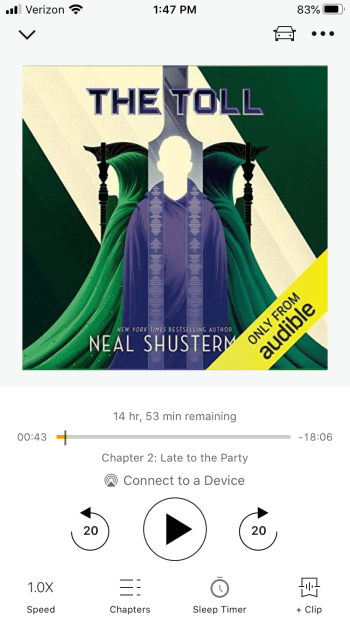
The Toll, by Neal Shusterman

This is the final installment of the Scythe trilogy. It’s hard to talk about the plot without spoilers for previous books, but the scope continues to widen, as a third installments usually does. Things look dire for our heroes.

Generally I liked this and thought it brought the series to an interesting conclusion, but I found the ending a little abrupt — there were lots of characters by the end and while we check in with most of the main ones left, what happens to the larger society and where a couple of the characters go next was left a little hazy. I understand this, but it felt a little…unfinished, or maybe unpolished.

But if you’re looking for a YA dystopian series to fill the Hunger Games sized hole in your heart, this may be just what you’re looking for.

★ ★ ★

Maisie Dobbs, by Jacqueline Winspear

We open with Miss Dobbs opening a private investigation business. Her first case is a possible marital infidelity, proving to me that this is the main reason to hire a PI, even in the 1920’s.

Most of this book is told in flashbacks of Maisie’s early life and how she went from housemaid to PI (well, the link between the end of the war and wanting to become an investigator is not fleshed out, but ok). It’s an interesting origin story for a female investigator after World War I, and the book is full of interesting historical detail.

The opening mystery itself seems more of a setup for dealing with the aftermath of WWI — there are interesting questions of how to deal with collective grief due to a traumatic worldwide event (this seems a little more relevant these days…).

Overall this was an enjoyable light touch look at post-WWI England and an introduction to a character who, I assume, has more adventures in psychology and detection in later books.

★ ★ ★

I’ve found it hard to focus the past couple months, so I’m surprised I read this much in April. I’m letting myself off the hook for trying to read anything difficult right now, and will get back to some of the tomes I want to read at a later date, maybe when we aren’t in the middle of a pandemic?

What have you been reading lately? Or have you been able to read much?

March 2020 Books

So…March was an interesting month. But I got a good bit of reading done, so let’s talk about covid-19 elsewhere and in this post I’ll focus on the books!

Save Me the Plums, by Ruth Reichl. This was a library book and I forgot to take a picture, alas!

I’ve read several of Reichl’s food memoirs and enjoyed them all. This one was specifically about her time working at food magazine Gourmet. Her descriptions of food are mouth-watering, and her writing deceptively simple.

★ ★ ★ ★

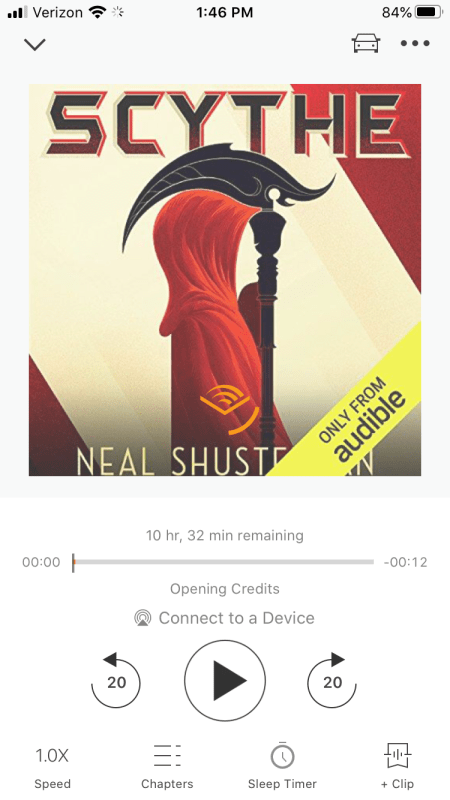
Scythe, by Neal Shusterman.

This is the first book in a YA trilogy about a perfect world where humans don’t die and don’t have to really feel pain. A benevolent AI, the Thunderhead, controls most of life’s logistics, and humans get to live their lives any way they want. When they start getting old, they reset down to a younger age and keep living.

This means that overpopulation could be a real problem, so there are some people, called Scythes, specially selected to winnow the population (see what I did there?) by “gleaning” people aka killing them.

Our two protagonists, Citra and Rowan, are selected for Scythe training, and they find that not everything is as perfect as it seems….

A light dystopian book with fascinating world building and interesting characters.

★ ★ ★ ★

The Doomsday Book, by Connie Willis.

Ben told me that I only had myself to blame, but reading this while finding out that the world is currently dealing with a global pandemic was truly bad timing. Please save this book for happier times, as it’s a bit of a downer.

In this book, Oxford historians study history by time traveling back and experiencing what it was really like. Kivrin, an aspiring young historian, is sent back to 1320 and she promptly becomes ill with influenza. Back in the future, the team that sent her also experiences a flu epidemic, and Oxford is quarantined so they have trouble bringing her back….

Of the two storylines, I enjoyed the medieval one more, as Kivrin explored the time period and got to know a family and their way of life. The 2055 timeline was mostly Kivrin’s mentor obsessing about getting her back while also dealing with the deteriorating situation.

This book was interesting, but there was a lot of death, right at the time a global pandemic was unfolding in real life, so….

★ ★ ★

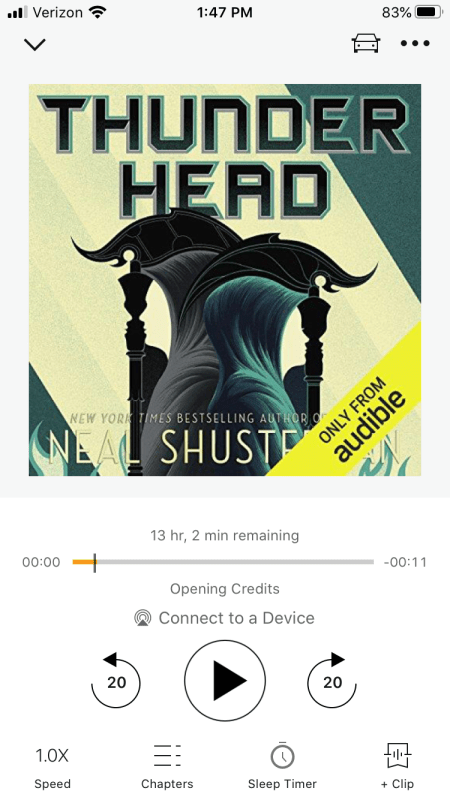
Thunderhead, by Neal Shusterman.

This is the second book in the Scythe trilogy. As usual in a second book, the situation unravels, new characters are introduced, and the world becomes bleaker! Yay!

Still interesting, and I enjoyed some of the new characters introduced, but a second book is tough to review without spoilers and without the (hopefully–I haven’t finished yet) resolution of the third book.

★ ★ ★

The Woman in White, by Wilkie Collins. This was for my 50 Classics project, so it gets its own fancy review.

The style is Charles Dickens but a light mystery! …and yes, I know there are elements of mystery in some of Dickens’ novels. Let’s not get hung up on that here.

★ ★ ★ ★