Books Read in August 2025, part 1

The Man in the Brown Suit, by Agatha Christie

Published 1924

Anne Beddingfield is at a loose end after the death of her father, an impecunious academic. She goes to London to look for work and adventure, and one day witnesses a man’s death at a Tube station (London’s underground train transport system). 

She decides to investigate, and this leads to her taking a cabin on a ship sailing for South Africa to find out more about the man’s death, which she thinks may also be connected to another death in a country house. Shenanigans ensue, of course. 

The spine of this book said it was first in the “Colonel Race” mysteries by Christie, and Colonel Race is a character in this book, but not in the way Poirot or Miss Marple are the main detectives in their stories. Miss Beddingfield is the main character in the book, and it’s a standalone story in which Col. Race appears as a background character. 

I appreciate that Christie was experimenting with style here—after two Poirot mysteries and a Tommy & Tuppence mystery, she moved on to try something else. However, I am not sure this effort at a thriller was completely successful. 

Anne is interesting, but she is attracted to men who are a bit brutal and harsh. She rejects a man who respects and admires her and instead is interested in someone who yells at her and orders her around. This preference was off-putting and I understand why this has not made any “best of” lists. There is a lot of Agatha Christie material out there, and I recommend starting elsewhere (The Murder of Roger Ackroyd, Death on the Nile, And Then There Were None, and The Body in the Library, and Murder on the Orient Express are well known for a reason. I also have a soft spot for Dumb Witness—a cute dog! and Crooked House—if you want to try something not related to Poirot or Marple). 

Remarkably Bright Creatures, by Shelby Van Pelt

Published 2022

Despite opening from the point of view of Marcellus, a Giant Pacific Octopus who lives in an aquarium, this is not a sci fi book. All the other point-of-view characters are humans living normal human lives. 

The primary characters are Tova, a lonely older woman who cleans the aquarium and befriends Marcellus, and Cameron, a young man who can’t seem to hold a steady job and who is searching for his identity and some stability to escape his troubled past. 

Tova is considering retiring and moving to a retirement home as she has no one to care for her as she ages—she’s a widow whose only son tragically died many years ago when he was just eighteen. She is so focused on her lack of biological family that she overlooks the people already in her life. 

Cameron also thinks of his past as his destiny. His drug-addicted mother left him with his aunt and never told him who his father was. Cameron finds his father’s class ring and goes to search for someone to tell him who he is. 

Of course, eventually Tova and Cameron meet at the aquarium, and Marcellus helps them realize that their pasts may hold tragedy, but they can move forward together. 

While I occasionally wanted to shake some sense into the characters (especially Cameron), this was a sweet book about connection and identity and I enjoyed it. 

Books Read in June 2025

I made it through my 6-hour exam (hooray!), so I now turn my attention back to books I have read somewhat recently.

Unnatural Death, by Dorothy Sayers

Published 1927

At dinner one evening, Lord Peter Wimsey chats with a doctor who suspects that one of his patients was murdered, though he cannot prove it. She was an elderly woman with terminal cancer, so it is not unusual that she died, but in the doctor’s opinion it is unusual that she died so soon and suddenly near the end of the previous year. 

His speaking up caused a lot of fuss and led to his needing to move out of the area due to bad feeling against him in the village. Lord Peter decides to investigate, despite the doctor’s protests (wanting to leave well enough alone). 

More suspicious deaths assure Lord Peter that he is on the track of an unscrupulous killer, but with the murder method being extremely difficult to trace, it is a challenge for him to prove the connection. 

Another good mystery from Dorothy Sayers and an opportunity to spend time with the erudite Lord Peter and his friends. 

The Unpleasantness at the Bellona Club, by Dorothy Sayers

Published 1928

On Armistice Day, 90-year-old General Fentiman is found dead in the titular gentlemen’s club. He has been in poor health, so this is not unexpected, but there is something slightly strange about his body that Lord Peter notices. 

It is also reported that the General’s sister, Lady Dormer, died at almost the exact same time. Lady Dormer’s will leaves everything either to her brother, or, if her brother predeceases her, she leaves everything to her companion. 

It becomes important to establish who actually died first, and Lord Peter takes the case to establish if both deaths were natural and who predeceased whom. 

Another interesting mystery from Dorothy Sayers, and I also appreciated that it also addresses the internal psychological wounds that soldiers brought back from war. Lord Peter himself has what might be mild PTSD, and one of the General’s grandsons has major physical and psychological wounds from being exposed to chemical weapons. This makes his behavior seem more “suspicious,” and whether that means he is guilty of a crime or just suffering from the effects is unclear. These wounds affect all his relationships, from his relationship with his wife to his difficulty in holding a steady job, and I appreciated having this acknowledged though with a fairly light touch as part of the story. 

Strong Poison, by Dorothy Sayers

Published 1930

A young woman, Harriet Vane, is on trial for the murder (by poisoning, as the title suggests) of her ex-boyfriend. Lord Peter, attending the trial, is immediately struck by her and cannot believe that she is guilty. 

The jury cannot come to a verdict, so there is a delay while a new jury is selected and a new trial can begin. Lord Peter takes this chance to re-investigate the case in hopes that he can discover Miss Vane’s innocence…and possibly marry her after her acquittal. 

Unfortunately for Lord Peter, the case and Miss Vane both prove tricky. Discovering new evidence and even another motive for the crime is difficult, and Miss Vane, while not repulsed by Lord Peter, is not in a marrying frame of mind (being in prison and on trial). 

The introduction of Harriet Vane to the Lord Peter mysteries is a bright spot and a turning point for the detective’s character development. While the story does not end with them together (which I appreciate), it does end with her being freed from false accusation and the audience is interested to see what happens next.

Service Model, by Adrian Tchaikovsky

Published 2024

In a post-apocalyptic setting, a robot valet named Charles serves his elderly master faithfully day after day…until one day he murders him. 

Charles leaves his manor house and sets out toward the central robot Diagnostics facility so they can figure out what made him slit his master’s throat and solve the problem so Charles (now un-Charles, as he had to leave his name behind at the manor) can find other employment. 

As we follow un-Charles on his adventures, it becomes clear that civilization has completely collapsed and it is unclear if there are any humans left for un-Charles to serve, or if robots are all that remain as relics of time gone by. The robots un-Charles encounters are all trying to complete their programmed missions as efficiently as possible. Of course they don’t have feelings about the futility of trying to do all their human-centric jobs when there are no humans to benefit from these jobs, but if they did, they might be depressed.

Un-Charles, despite his one murderous episode, is a gentle narrator, which helps to lighten a pretty bleak landscape. He does make a friend, the Wonk, who accompanies him on many of his adventures, and who pushes un-Charles to be more than the sum of his programmed parts. 

This book gives a sharp critique of late-stage capitalism and joins many other works of art warning about over-reliance upon technology and its dehumanizing effects (as usual, it leads to the collapse of civilization). It is interesting and Tchaikovsky is an engaging writer, but it is certainly a cautionary tale and not just interesting science fiction. 

(Sorry for the dark cover image–the painting was very light so I needed to adjust it, but the results were not completely satisfactory.)

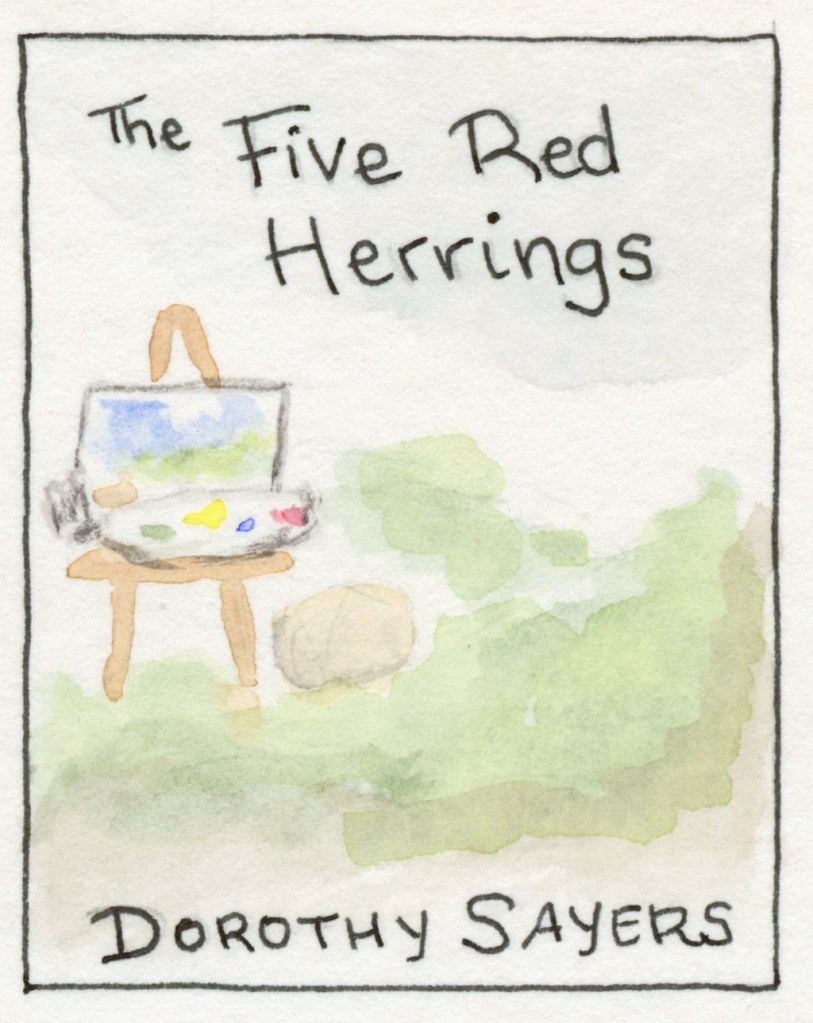
The Five Red Herrings, by Dorothy Sayers

Published 1931

Lord Peter, on holiday in Scotland in an artistic community, consults with the local police on the case of an artist found dead among the rocks. While initially thought to have fallen to his death while painting, Lord Peter finds evidence that all is not as it seems, and murder is indicated. 

This painter seemed to have provoked quarrels with basically every other artist in the area, so there is no shortage of suspects. 

I have slightly mixed feelings about this installment of Lord Peter’s adventures in detection because while the story is interesting, there is a lot (and I mean a lot) of discussion about railway timetables, and all the Scottish characters’ dialogue is written out phonetically, so we get the idea of what the Scottish brogue sounds like. 

This is charming for a few paragraphs, and then becomes difficult when it is clear that this will persist throughout the entire book. 

Between struggling through some of the dialogue and also not having personal familiarity with the British obsession with railway timetables, this one was a bit more difficult. I also could not stop thinking about the Monty Python railway timetable sketch, which I will link here in case you have not watched it. 

Not a bad mystery, but I would not put it in my top-tier list of Lord Peter’s adventures. 

Books Read in May 2025

Sorry this is so late! I have been studying hard for the CERTIFIED FINANCIAL PLANNER® exam, which I am sitting for in July, so other efforts have fallen by the wayside. However, here are two books I finished in May:

Our Mutual Friend, by Charles Dickens

Published 1865

I have been making my meandering way through the works of Dickens over the past few years, and I found a copy of this one at our local library book sale (which is amazing and not to be missed!) last year. This was one of Dickens’ last novels, and he does seem to start with a bit more confidence than some of his earlier works. 

As with some other Dickens novels, the central story involves money: a will and a large inheritance (I haven’t read Bleak House yet, but look forward to it!). The only son of the late Mr. Harmon is set to inherit a large fortune if he returns to England and marries the girl his father chose for him, Bella Wilfur. Miss Wilfur captured the old gentleman’s attention as a child, and he wanted his son to marry her when they both grew up (this is bananas, but was it maybe less bananas in the 19th century? Unclear). 

The son, John Harmon, was abroad and is apparently murdered immediately upon returning to England, alas. So instead, the Boffins, faithful servants of old Mr. Harmon inherit the goods. 

Separately, we also follow the story of Lizzie Hexam, whose father pulled Harmon’s body out of the Thames, and we also check in on some Members of Society who are around I presume to be a contrast to the lower class characters. 

Class and money are two defining themes of the novel, with various characters exemplifying different attitudes toward both. Their moral character is not defined by their rising or falling in status or class, which is interesting, though we do have the satisfaction of seeing some bad characters come to bad ends. 

As with all Dickens novels, you have to settle in and go at his pace. You can’t rush forward, and you have to bear with all the side-plots and cast of many characters who appear and weave in and out of the story. Eventually most of the threads come together in some way, but it is sometimes a long road to get there. 

While there were sub-plots and characters I enjoyed, this is not going on my list as a “top shelf” Dickens. It wasn’t bad, but I was bored in the sections where the fancy society people came together and tried to all trick each other into thinking they were richer than they were, and I also did not care for the way the main male character “tested the character” of the main female character. Lying to a woman you profess to love to see if she will pass your test and demanding she be loyal to you no matter what is not great. Either you think she has good moral character or you don’t. Do not lie to her and get other people to also lie to her to trick her into being “good.” 

All in all, I would say this is a Dickens novel you could skip unless you’re really a completionist. There are, as always, entertaining side characters, and I thought the various characters and their attitudes toward money (or the lack thereof) were helpful in some ways, but Dickens explored those themes in other books to greater success I think. 

Clouds of Witness, by Dorothy Sayers

Published 1926

I am an unabashed Dorothy Sayers fan. This is the second book in her Lord Peter Wimsey detective series. In it, Lord Peter’s brother, Gerald, is on trial for murdering his sister’s fiancé, and Lord Peter (with his faithful valet, Bunter, and police friend, Inspector Parker) must unravel the mystery. 

As usual in a good mystery, witnesses are lying about their movements the night of the murder, there are various clues to be followed up, and in this case there is also a vivid scene of blundering about near a bog in the foggy moors. 

The mystery is good, the characters are entertaining, and I appreciate the literary quotations and references. 

Lord Peter is an interesting sleuth because while he is methodical in following clues, personable in questioning witnesses, and can come across as the idiotic upper class rich gentleman to lull suspects into a false sense of security, we also see glimpses of his sensitive emotions and hints of the ways that a generation of men who went off to WWI did not escape unscathed. This blend humanizes him. Bunter’s obvious faithfulness to his master, without being slavish, is also a point in his favor. 

This was perfect to read in the evenings to wind down while I am studying for the CFP® exam—I can’t handle putting other facts in my brain with nonfiction right now (my brain is full of facts about financial planning!), but I didn’t want something completely mindless, so a good story well told was exactly what I needed.

Books Read in March 2025

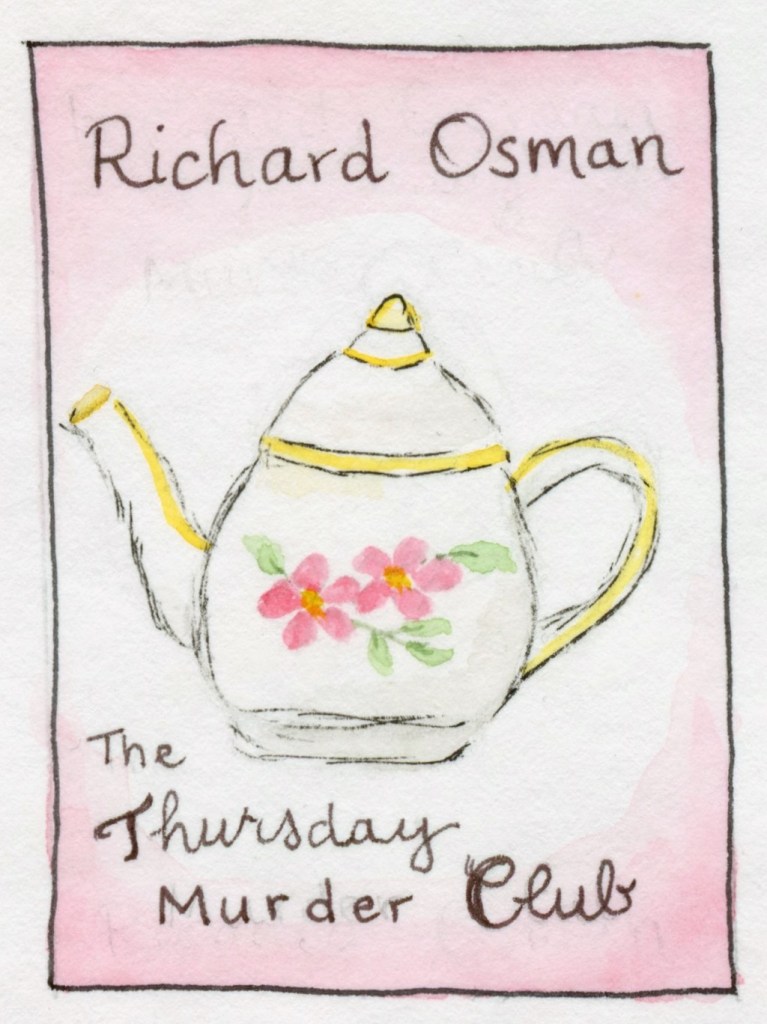
The Thursday Murder Club, by Richard Osman

Published 2020

This book series seems to be having a moment—multiple people told me they were reading it and really enjoyed it. I believe there is a movie in the works to adapt it? So maybe that is why there is some buzz around it right now. 

Joyce, Elizabeth, Ron, and Ibrahim are four residents of Cooper’s Chase, an English retirement community. They are unlikely friends, but the story opens with Joyce being invited to the titular Thursday Murder Club to even out the numbers. The members look at files of unsolved murders to see if they can unravel them. 

Then, of course, a real murder turns up practically on their doorstep and the cold cases are set aside in favor of investigating a fresh murder, with a side of retirement community shenanigans. 

Having protagonists in their 70’s was excellent too: while they are solving the murder, they are also dealing with the pain of losing spouses and friends to dementia and death, the frustration of aging bodies, and the annoyance of being dismissed due to age. How does it feel to know that most of your life is behind you, and how do you make friends when you know that your time is short? When you are acutely aware that your mind and body are not as reliable as they once were, how do you react? 

These questions were integral to the story, and I appreciated that perspective. 

It was a fun mystery without being heavy handed in the description of evil that leads to murder and also without grisly details. The mystery was interesting, the characters fun, and the murder not too grisly. Miss Marple might have fit in with the club, had the story not been set in the present. Fans of Agatha Christie might enjoy this book, and there are currently four books in the series, with a fifth coming out in September. 

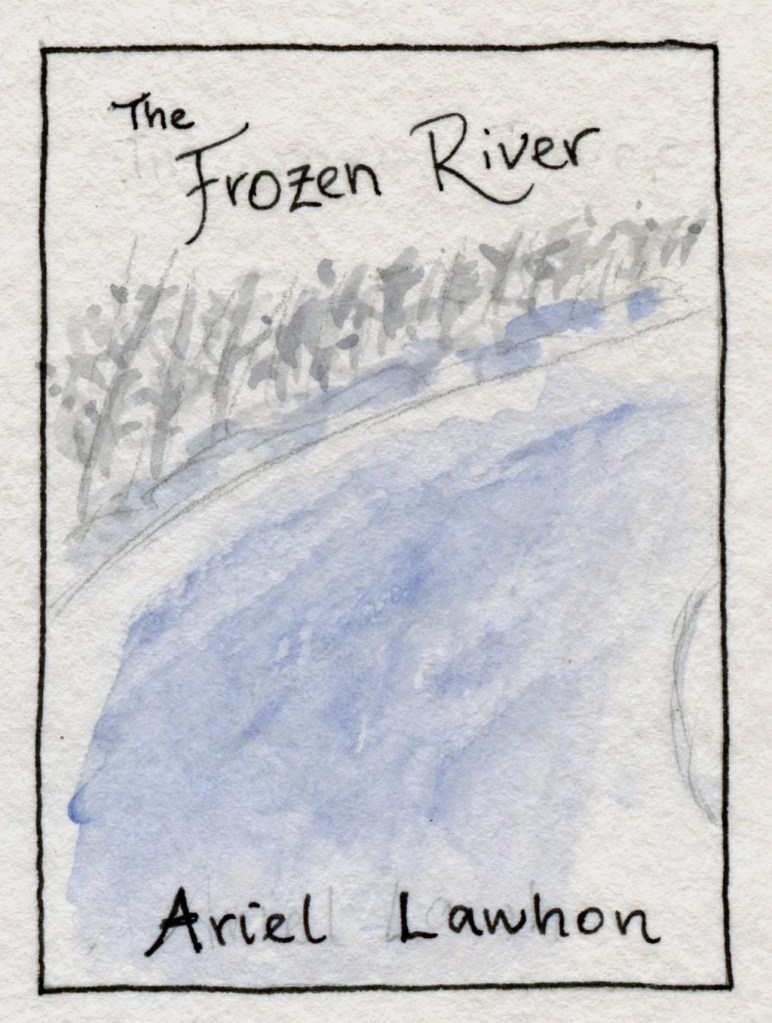
The Frozen River, by Ariel Lawhon

Published 2023

I don’t read a lot of historical fiction, and I heard a recommendation for this book…somewhere…and thought I would give the genre another go. 

The book is set in Maine in 1790-1791 and is from the perspective of Martha Ballard, a local midwife in a small river community. When a man is discovered in the river (which, as the title suggests, is frozen), Martha, as a medical practitioner, is asked to examine the body. She discovers he was murdered and then thrown in the river. 

The man, Joshua Burgess, had also been accused a few months before of participating with a local magistrate in the rape of a minister’s wife, and was generally of doubtful reputation, providing multiple motives for murder. 

Martha attends births, works at unraveling the murder mystery, and attends court hearings as a medical witness on behalf of her friend who was attacked. 

The story itself was interesting, and Lawhon is a good writer, but while it is possible that a midwife in the 18th century had some more progressive views on the role of women in family and society, Martha’s perspective felt a bit more like a 21st century woman who traveled back in time to the 18th century. 

I think this is why most historical fiction is not for me: the historical details are interesting, and I appreciate the attempt to make the past come alive, but it is exceedingly difficult for a modern author to take the attitudes of the time on their own terms. This is not to say a modern author cannot comment or show outdated or immoral ideas as outdated or wrong, but the protagonist here really felt out of step with the community. 

This is why I prefer historical fiction with a sci-fi framing: if a modern person travels back in time to observe a previous era, it is completely plausible that they would be horrified by some of the attitudes and prejudices. 

Of course there have been people who were “ahead of their time” in some way, and it is possible that the historical Martha Ballard on whose diary the book is based had some progressive views. However, some of the perspectives rang slightly false to me personally.

I still wanted to find out what happened, and I didn’t hate the book, I just think that historical fiction might not be for me. 

Content warning: fairly explicit description of rape. 

The Tomb of Dragons, by Katherine Addison

Published 2025

This is the third installment of a fantasy series (which itself is a spin-off of another book–kind of a nesting doll situation) about a man who is a witness for the dead (he can communicate with the recently deceased). He is also someone who can patiently unravel a difficult situation, likely because he is not easily put off by social discomfort, in a society which is extremely concerned with politeness and protocol. 

Thara Celehar is a prickly prelate who has managed, despite his expectations, to make friends in the city of Amalo where he was sent (two books ago). Although he is experiencing a career crisis (the details of which would be a spoiler for the end of the previous book, The Grief of Stones), he continues to show up and do the tasks set before him by his superior. 

Celehar’s adventures do lead him to the titular tomb where he agrees to witness for the ghost of a dragon, but he also has other tasks such as: figuring out how to get a new coat which he can barely afford, drinking tea with his friends, acquiring a bodyguard to protect against assassination attempts, and prodding another religious administrator to do his job and clean up a paperwork nightmare. 

All the while he is grappling with his unhappy past and his friends try to encourage him that he is actually worth befriending and that they truly enjoy his company, which he finally starts to believe. 

The world building in these books is amazing: I love a complex societal structure with rich details (since the characters are elves and goblins, they have long ears that express emotion, for example). 

While Celehar does have missions and adventures, these are not really the main point: it is more about how he deals with his past hurts, and how his friends humanize him, and vice versa. The way Thara learns to move forward and live again, even though his job is to speak for the dead, is a major theme. 

I have mixed feelings about the ending—it certainly leaves the door open for future books, but changes how things stand in a way that I am not sure I love. But I do enjoy this world and the character, so I am open to reading future books if the author decides to return. This ending could also possibly close the end of this character arc and allow the author to move on to other people in the same world, so she left her options open. 

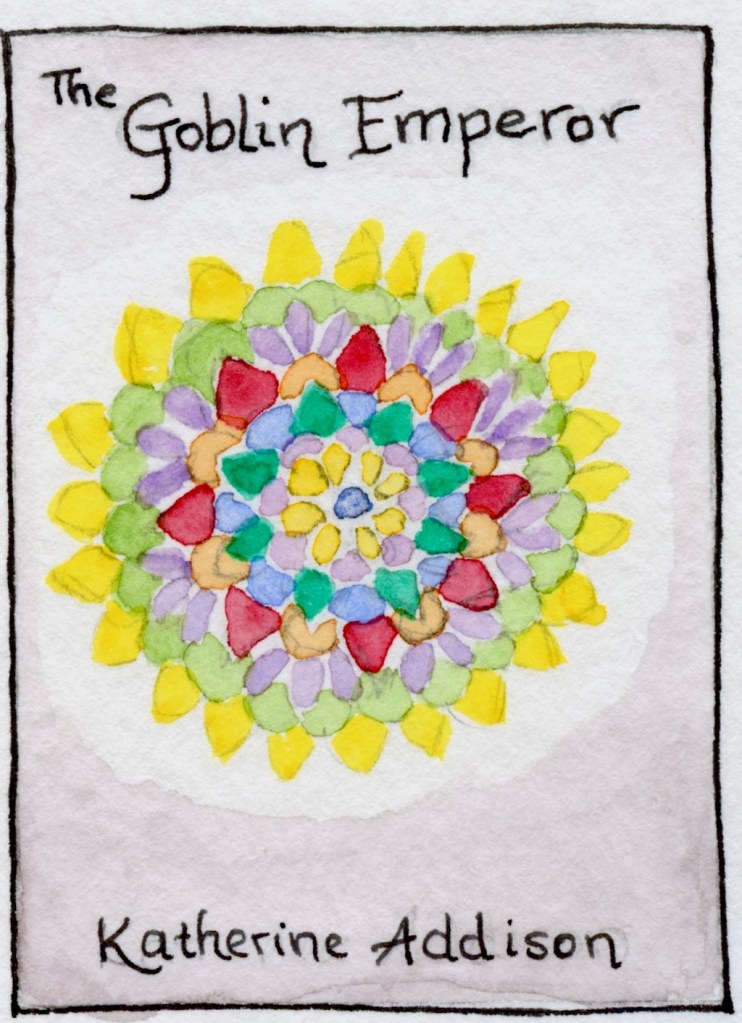
The Goblin Emperor, by Katherine Addison

Published 2014

I enjoyed The Tomb of Dragons so much I decided to go back and read the book that started it all. I listened to this audio book while I painted our guest room, so I blew through it in several days. 

As I said above, I love a complex social structure with court intrigue, and this is also a fish-out-of-water story, which is helpful in introducing a complicated world. 

Maia is the fourth and youngest son of the Emperor of the Elflands. His mother died when he was a child, and Maia has been raised in exile by a distant cousin who was banished from court and who takes out his frustration on the boy. 

A messenger arrives, and Maia is whisked off to the palace as the only surviving son and heir to the throne. 

From learning about how the government functions and the dizzying intrigues of court politics, Maia will have to fall back on his own judgment and figure out who is loyal and who might be plotting against him, assuming him to be an ignorant lout (partially a stereotype because Maia’s mother was a goblin, and therefore considered inferior to the lighter-skinned elves). 

Maia makes friends and enemies, good decisions and foolish ones, and must come to terms with what it means to be Emperor: he is both alone and also never alone. As Emperor, Maia has a lot of power, and he is self-reflective enough to know that this power could be corrosive. It is also strong and fragile, as all power is: he knows if he pushes too far, he could lose it, but if he plays it too safe, important work for the less fortunate will not happen. Being the Emperor is both a privilege and a responsibility, and those themes are explored without feeling like they hit you on the head.

A lot happens in this book (assassination attempts, audiences with any number of petitioners wanting something from the emperor, details about setting up a household, and many many names and aristocratic titles) and the steampunk details are fun. 

While I would gladly read more about Maia’s adventures as Emperor, the book ends on a satisfying note and so far the other books set in this world are about a side character (though we do get a glimpse of Maia in The Tomb of Dragons, which is so fun). I do like a book that sticks the landing, and this one does.

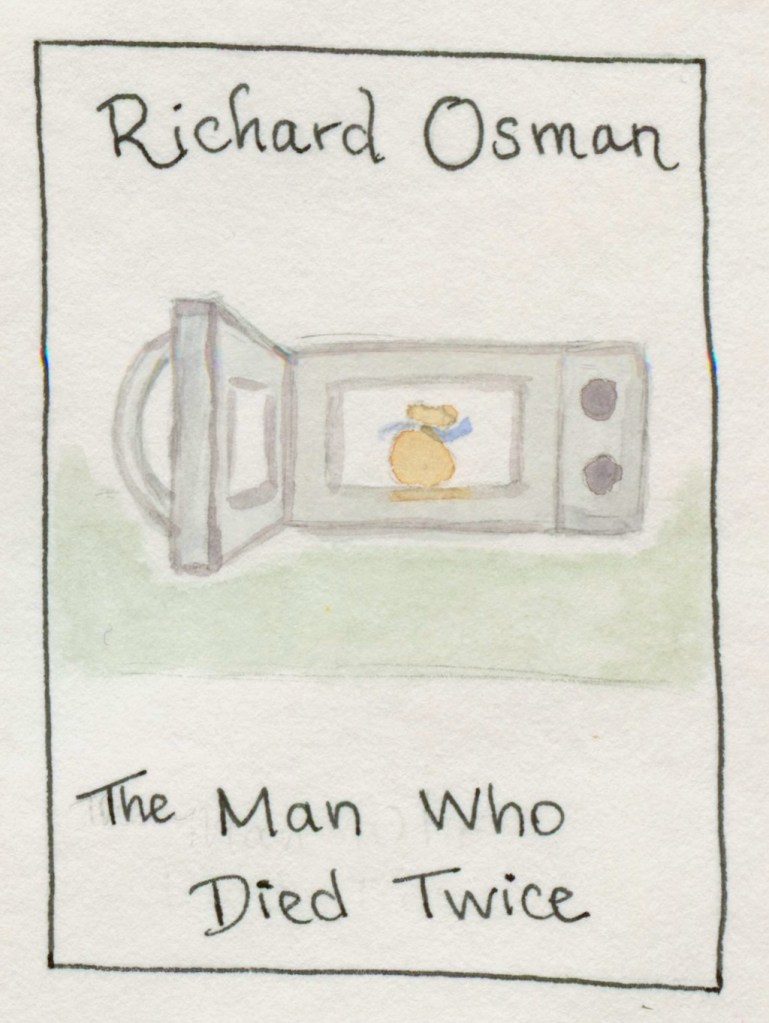
The Man Who Died Twice, by Richard Osman

Published 2021

This is the second book in the Thursday Murder Club series, and it was also delightful. Elizabeth, Ron, Ibrahim, and Joyce and back for another adventure. 

Elizabeth’s ex-husband, Douglas, was also in MI5 and returns to her life as a man in hiding due to stealing some diamonds from a black market “banker.” But did he actually steal the diamonds? Is his life really in danger (all signs point to yes, but Douglas is not exactly truthful). Can our geriatric heroes extricate themselves from more sticky situations? Especially when Ibrahim is mugged by some teenage delinquents and is not at the top of his game. 

Blending mystery, friendship, and the indignities of aging in a humorous way, Osman’s books are entertaining with poignant moments of reflection on the difficulties of getting older. When mind and body are no longer going to be in better shape even with mental and physical exercise as the body slowly breaks down, it creates an urgency and clarity that is refreshing in some ways. 

The mystery is again entertaining, the characters endearing, and it’s just a fun ride.

Books Read in February 2025

I’ve been putting off publishing this because I started painting the upstairs walls (and ceilings and doors and trim) and did not have an office space to paint my little book covers. However, it is now mid-April, and really it’s best to just move forward and return to cute little book covers later. Sorry, February! But here is what I read:

The Two Towers, by J.R.R. Tolkien

Tolkien’s story of an epic quest to rid Middle Earth of an evil via a magic ring continues in The Two Towers. 

The fellowship of nine companions who set out to destroy the ring of power have been scattered, and the first half of the book follows most of our heroes as they cover new ground and the second half follows the other two as they continue the journey to the land of Mordor and the volcano where the ring can be destroyed. 

The second installment of a series often expands the world, introduces new characters, and splits up the party to follow various side quests.

Tolkien split his story into 6 sub-books, and I had forgotten that the entirety of “book three” (the first half of The Two Towers) is about the rest of the fellowship and the entirety of “book four” is about Frodo and Sam. I wish Tolkien had organized the book to interweave the two stories a bit more, as there’s a lot of excitement (and a battle!) in the first half, and then the action nearly grinds to a halt as we follow the two hobbits’ slow journey in the second half. One almost forgets all the activity as the journey to Mordor creeps onward. 

I do think the slowness of the journey to Mordor highlights its difficulty; the brutal terrain, the enemies all around, and the burden of the ring growing. It is effective in communicating that doing what is right is often difficult, tedious, and part of Frodo’s heroism is continuing even when he thinks the chance of success grows smaller every day. 

While I would have suggested interweaving the stories a bit more so we didn’t forget about one half of the adventure while following the other, Tolkien is still a good storyteller and the world he created becomes more incredible as the view of it expands. I love meeting new characters (one of whom is female—hooray). 

As with The Fellowship of the Ring, I listened to Andy Serkis’s narration of the audiobook, and I have no idea how he kept all the different character voices straight, but his commitment to the book was impressive and entertaining. 

System Collapse, by Martha Wells

Murderbot returns for more adventures! 

It is difficult to write reviews for subsequent books in a series due to spoilers for previous books, and also just the difficulty in dropping someone in when an adventure is seven books deep. 

The Murderbot Diaries series follows a cyborg Security Unit that has hacked its governor module (which compelled it to follow orders) and has gone rogue. The SecUnit has christened itself “Murderbot” and is trying to figure itself out over the course of the series. 

This installment picks up immediately following the last adventure, so it is helpful to refresh one’s memory about recent events via a Wikipedia entry of plot summaries if one has forgotten exactly what happened last. 

Murderbot is snarky, and swings between being extremely concerned about the safety of its adopted humans and wanting to be left online to watch tv. Relatable. In each adventure Murderbot is also learning more about itself and also reluctantly forming relationships with some kind humans and another snarky bot, ART (who is a transport ship—don’t think too hard about how that works). 

There’s a lot of plot and action, and most of the books are novellas, but the threads of self-discovery and growth that run throughout are really charming. I enjoy plot-heavy books, so I enjoy the action in these, but I also want characters to learn and grow over time, and Murderbot does grow through its experiences and is changed by interactions with others. Wanting to just sit around and watch tv but instead going out and forming relationships, caring for others in the best way it knows how (calculating the probability of everything falling apart and its humans reaching untimely ends unless Murderbot intervenes) is actually quite lovely. 

While there is one full-length novel in the series, I really think these stories work better as novellas, and was pleased to see this return to form. 

The Return of the King, by J.R.R. Tolkien

Tolkien’s epic fantasy trilogy comes to a conclusion at last! 

Once again, the first part of the book is devoted to Aragorn & co. and the second part follows Frodo and Sam on the final stage of their journey through Mordor to rid the world of Sauron’s evil ring which holds his power and keeps his malice alive.

Eventually the two stories converge, but the two journeys are mostly separate once again. 

Tolkien’s descriptions of the natural world are beautiful (or depressing, when he describes what evil characters do to nature when they have power over it; you know a character is evil if he cuts down trees for no reason). The descriptions at the end of rebuilding, with planting trees, an abundant harvest and the births of many children as signs of renewal and restoration, peace and plenty, are so lovely. 

Some people have complained that the denouement goes on too long, but I love that the members of the fellowship take their time disbanding after their time together, and I enjoyed the chapter The Scouring of the Shire about how evil can spread even to places we once thought “safe.” Also, it’s one final adventure for our hobbits on their own, and it shows how much they have learned and grown from their adventures in the wider world. 

The ending is bittersweet and hopeful—a reminder that journeys and wars leave scars, but also that there is healing and leaving a place better than you found it is a worthy goal, whether or not you personally get to enjoy the peace and prosperity. 

It has been such a delight revisiting Middle Earth! There are so many great characters, a beautiful world, and resonant themes that it is no wonder this trilogy is a fantasy classic and has inspired so many people to follow in Tolkien’s footsteps.

“There, peeping among the cloud-wrack above a dark tor high up in the mountains, Sam saw a white star twinkle for a while. The beauty of it smote his heart, as he looked up out of the forsaken land, and hope returned to him. For like a shaft, clear and cold, the thought pierced him that in the end the Shadow was only a small and passing thing: there was light and high beauty for ever beyond its reach.”