Books Read in April 2025

The Sabbath, by Abraham Joshua Heschel 

Published 1951
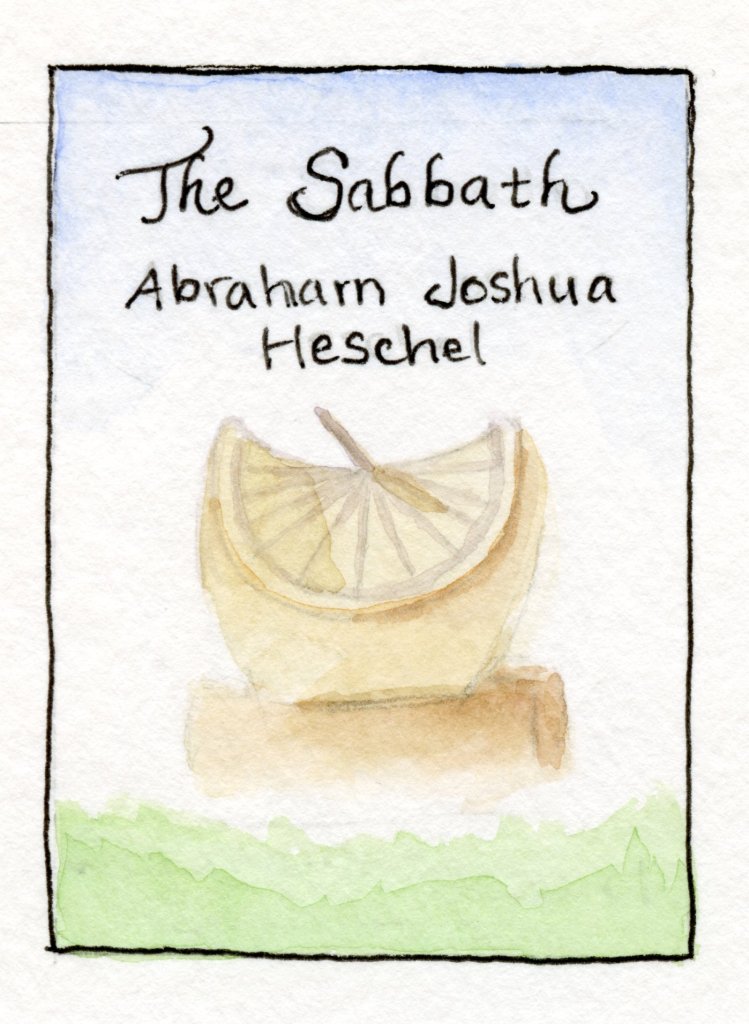
This is a book I’ve heard referenced several times, often by people who seem pretty smart/ able to handle academic treatises well, so I assumed this would be a 500 page tome that I would crawl halfway through and hope to glean some wisdom from the pages I could handle. 

I bought the book and was surprised to see that it is only 100 pages! But reports of the wisdom and poetry of this slim volume on the Sabbath were not over-hyped. 

While I am not Jewish and some of Heschel’s interactions with other rabbis and a chapter that is an extended parable went above my head, his meditations on the meaning of the Sabbath day were both beautiful and profound. 

“The Sabbath…is not for recovering one’s lost strength and becoming fit for the coming labor. The Sabbath is a day for the sake of life. Man is not a beast of burden, and the Sabbath is not for the purpose of enhancing the efficiency of his work.

“The Sabbath is not for the sake of the weekdays; the weekdays are for the sake of the Sabbath. It is not an interlude but the climax of living.”

I grew up and am in a Christian tradition that has a somewhat uneasy relationship with the Sabbath: as Christians, our holy day is Sunday, not Saturday, and while the other 9 of the 10 Commandments are treated as rules one should follow, remembering the sabbath day to keep it holy is treated more as a suggestion. There are all kinds of complicated reasons, historical and practical and cultural, and I don’t pretend to be any kind of expert. But we could learn a lot from Heschel and his meditations on the holiness of time. 

He says “[The Bible’s] premise [is] that time has a meaning for life which is at least equal to that of space…. Judaism is a religion of time aiming at the sanctification of time. Unlike the space-minded man to whom time is unvaried, iterative, homogenous, to whom all hours are like, qualitiless, empty shells, the Bible senses the diversified character of time.” 

This book is beautiful and thought-provoking, and there are portions that I didn’t understand at all, especially parts where he is clearly in conversation with other rabbis and I’m missing a lot of context. But his insistence that the Sabbath is supposed to be a gift and an invitation into holy time is really lovely and something for me to think about. 

Part of what is difficult is that for observant Jews, Sabbath is an agreed-upon communal different (holy) time. Protestant Christians do not have a similar agreed upon view of Sundays, and it is difficult to Sabbath alone. Not impossible, perhaps, but certainly not the same. 

There is more to say, but I am sure I will come back to this book to try to absorb more of its wisdom. 

Careless People, by Sarah Wynn-Williams

Published 2025

Whew, this book was a ride! This was a tell-all memoir about one of the biggest tech companies in the United States, and I’m sure Facebook/Meta is trying desperately to sue the author for all she’s worth because this was not a flattering portrait. 

Sarah Wynn-Williams worked at Facebook in their global policy department, a job that she basically invented because she saw that as it became a global company Facebook could shape global discourse and would need a team to think about how to interact with other countries, not just the United States. 

I already had a fairly low opinion of Facebook and its founders and leaders, and Wynn-Williams does not hold back in her critiques via stories of how clueless and careless they are. Tech start-up culture also sounds terrible and all-consuming. To “succeed” in that world, you sacrifice everything: your time, relationships, other interests, to work all hours and be available at any time. This is not completely unusual, especially for American tech companies.

The work culture was interesting when compared with my last read: The Sabbath

There were so many stories about interactions Wynn-Williams had with leadership where she advocated from a public policy background trying to encourage the leaders of Facebook that they could do so much good in the world connecting people, and the leaders just…didn’t care. They didn’t get it or understand what they might do as creators of something with moral implications. They were not curious about other countries, or other ways of life.

They saw their creation as a tech product and payday. Unending growth and unending wealth were the goals, and any other expectations were secondary. Sacrificing so much of oneself to unfettered growth and money-making does not leave a lot of room for personal growth, reflection, or thoughtfulness. Commitment to profits alone means moral equivocations, if indeed morals matter at all. 

Working in such an environment meant that Wynn-Williams herself made moral choices that I disagree with, and while she definitely stayed much longer at the company than she should have, she seems to still have a somewhat working moral compass. Enough to write a book pointing out that we have all opted into social media platforms created by people who do not care about us, especially if we are not wealthy or powerful enough to offer them something they want. People are expendable to them, dollar signs to exploit. 

How can social media be a public good when the creators do not care about public good in any way? How can a platform really work to connect people when its creators do not care about other people?

There were definitely some shocking stories, and I am even more convinced that there are levels of fame and wealth that are extremely corrosive to the soul. We all think we want to be rich, and certainly there is a level of wealth that will solve problems and create comfort, but beyond that, it shackles the wealthy, blunts creativity, creates moral wasting. 

Reading this book was like watching a train wreck I couldn’t look away from. Fascinating, maddening, and worrying when I think about all the ways that social media is tearing us apart and magnifying the dysfunction in our relationships with one another. 

I listened to the audio version of this book, which is read by the author in her delightful New Zealand accent, so I recommend that if you enjoy audiobooks.
Books Read in March 2025

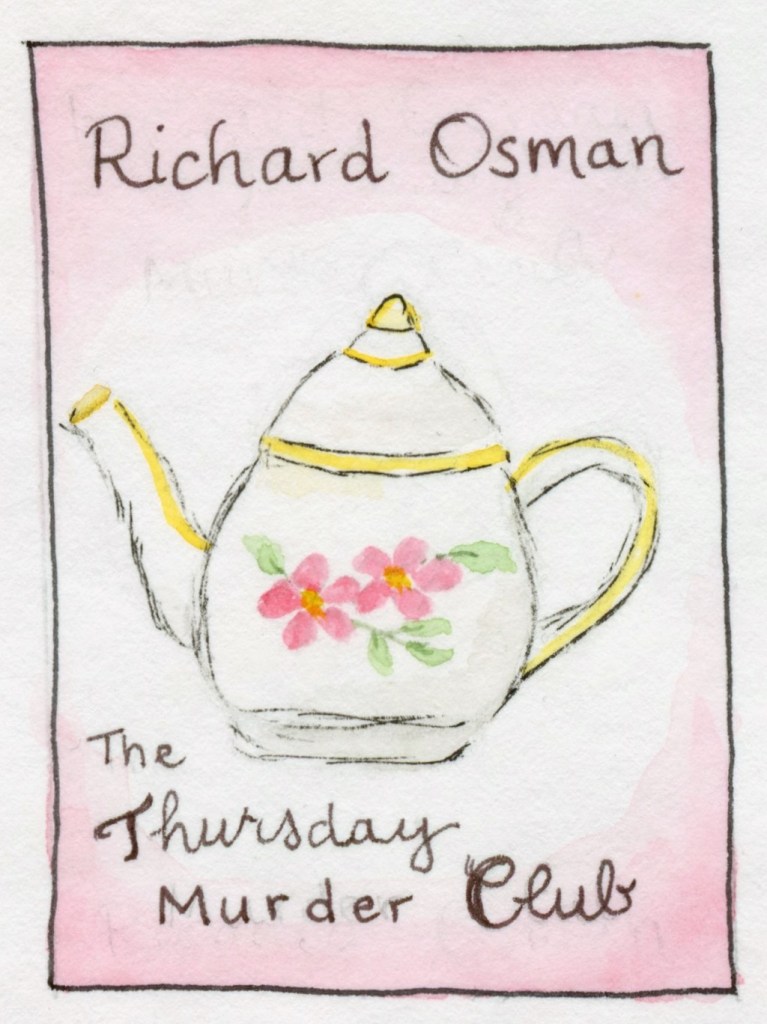
The Thursday Murder Club, by Richard Osman

Published 2020

This book series seems to be having a moment—multiple people told me they were reading it and really enjoyed it. I believe there is a movie in the works to adapt it? So maybe that is why there is some buzz around it right now. 

Joyce, Elizabeth, Ron, and Ibrahim are four residents of Cooper’s Chase, an English retirement community. They are unlikely friends, but the story opens with Joyce being invited to the titular Thursday Murder Club to even out the numbers. The members look at files of unsolved murders to see if they can unravel them. 

Then, of course, a real murder turns up practically on their doorstep and the cold cases are set aside in favor of investigating a fresh murder, with a side of retirement community shenanigans. 

Having protagonists in their 70’s was excellent too: while they are solving the murder, they are also dealing with the pain of losing spouses and friends to dementia and death, the frustration of aging bodies, and the annoyance of being dismissed due to age. How does it feel to know that most of your life is behind you, and how do you make friends when you know that your time is short? When you are acutely aware that your mind and body are not as reliable as they once were, how do you react? 

These questions were integral to the story, and I appreciated that perspective. 

It was a fun mystery without being heavy handed in the description of evil that leads to murder and also without grisly details. The mystery was interesting, the characters fun, and the murder not too grisly. Miss Marple might have fit in with the club, had the story not been set in the present. Fans of Agatha Christie might enjoy this book, and there are currently four books in the series, with a fifth coming out in September. 

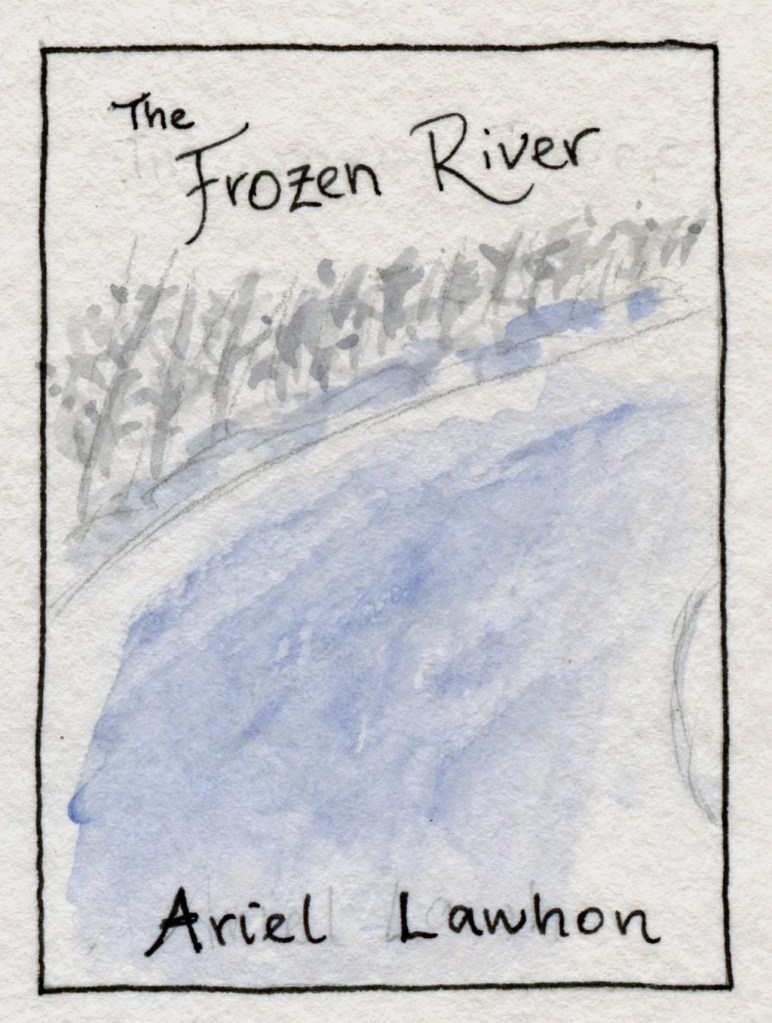
The Frozen River, by Ariel Lawhon

Published 2023

I don’t read a lot of historical fiction, and I heard a recommendation for this book…somewhere…and thought I would give the genre another go. 

The book is set in Maine in 1790-1791 and is from the perspective of Martha Ballard, a local midwife in a small river community. When a man is discovered in the river (which, as the title suggests, is frozen), Martha, as a medical practitioner, is asked to examine the body. She discovers he was murdered and then thrown in the river. 

The man, Joshua Burgess, had also been accused a few months before of participating with a local magistrate in the rape of a minister’s wife, and was generally of doubtful reputation, providing multiple motives for murder. 

Martha attends births, works at unraveling the murder mystery, and attends court hearings as a medical witness on behalf of her friend who was attacked. 

The story itself was interesting, and Lawhon is a good writer, but while it is possible that a midwife in the 18th century had some more progressive views on the role of women in family and society, Martha’s perspective felt a bit more like a 21st century woman who traveled back in time to the 18th century. 

I think this is why most historical fiction is not for me: the historical details are interesting, and I appreciate the attempt to make the past come alive, but it is exceedingly difficult for a modern author to take the attitudes of the time on their own terms. This is not to say a modern author cannot comment or show outdated or immoral ideas as outdated or wrong, but the protagonist here really felt out of step with the community. 

This is why I prefer historical fiction with a sci-fi framing: if a modern person travels back in time to observe a previous era, it is completely plausible that they would be horrified by some of the attitudes and prejudices. 

Of course there have been people who were “ahead of their time” in some way, and it is possible that the historical Martha Ballard on whose diary the book is based had some progressive views. However, some of the perspectives rang slightly false to me personally.

I still wanted to find out what happened, and I didn’t hate the book, I just think that historical fiction might not be for me. 

Content warning: fairly explicit description of rape. 

The Tomb of Dragons, by Katherine Addison

Published 2025

This is the third installment of a fantasy series (which itself is a spin-off of another book–kind of a nesting doll situation) about a man who is a witness for the dead (he can communicate with the recently deceased). He is also someone who can patiently unravel a difficult situation, likely because he is not easily put off by social discomfort, in a society which is extremely concerned with politeness and protocol. 

Thara Celehar is a prickly prelate who has managed, despite his expectations, to make friends in the city of Amalo where he was sent (two books ago). Although he is experiencing a career crisis (the details of which would be a spoiler for the end of the previous book, The Grief of Stones), he continues to show up and do the tasks set before him by his superior. 

Celehar’s adventures do lead him to the titular tomb where he agrees to witness for the ghost of a dragon, but he also has other tasks such as: figuring out how to get a new coat which he can barely afford, drinking tea with his friends, acquiring a bodyguard to protect against assassination attempts, and prodding another religious administrator to do his job and clean up a paperwork nightmare. 

All the while he is grappling with his unhappy past and his friends try to encourage him that he is actually worth befriending and that they truly enjoy his company, which he finally starts to believe. 

The world building in these books is amazing: I love a complex societal structure with rich details (since the characters are elves and goblins, they have long ears that express emotion, for example). 

While Celehar does have missions and adventures, these are not really the main point: it is more about how he deals with his past hurts, and how his friends humanize him, and vice versa. The way Thara learns to move forward and live again, even though his job is to speak for the dead, is a major theme. 

I have mixed feelings about the ending—it certainly leaves the door open for future books, but changes how things stand in a way that I am not sure I love. But I do enjoy this world and the character, so I am open to reading future books if the author decides to return. This ending could also possibly close the end of this character arc and allow the author to move on to other people in the same world, so she left her options open. 

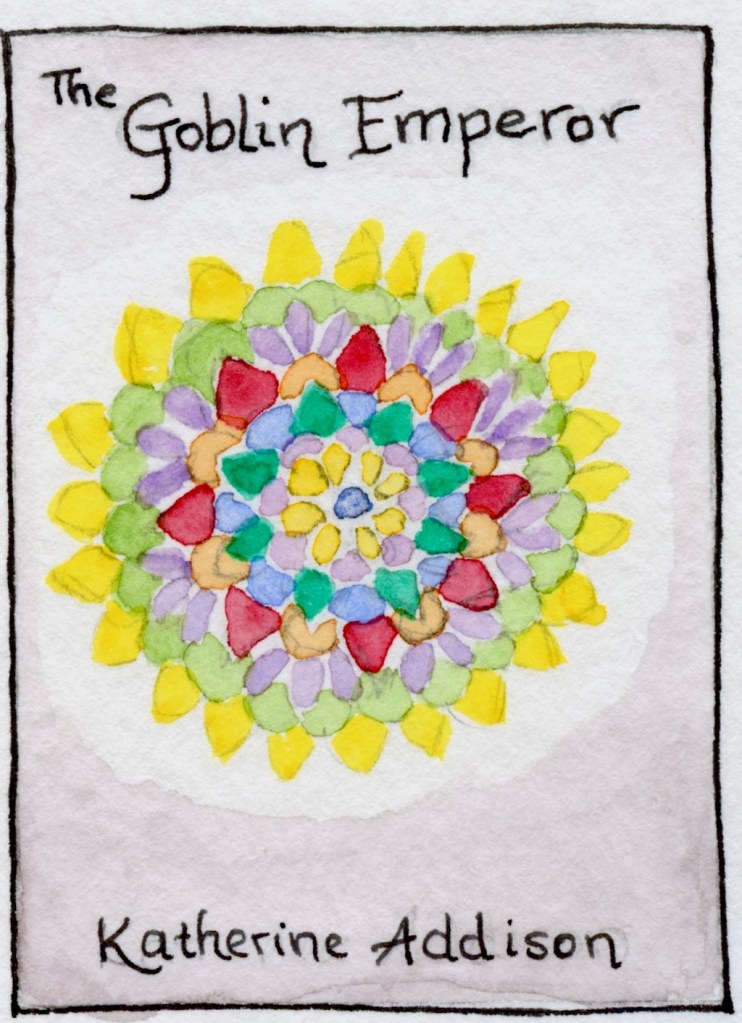
The Goblin Emperor, by Katherine Addison

Published 2014

I enjoyed The Tomb of Dragons so much I decided to go back and read the book that started it all. I listened to this audio book while I painted our guest room, so I blew through it in several days. 

As I said above, I love a complex social structure with court intrigue, and this is also a fish-out-of-water story, which is helpful in introducing a complicated world. 

Maia is the fourth and youngest son of the Emperor of the Elflands. His mother died when he was a child, and Maia has been raised in exile by a distant cousin who was banished from court and who takes out his frustration on the boy. 

A messenger arrives, and Maia is whisked off to the palace as the only surviving son and heir to the throne. 

From learning about how the government functions and the dizzying intrigues of court politics, Maia will have to fall back on his own judgment and figure out who is loyal and who might be plotting against him, assuming him to be an ignorant lout (partially a stereotype because Maia’s mother was a goblin, and therefore considered inferior to the lighter-skinned elves). 

Maia makes friends and enemies, good decisions and foolish ones, and must come to terms with what it means to be Emperor: he is both alone and also never alone. As Emperor, Maia has a lot of power, and he is self-reflective enough to know that this power could be corrosive. It is also strong and fragile, as all power is: he knows if he pushes too far, he could lose it, but if he plays it too safe, important work for the less fortunate will not happen. Being the Emperor is both a privilege and a responsibility, and those themes are explored without feeling like they hit you on the head.

A lot happens in this book (assassination attempts, audiences with any number of petitioners wanting something from the emperor, details about setting up a household, and many many names and aristocratic titles) and the steampunk details are fun. 

While I would gladly read more about Maia’s adventures as Emperor, the book ends on a satisfying note and so far the other books set in this world are about a side character (though we do get a glimpse of Maia in The Tomb of Dragons, which is so fun). I do like a book that sticks the landing, and this one does.

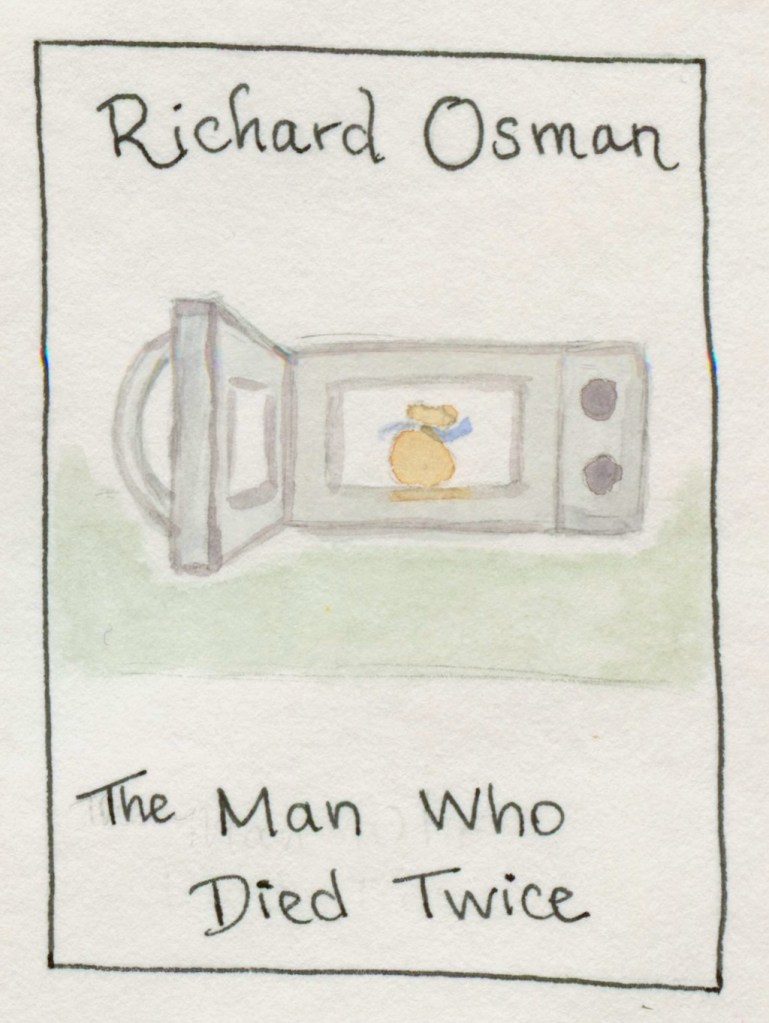
The Man Who Died Twice, by Richard Osman

Published 2021

This is the second book in the Thursday Murder Club series, and it was also delightful. Elizabeth, Ron, Ibrahim, and Joyce and back for another adventure. 

Elizabeth’s ex-husband, Douglas, was also in MI5 and returns to her life as a man in hiding due to stealing some diamonds from a black market “banker.” But did he actually steal the diamonds? Is his life really in danger (all signs point to yes, but Douglas is not exactly truthful). Can our geriatric heroes extricate themselves from more sticky situations? Especially when Ibrahim is mugged by some teenage delinquents and is not at the top of his game. 

Blending mystery, friendship, and the indignities of aging in a humorous way, Osman’s books are entertaining with poignant moments of reflection on the difficulties of getting older. When mind and body are no longer going to be in better shape even with mental and physical exercise as the body slowly breaks down, it creates an urgency and clarity that is refreshing in some ways. 

The mystery is again entertaining, the characters endearing, and it’s just a fun ride.

Books Read in February 2025

I’ve been putting off publishing this because I started painting the upstairs walls (and ceilings and doors and trim) and did not have an office space to paint my little book covers. However, it is now mid-April, and really it’s best to just move forward and return to cute little book covers later. Sorry, February! But here is what I read:

The Two Towers, by J.R.R. Tolkien

Tolkien’s story of an epic quest to rid Middle Earth of an evil via a magic ring continues in The Two Towers. 

The fellowship of nine companions who set out to destroy the ring of power have been scattered, and the first half of the book follows most of our heroes as they cover new ground and the second half follows the other two as they continue the journey to the land of Mordor and the volcano where the ring can be destroyed. 

The second installment of a series often expands the world, introduces new characters, and splits up the party to follow various side quests.

Tolkien split his story into 6 sub-books, and I had forgotten that the entirety of “book three” (the first half of The Two Towers) is about the rest of the fellowship and the entirety of “book four” is about Frodo and Sam. I wish Tolkien had organized the book to interweave the two stories a bit more, as there’s a lot of excitement (and a battle!) in the first half, and then the action nearly grinds to a halt as we follow the two hobbits’ slow journey in the second half. One almost forgets all the activity as the journey to Mordor creeps onward. 

I do think the slowness of the journey to Mordor highlights its difficulty; the brutal terrain, the enemies all around, and the burden of the ring growing. It is effective in communicating that doing what is right is often difficult, tedious, and part of Frodo’s heroism is continuing even when he thinks the chance of success grows smaller every day. 

While I would have suggested interweaving the stories a bit more so we didn’t forget about one half of the adventure while following the other, Tolkien is still a good storyteller and the world he created becomes more incredible as the view of it expands. I love meeting new characters (one of whom is female—hooray). 

As with The Fellowship of the Ring, I listened to Andy Serkis’s narration of the audiobook, and I have no idea how he kept all the different character voices straight, but his commitment to the book was impressive and entertaining. 

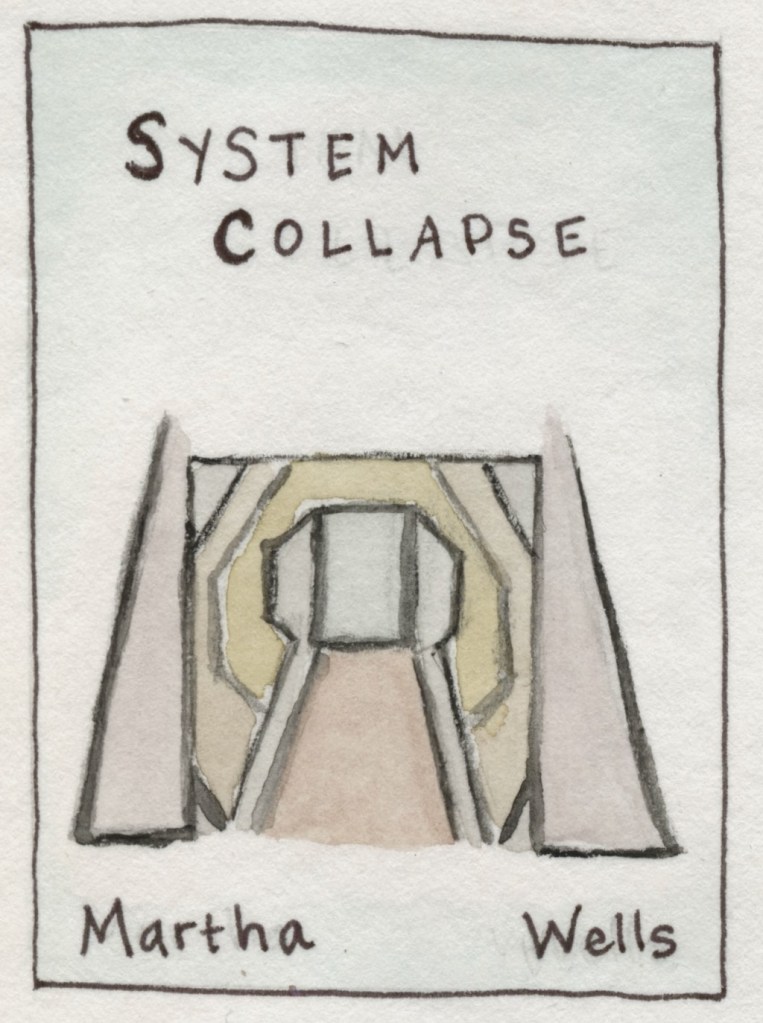
System Collapse, by Martha Wells

Murderbot returns for more adventures! 

It is difficult to write reviews for subsequent books in a series due to spoilers for previous books, and also just the difficulty in dropping someone in when an adventure is seven books deep. 

The Murderbot Diaries series follows a cyborg Security Unit that has hacked its governor module (which compelled it to follow orders) and has gone rogue. The SecUnit has christened itself “Murderbot” and is trying to figure itself out over the course of the series. 

This installment picks up immediately following the last adventure, so it is helpful to refresh one’s memory about recent events via a Wikipedia entry of plot summaries if one has forgotten exactly what happened last. 

Murderbot is snarky, and swings between being extremely concerned about the safety of its adopted humans and wanting to be left online to watch tv. Relatable. In each adventure Murderbot is also learning more about itself and also reluctantly forming relationships with some kind humans and another snarky bot, ART (who is a transport ship—don’t think too hard about how that works). 

There’s a lot of plot and action, and most of the books are novellas, but the threads of self-discovery and growth that run throughout are really charming. I enjoy plot-heavy books, so I enjoy the action in these, but I also want characters to learn and grow over time, and Murderbot does grow through its experiences and is changed by interactions with others. Wanting to just sit around and watch tv but instead going out and forming relationships, caring for others in the best way it knows how (calculating the probability of everything falling apart and its humans reaching untimely ends unless Murderbot intervenes) is actually quite lovely. 

While there is one full-length novel in the series, I really think these stories work better as novellas, and was pleased to see this return to form. 

The Return of the King, by J.R.R. Tolkien

Tolkien’s epic fantasy trilogy comes to a conclusion at last! 

Once again, the first part of the book is devoted to Aragorn & co. and the second part follows Frodo and Sam on the final stage of their journey through Mordor to rid the world of Sauron’s evil ring which holds his power and keeps his malice alive.

Eventually the two stories converge, but the two journeys are mostly separate once again. 

Tolkien’s descriptions of the natural world are beautiful (or depressing, when he describes what evil characters do to nature when they have power over it; you know a character is evil if he cuts down trees for no reason). The descriptions at the end of rebuilding, with planting trees, an abundant harvest and the births of many children as signs of renewal and restoration, peace and plenty, are so lovely. 

Some people have complained that the denouement goes on too long, but I love that the members of the fellowship take their time disbanding after their time together, and I enjoyed the chapter The Scouring of the Shire about how evil can spread even to places we once thought “safe.” Also, it’s one final adventure for our hobbits on their own, and it shows how much they have learned and grown from their adventures in the wider world. 

The ending is bittersweet and hopeful—a reminder that journeys and wars leave scars, but also that there is healing and leaving a place better than you found it is a worthy goal, whether or not you personally get to enjoy the peace and prosperity. 

It has been such a delight revisiting Middle Earth! There are so many great characters, a beautiful world, and resonant themes that it is no wonder this trilogy is a fantasy classic and has inspired so many people to follow in Tolkien’s footsteps.

“There, peeping among the cloud-wrack above a dark tor high up in the mountains, Sam saw a white star twinkle for a while. The beauty of it smote his heart, as he looked up out of the forsaken land, and hope returned to him. For like a shaft, clear and cold, the thought pierced him that in the end the Shadow was only a small and passing thing: there was light and high beauty for ever beyond its reach.” 

2024 Reading Year In Review

Welcome to 2025. 2024 was a difficult year for me personally. My work-life was challenging, I was (and still am) studying for the Certified Financial Planner certification, and there were some other difficult things going on that I’m not going to get into here. 

My reading-for-pleasure life was pretty minimal last year as a result. I did read some good books, and in the fall I read a lot of Agatha Christie, which was lovely and about all I could handle between studying, working, and trying to occasionally hang out with people. 

I did read a lot of words last year, but most of them were for class. Outside of class, I read 23 books last year. 

Top 3 books from 2024: 

“The Kingdom, the Power, and the Glory,” by Tim Alberta. A fascinating look at where and how white evangelicals got to the place they are politically. Alberta is a Christian and a journalist, so he has an interesting perspective. He is pretty clear that he thinks many Christians have exchanged their values for political power. This is nothing new (“Again, the devil took him to a very high mountain and showed him all the kingdoms of the world and their splendor. ‘All this I will give you,’ he said, ‘if you will bow down and worship me.’” -Matthew 4:8-9), it’s just the most recent iteration of this temptation. 

“Ghosted,” by Nancy French. A memoir of someone who has survived a tough life so far, and someone who got on the “wrong side” of right-wing American politics and has seen how vicious it can be. Clearly, this has been a reading theme over the past few years. French is a good writer and great story-teller, and I couldn’t put this down. 

“Middlemarch,” by George Eliot. This book deserves its place in the canon of great works of literature in the English language. It is about life in 19th century England in a small town, full of normal people living their normal lives, but also giving such interior descriptions that you recognize the hopes, fears, actions, inactions of the characters. At its core it looks at three relationships, and peels back layers to see the ways people misunderstand one another and how a good marriage can help you succeed as a human (which may or may not impact you financially, but certainly impacts you morally) and a bad marriage can ruin your life. 

This year, I am still studying, but I’m hoping that I will pass the exam in July and then be free from the burden of study for a while. That should give me some more space to read other things! 

50 Classics in 5 Years Recap and Next Challenge

Greetings, internet! The date of my last entry tells me I have neglected this space for two years. It feels like a garden I have not tended where the grass and clover has overtaken the flower beds, and the whole thing looks a little sad and shabby. So it’s time to clear out some of the weeds, till the soil, and begin again.

In the summer of 2018 I discovered The Classics Club community, which encourages members (membership is quite loose) to read more classics by imposing the structure–a challenge–of reading 50 classics in 5 years. I wanted to include more classics in my reading life, and thought this sounded like a great idea. In August of 2018, I set out to read many classics (to accomplish this in 5 years requires completing 0.833% of a book every month, so a pretty steady pace).

All was going well. And then it was 2020 and all was not going well.

I think it is worthwhile to set goals and read classics. Having a challenge and a list is helpful, especially when a book is finished and it is time to pick up another one. Having a list narrows the choices, which I appreciate.

In reflecting back over my previous challenge, I identified a few things that I might change:

First, I tried to “one up” myself and increase the difficulty by choosing too many long books, and by choosing several sets of multiple books and counting them as one. I modified my list over time and took out some of these books (for example, Kristin Lavransdatter is actually a trilogy. Just because I own an omnibus edition does not mean I have to count it as one!). I am not being graded, nor will I get extra credit for doing more. There’s no need to make this challenge more difficult than it is.

Second, I started this challenge in 2018 and had no idea what the next few years would bring. I did not have the same attention span in 2020 and the couple years after that or the mental space for more challenging reading during the pandemic years.

My first plan to mitigate this was to give myself an extension to 2024, but I was already far behind and 2023 has been difficult for my reading life.

Instead, it is time to close the book on the first 50 Classics Challenge (pun absolutely intended), and start afresh. I hope that the next five years will be a bit better for my reading life, though who knows what lies in store.

This time, I want to be a little kinder to myself and choose some shorter books alongside the classic doorstop novels. I will, of course, choose some unread books from my previous challenge, but include some new titles and not keep everything from my last effort. I will also count books in a series or trilogy as one book each, instead of counting three books as one, etc.

I’m going to go from October 2023 to October 2028, instead of choosing the calendar year, because there are enough things that follow the calendar year, and I want to start while I’m excited for a new project and have a little momentum to start me out on this next adventure.

My list for Round 2 of the challenge is here: https://austinfey.com/50-classics-2/

Of course, I will not be reading only classics. Newer books will make their way onto my list, and I’ll have to decide if I want to review books read in a month or review books as I read them. We shall see. Books read for this challenge will get their own review posts, as usual.

I hope that your reading life is going well and I look forward to rehabilitating my own.

Image from Sergiu Valenas via Unsplash.