Books Read in October 2025

Gaudy Night, by Dorothy Sayers 

Published 1935

This is one of my all-time favorites, so it’s difficult to review it and not just encourage you to read it! 

Ostensibly a Lord Peter Wimsey mystery, this book is written primarily from another character, Harriet Vane’s, point of view, and she is really the main character for a change. While the is a mystery (and Lord Peter gets to the bottom of it), this book is more interested in exploring human relationships and vocations. 

Harriet Vane agrees to attend a gaudy (a reunion weekend, for those of us not part of the British education system) at her (fictional) Oxford college, Shrewsbury, one of the first women’s colleges at Oxford. She discovers that someone is sending poison pen letters and occasionally destroying college property and generally making an embarrassing mess that the college is trying to shield from view by handling internally. Harriet’s old college friends ask her to investigate, fearing that calling in the police would reflect negatively on the project of educating women, already precarious. 

Harriet temporarily relocates to Shrewsbury College, enjoying the peace and quiet of working in an academic atmosphere, and contemplates her writing and her life generally. This opportunity to reflect on the work she feels called and gifted to do, versus doing work that may be noble but she doesn’t feel is “hers” to do. It also gives her an opportunity to reflect on her relationship with Lord Peter and the way she is both attracted to and afraid of the idea of marriage. 

After a failed relationship and a murder trial, she was naturally skittish about Lord Peter’s proposal, but as time as passed, she feels differently. 

The poison pen letters and her conversations with the single and married women around the college make her think about her feelings about romantic attachments. It is especially tricky for intellectual women, as expectations about how marriage should be and expectations about women’s roles complicate the question. 

While things have changed to some extent (female professors and professionals are not expected to be single now), questions of “the role of women” or “a woman’s place” and a suspicion in some quarters of women in intellectual and/or authoritative spaces are still contested, and figuring out a marriage of equals is still fraught today. 

Birds of a Feather, by Jacquline Winspear

Published 2004

This is the second in the Maisie Dobbs mystery series. I enjoyed the historical setting (set in London after World War I; Maisie was a nurse in the war), and the books definitely fit in the “cozy without being ridiculous” side of the mystery genre. 

In this installment, Maisie has an office and an assistant, Billy. Maisie is called in my a wealthy businessman to find his adult daughter, who has disappeared. As the case unfolds, Maisie begins to suspect that the disappearance is related to the murders of several women—and the girl who vanished knew them all. 

Maisie presents herself as a “psychologist and investigator,” and she often tries to imagine herself in the place of a person she investigates or works for. It’s sort of “I’m really great at picking up vibes,” and these hunches are taken as accurate. It reminds me of Sherlock Holmes, except she’s supposed to “read the room” instead of being hyper-observant and making deductive leaps like Holmes. If that bothers you, move along, but if the occasional psychological reading doesn’t bother you, carry on. 

The mystery is interesting, but also interesting was the setting and I appreciated the depiction of life after a devastating war that left society dealing collectively and individually with many losses and the trauma attached to a post-war era. 

Maisie herself started as a maid to a wealthy family who saw her potential and had her educated, so the slightly fluid social environment is also interesting (if slightly unbelievable). 

I enjoyed the characters and the mystery and recommend it for fans of the cozy mystery genre who don’t want explicit details but want a satisfying ending. 

Enshittification, by Cory Doctorow

Published 2025

While the title of this book is, ahem, colorful, the concept is one that makes sense. You may have come across this term if you’ve read any of Doctorow’s essays or read other critiques of the way the internet (particularly social media) seems to work now.

Doctorow points out that most of us are unhappy with the way we experience using internet platforms and technology, and it is spreading out into our “real” (offline) lives too. 

He describes the enshittification process of some of the biggest name social media/ tech companies as this: 

  1. “First, platforms are good to their users
  2. “Then they abuse their users to make things better for their business customers
  3. “Next, they abuse those business customers to claw back all the value for themselves
  4. “Finally, they have become a giant pile of shit.”

Doctorow explores these phases by looking at Facebook, Amazon, Twitter, the iPhone, and I’m sure you can think of other platforms and services that you once enjoyed but now grudgingly use because they reached Stage 4 of this process. 

It’s not just things on the internet: it is also many companies that go through this process, or companies that are acquired by big companies or venture capital that make programs, platforms, and services worse (this extends to restaurants as well; the problem is pernicious). 

After diagnosing the problem, laying out the ways that the death of competition and regulation have accelerated the problem, Doctorow does give some ideas for a way out of our rest seeking and techno-feudalist problem. His four forces pushing against enshittification are: 

  1. Competition (real competition, not just buying your opponent)
  2. Regulation (tech especially as avoided antitrust laws because the sector is new, complex, and evolving and regulators are slow and the average age of our legislators is…high)
  3. Interoperability (allowing repairs by third parties and allowing things to work with other things—for example, this would mean Apple devices allowing non-Apple third parties to repair phones without voiding warranty, etc.) 
  4. Tech worker power (I think this could be expanded to other industries; America has a terrible recent track record with unions, which I think is a huge problem. When the bosses are the only ones with power, we’re in trouble)

Doctorow says there are reasons to hope, all is not lost, and we can work together to raise awareness and demand change so the internet—and other real-life companies—must take notice. 

Various other countries are also passing regulations that gradually are trying to reign in tech companies. The Biden administration was unpopular with tech in part because Lina Khan (I’m a big fan) and others stood up to them. 

My personal theory about why so many younger people are so down on “capitalism” is that what we are living through right now is not strictly speaking, capitalism. Ostensibly, yes, but really it’s more of a techno-feudal society that has sprung up under the guise of capitalism. This is not to say that I think unfettered capitalism is great, but I think our economic structure right now has shifted quietly (see page 194 and following in the book for more details). 

I have so many thoughts on this book, and I think it is an incredibly helpful frame for considering why we have a lot of discontent about our lives and feel uneasily that they have gotten worse/ harder despite having access to so much. 

While we do have access to quantity, the quality has gone down and we feel trapped in systems and using products where true competition and customer protection have been sidelined for years, allowing greed and anti-competition to win the day. 

I would love to be part of the movement that unsticks us from the current enshittifying trajectory! Surely we can find a peaceful way to take our power back and move into a new era of small business innovation and freedom. 
Books Read in September 2025, Part 1

Sorry for the delay getting this out. My scanner was not cooperating, and then I got busy, time passed, and it’s November already! But here are the first two books I read in September, which was an interesting reading month.

Parliamentary America, by Maxwell Stearns 

Published 2024

As a constitutional law professor, Stearns thinks that we are living through a third constitutional crisis (the first when the constitution was written, the second after the Civil War), a crisis that calls for action to repair our democracy and update our founding document for the challenges we face now. 

After laying out the problems of our two party system, especially legislative gridlock and a presidential office which has consolidated power, he takes us on a world tour to examine other forms of democratic governance. Stearns notes that many (most?) of their governments are organized as parliaments with a prime minister and/or president, not like our two houses of congress with a president (even when we have exported democracy, other countries are choosing parliaments instead of our system, which is telling).

Then Stearns proposes three constitutional amendments which would transform our system into a parliamentary system, which he believes would serve us better as a form of government, while still keeping most of the rest of our founding document in place. 

  1. Expand the House of Representatives (to about double its current size), which would mean that each representative would have fewer constituents than they currently have. 
  2. The majority party or parties would select the President (similar to the way that the majority party in, for example, the UK, selects their Prime Minister). 
  3. Give the House the power for a “vote of no confidence” to remove a President who fails to perform their duties (the bar is “maladministration,” which might allow for removal; our current impeachment method clearly is not working; the bar is set too high). 

Is amending our Constitution to transform into a more Parliamentary form of government radical? Yes, but also, as Stearns takes us through the world tour of democracies, he notes that pretty much all other democratic nations have some sort of Parliament.

I would love to see some dramatic reform like this, though how feasible it is is anyone’s guess. 

Our current system, however, is failing us. Stearns says (and I agree with him) that our current system has locked us into having only two parties, and those parties tend to pull to the extremes. We’re also in an era of extreme Presidential power. Power has been consolidated to the Executive branch at the expense of the other branches of government (and, I think, at the expense of the American people). 

Stearns says the political unhappiness of many Americans is feeling unrepresented in Congress, and as we are seeing in Trump’s second term, Congressional Republicans have ceded much (most?) of their independence to Trump anyway. Stearns posits that many Americans have more moderate political views, and that a multi-party Parliamentary system would allow more viewpoints to be represented, and would also allow coalition-building and incentivize moderation and compromise to get things done in government. 

I agree that his system sounds much more functional, but what I don’t know is if we have the political will to push dramatic changes through. Our government is currently being dismantled as quickly as the Trump administration is able to do so, which may give us an opportunity to rebuild something different (assuming we make it to the other side of this administration with our democracy intact). However, I think it will take some real political leadership and a strong push to make something like this happen. I am very interested in the idea of Constitutional reform, and I would love to have more viable parties to represent political interests (two parties are clearly insufficient for the task with a population of ~340 million). 

I have so many more thoughts on this and our current political situation, but those probably belong in a separate essay. For the purposes of this review, I think the ideas are interesting, I like that someone is out there with some bold suggestions for how we move forward out of our current malaise and the death spiral we currently seem to be locked in, and I hope that this sparks conversations and actual action to move us forward as a functioning 21st century country. One of my biggest complaints is that we have real issues to address and clearly a government that is not interested in addressing most of them. Our current Congress seems mostly uninterested in governing, and even if you think that government should mostly leave people alone, I think that most of us could find some agreement on a few issues where government is what we need to address some collective issues. Our current leaders mostly do not seem interested in tackling issues like adults, and I really want some adult people to work together to help us move forward. I’d love to talk about this book or other ideas! If you have read it, I’d love to hear your thoughts! 

The Sittaford Mystery, by Agatha Christie 

Published 1931 

Apparently this was originally published with the title “The Murder at Hazlemoor,” and I am really not sure why it was changed. Either title sounds equally interesting to me personally, but I’m also not a 1930’s publishing house. 

This is another Christie novel without including one of her best-known detectives. It is a standalone and I don’t believe any of the characters show up in other books. 

Mrs. Willet and her daughter Violet are renting a large country house in the winter (which everyone finds odd), and one evening they host a séance in which a “spirit” tells them that their landlord, Captain Trevelyan is dead. 

One of the Captain’s old friends, Major Burnaby, is alarmed and says he will go on foot (the roads being impassible due to snow) to check on his friend. He discovers (of course) that the Captain has been murdered! 

A police Inspector Narracot investigates the crime, and a young and extremely capable young lady, Emily Trefusis, also investigates on behalf of her fiancé, a nephew of the murdered man (an heir and a suspect). 

While I did not particularly enjoy the last standalone Christie I read (The Man in the Brown Suit), this is a more straightforward mystery which I did enjoy. There are the usual red herrings, people behaving suspiciously, people suspecting and trying to shield one another from suspicion (and therefore being stupid), and a clever murderer who was not quite as clever as our detectives. 

This makes the book sound formulaic, and in some ways it is, but I enjoyed it as a classic Christie novel that is fun and a worthwhile read.

Books Read in August 2025, part 1

The Man in the Brown Suit, by Agatha Christie

Published 1924

Anne Beddingfield is at a loose end after the death of her father, an impecunious academic. She goes to London to look for work and adventure, and one day witnesses a man’s death at a Tube station (London’s underground train transport system). 

She decides to investigate, and this leads to her taking a cabin on a ship sailing for South Africa to find out more about the man’s death, which she thinks may also be connected to another death in a country house. Shenanigans ensue, of course. 

The spine of this book said it was first in the “Colonel Race” mysteries by Christie, and Colonel Race is a character in this book, but not in the way Poirot or Miss Marple are the main detectives in their stories. Miss Beddingfield is the main character in the book, and it’s a standalone story in which Col. Race appears as a background character. 

I appreciate that Christie was experimenting with style here—after two Poirot mysteries and a Tommy & Tuppence mystery, she moved on to try something else. However, I am not sure this effort at a thriller was completely successful. 

Anne is interesting, but she is attracted to men who are a bit brutal and harsh. She rejects a man who respects and admires her and instead is interested in someone who yells at her and orders her around. This preference was off-putting and I understand why this has not made any “best of” lists. There is a lot of Agatha Christie material out there, and I recommend starting elsewhere (The Murder of Roger Ackroyd, Death on the Nile, And Then There Were None, and The Body in the Library, and Murder on the Orient Express are well known for a reason. I also have a soft spot for Dumb Witness—a cute dog! and Crooked House—if you want to try something not related to Poirot or Marple). 

Remarkably Bright Creatures, by Shelby Van Pelt

Published 2022

Despite opening from the point of view of Marcellus, a Giant Pacific Octopus who lives in an aquarium, this is not a sci fi book. All the other point-of-view characters are humans living normal human lives. 

The primary characters are Tova, a lonely older woman who cleans the aquarium and befriends Marcellus, and Cameron, a young man who can’t seem to hold a steady job and who is searching for his identity and some stability to escape his troubled past. 

Tova is considering retiring and moving to a retirement home as she has no one to care for her as she ages—she’s a widow whose only son tragically died many years ago when he was just eighteen. She is so focused on her lack of biological family that she overlooks the people already in her life. 

Cameron also thinks of his past as his destiny. His drug-addicted mother left him with his aunt and never told him who his father was. Cameron finds his father’s class ring and goes to search for someone to tell him who he is. 

Of course, eventually Tova and Cameron meet at the aquarium, and Marcellus helps them realize that their pasts may hold tragedy, but they can move forward together. 

While I occasionally wanted to shake some sense into the characters (especially Cameron), this was a sweet book about connection and identity and I enjoyed it. 

Books Read in July 2025, Part 2

Return of the Thief, by Megan Whalen Turner

Published 2020

My book logs tell me that I discovered this series in 2022 and I enjoyed them, but somehow I had missed reading the last installment. Wanting a tale of adventure with a clever plot twist, I returned to the series finale, and was not disappointed. 

The Queen’s Thief Series (6 books) is about the political machinations of several small fantasy-Greece-esque countries on a peninsula who are trying to maintain their own sovereignty in the face of larger mainland forces who want to conquer them for their emperor’s own enrichment. 

Each book follows a specific point of view character, and in this case it is Pheris, the disabled grandson of an influential baron. Pheris is sent to represent his family at court by his grandfather, under the assumption that the king will send him back to be disposed of. However, the king (used to being underestimated himself) decides to keep Pheris as an attendant, realizing that his physical disabilities have nothing to do with his mental capabilities. Pheris is clever and observant, and it is interesting to see the story unfold from his perspective. 

With the final book in a series, you’re always hoping that the author sticks the landing, because it could either bring the story to a satisfying conclusion or be a stumble that taints the entire project. In this case, I am happy to say that I liked the ending, and I enjoyed this visit with familiar and new characters. 

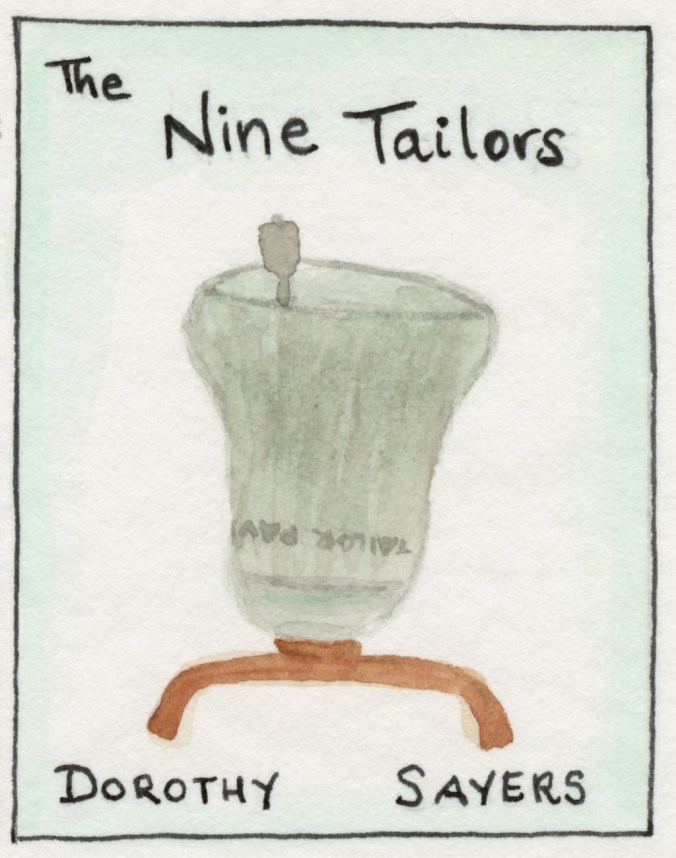
The Nine Tailors, by Dorothy Sayers

Published 1934

A couple books after Lord Peter’s railway timetable adventures comes Lord Peter’s church-bell-ringing adventure. 

After really enjoying “Have His Carcase” and “Murder Must Advertise,” I have to say that this is not a favorite installment of Sayers’ mysteries. This one has a lot of information about English bell-ringing, which is a bit abstruse. Thankfully even if I didn’t follow everything that was happening with the bells, the rest of the mystery to discover the identity of an extra body found in a grave and who the killer might be was easier to follow. 

Lord Peter and his faithful valet Bunter are smart as ever, and there were still things to enjoy, even if I found the bell ringing descriptions confusing and sometimes a little tedious. I didn’t race through this one like I did the previous book, but it was still fine enough that I wanted to see what happened at the end. 

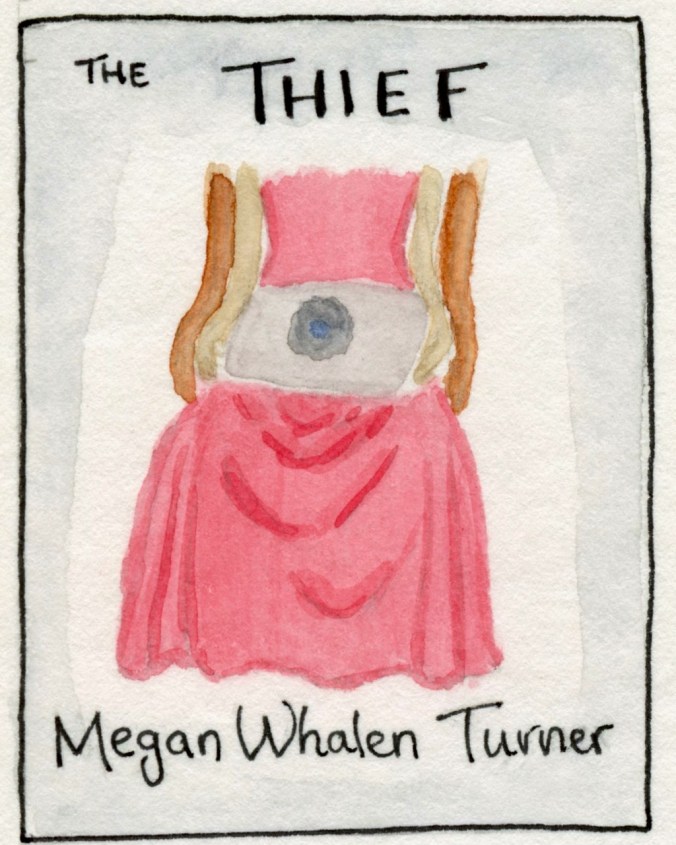
The Thief, by Megan Whalen Turner

Published 1996

After reading the conclusion of the series, I went back and re-read the first installment. The point of view character in this story is Gen, a thief who has stolen a ring from the king of Sounis, boasted of his skill, and been locked in the king’s prison as a result. One day he is freed by the king’s magus and brought on an adventure because the king requires his skills to steal something else. 

This is an adventure story that starts slowly as Gen and his companions start their journey toward whatever it is that Gen is supposed to steal for the king. About halfway through the book though, things start really happening, and the pace and the stakes keep ratcheting up to a twist and a satisfying conclusion. 

I don’t want to say too much, as part of what I enjoyed about this book was the journey and the surprises. This is an engaging story with likable characters, and I enjoy Greek-myth-adjacent stories (technically this is a fantasy world, not ancient Greece, but… these people are pretty clearly Greek). 

It was interesting to re-read after knowing what happens and where the series goes after this book. Each subsequent book deepens the characters and the political machinations that are only barely touched in this first story. A fine beginning to a YA series I enjoyed (it is a Newberry Honor book, so clearly others have enjoyed it as well). 

Books Read in July 2025, Part 1

Murder Must Advertise, by Dorothy Sayers

Published 1933

In this installment, Lord Peter goes undercover as an employee at a London Advertising Agency. One of the agency’s employees has fallen down a stairwell to his death, and the man in charge is not sure if it was accidental or not. Lord Peter quickly discovers that there is a link between the firm and a drug dealing operation and must use his wits and his working-class man disguise to get to the bottom of the murder and the drug ring. 

The agency had strong Mad Men vibes; just change the time period to the early 1930’s with slightly less alcohol (slightly). The office culture feels creative and chaotic, with different departments getting in each other’s way and with the petty rivalries that accompany most office dramas. 

It’s a different setting for Lord Peter, which was a nice change of pace, and I enjoyed this installment more than the previous Scottish artist installment. 

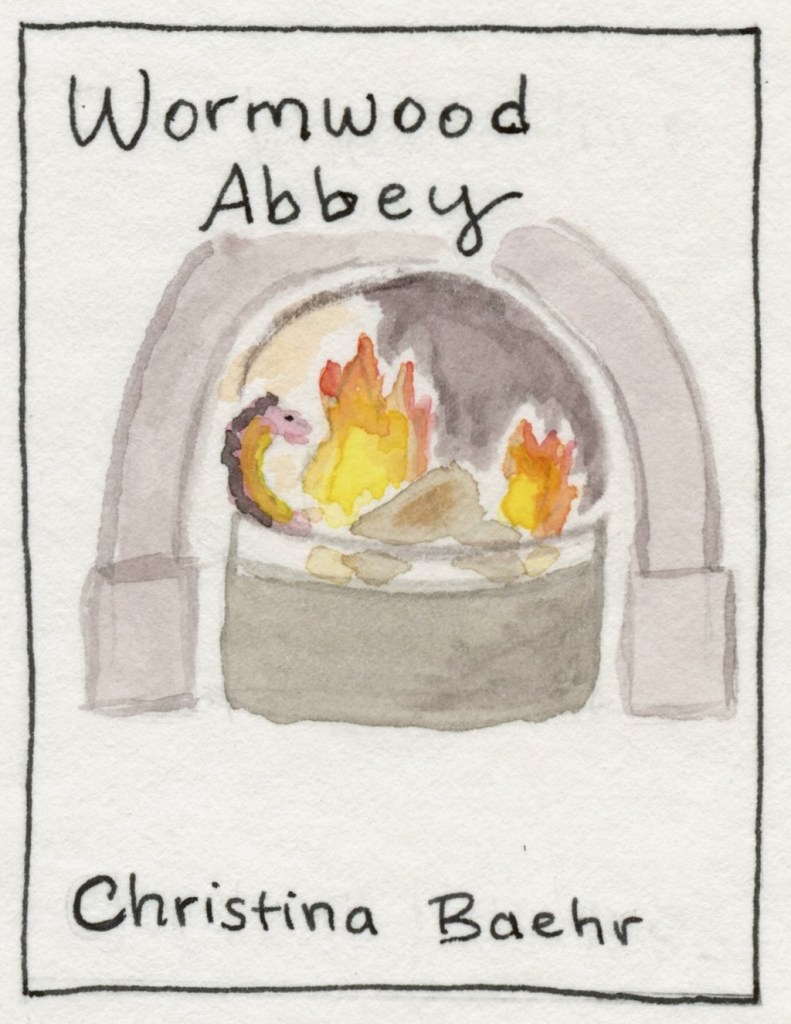
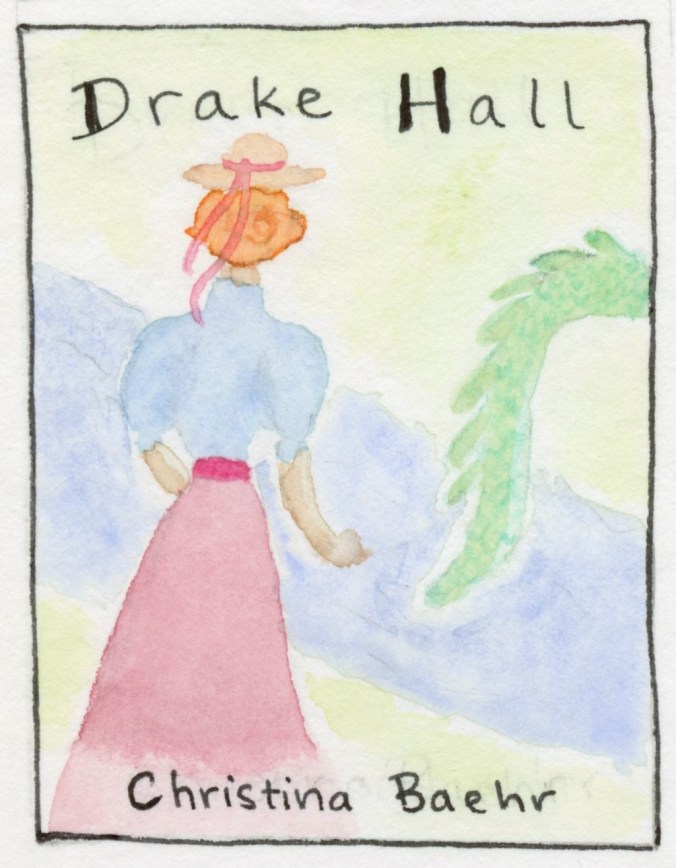
Wormwood Abbey and Drake Hall, by Christina Baehr

Published 2023, 2024

My Mom recommended this YA series “The Secrets of Ormdale” as a“wind down before bed when you’re stressed out from studying” read, and they definitely worked for that purpose! 

Edith Worms and her family relocate to her father’s ancestral home in northern England when his brother and nephew are killed and he inherits the estate (it’s 1899 and therefore preposterous to think that her female cousin might inherit). 

The house and her cousin are somewhat dark and dour, clearly hiding secrets from Edith and her family. The attractive young man from the neighboring estate seems to be in on the secrets as well, and Edith has to unravel what is going on and also why they are so keen to keep these secrets from the outside world. There may be dragons involved…. 

I would describe these (and the author similarly describes them) as “cozy, light gothic vibes” books (do not fear: tea is served at regular intervals). They are fast-paced, appropriate for middle grade readers, and each book is pretty short (there are 5 in the series). Each subsequent book picks up right where the previous book leaves off. These are not earth-shattering, but are entertaining;  Victorian England + dragons is a fun combination, and the author clearly set her book in this time period to give nods to classic 19th century British authors. I am not sure if I will continue the series, but twelve-year-old me probably would have enjoyed them, and while there are some darker topics hinted at, they are handled with a light age-appropriate touch. 

Crying in H Mart, by Michelle Zauner

Published 2021

There are times in our lives that are important milestones for looking back, for contemplating our lives and relationships, and reinterpreting them in light of what we have learned. There are things that are part of me at age 39 that I couldn’t have adequately explained or known at age 29. 

Memoirs are a way of recontextualizing our lives, of telling a story about who we are and how we got there. Here Michelle Zauner explores her complicated relationship with her mother after her mother’s death from cancer. 

It is a way of honoring her mother and her own journey, and a way of trying to tell the truth about who her mother was and work through her emotions and judgments now that her mother is gone. Food was a central way her mother showed her love for her daughter and for the people around her, which is something I love: food is such a central part of being human and the food of one’s childhood is especially powerful. Zauner’s descriptions of Korean food made me immediately want to head to my nearest Korean restaurant and order one of everything, and it also made me think about some of the food of my childhood and the meals my family ate that are such a part of me—food can be a time travel device to memories and cooking can be therapy. 

I enjoy learning about people and about food, so this was in a great intersection for me. It is also about reflecting on the death of a parent, so just know going in that it will be both mouth-watering and also tear-inducing. Kind of like life. 

My husband pointed out that while I have read multiple memoirs over the past few years, they are all memoirs written by women. Maybe I need to expand my memoir range–if you have any suggestions written by men, I am open to those! Especially if they have descriptions of food.