The Thursday Murder Club, by Richard Osman
Published 2020
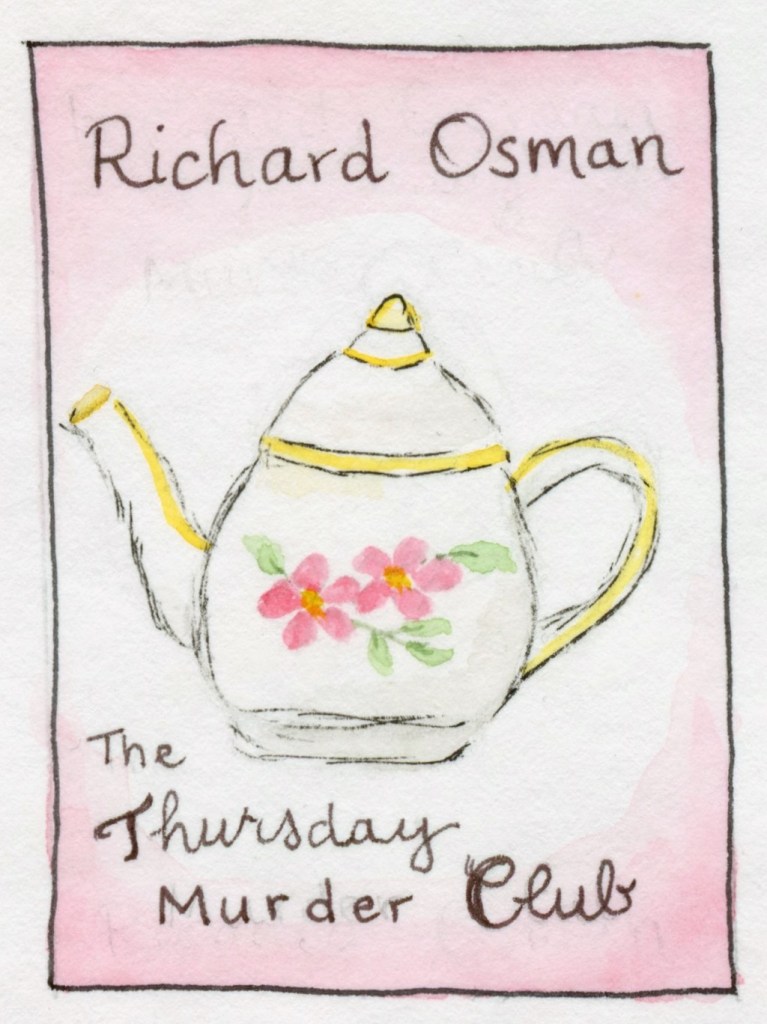
This book series seems to be having a moment—multiple people told me they were reading it and really enjoyed it. I believe there is a movie in the works to adapt it? So maybe that is why there is some buzz around it right now.
Joyce, Elizabeth, Ron, and Ibrahim are four residents of Cooper’s Chase, an English retirement community. They are unlikely friends, but the story opens with Joyce being invited to the titular Thursday Murder Club to even out the numbers. The members look at files of unsolved murders to see if they can unravel them.
Then, of course, a real murder turns up practically on their doorstep and the cold cases are set aside in favor of investigating a fresh murder, with a side of retirement community shenanigans.
Having protagonists in their 70’s was excellent too: while they are solving the murder, they are also dealing with the pain of losing spouses and friends to dementia and death, the frustration of aging bodies, and the annoyance of being dismissed due to age. How does it feel to know that most of your life is behind you, and how do you make friends when you know that your time is short? When you are acutely aware that your mind and body are not as reliable as they once were, how do you react?
These questions were integral to the story, and I appreciated that perspective.
It was a fun mystery without being heavy handed in the description of evil that leads to murder and also without grisly details. The mystery was interesting, the characters fun, and the murder not too grisly. Miss Marple might have fit in with the club, had the story not been set in the present. Fans of Agatha Christie might enjoy this book, and there are currently four books in the series, with a fifth coming out in September.
The Frozen River, by Ariel Lawhon
Published 2023
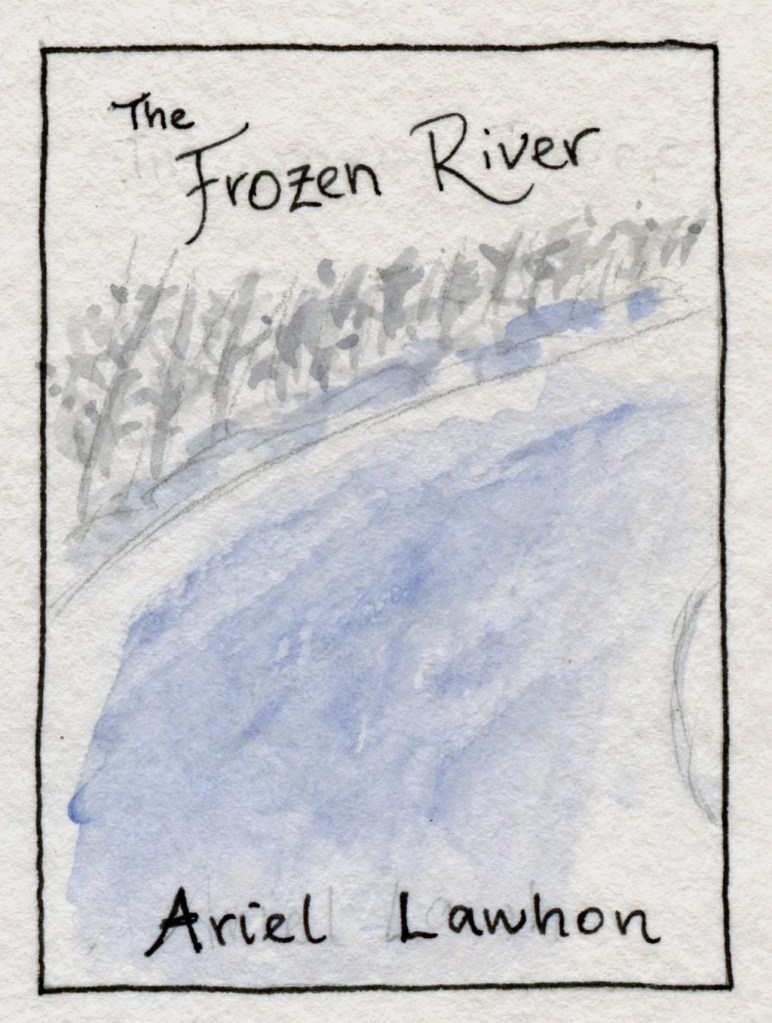
I don’t read a lot of historical fiction, and I heard a recommendation for this book…somewhere…and thought I would give the genre another go.
The book is set in Maine in 1790-1791 and is from the perspective of Martha Ballard, a local midwife in a small river community. When a man is discovered in the river (which, as the title suggests, is frozen), Martha, as a medical practitioner, is asked to examine the body. She discovers he was murdered and then thrown in the river.
The man, Joshua Burgess, had also been accused a few months before of participating with a local magistrate in the rape of a minister’s wife, and was generally of doubtful reputation, providing multiple motives for murder.
Martha attends births, works at unraveling the murder mystery, and attends court hearings as a medical witness on behalf of her friend who was attacked.
The story itself was interesting, and Lawhon is a good writer, but while it is possible that a midwife in the 18th century had some more progressive views on the role of women in family and society, Martha’s perspective felt a bit more like a 21st century woman who traveled back in time to the 18th century.
I think this is why most historical fiction is not for me: the historical details are interesting, and I appreciate the attempt to make the past come alive, but it is exceedingly difficult for a modern author to take the attitudes of the time on their own terms. This is not to say a modern author cannot comment or show outdated or immoral ideas as outdated or wrong, but the protagonist here really felt out of step with the community.
This is why I prefer historical fiction with a sci-fi framing: if a modern person travels back in time to observe a previous era, it is completely plausible that they would be horrified by some of the attitudes and prejudices.
Of course there have been people who were “ahead of their time” in some way, and it is possible that the historical Martha Ballard on whose diary the book is based had some progressive views. However, some of the perspectives rang slightly false to me personally.
I still wanted to find out what happened, and I didn’t hate the book, I just think that historical fiction might not be for me.
Content warning: fairly explicit description of rape.
The Tomb of Dragons, by Katherine Addison
Published 2025

This is the third installment of a fantasy series (which itself is a spin-off of another book–kind of a nesting doll situation) about a man who is a witness for the dead (he can communicate with the recently deceased). He is also someone who can patiently unravel a difficult situation, likely because he is not easily put off by social discomfort, in a society which is extremely concerned with politeness and protocol.
Thara Celehar is a prickly prelate who has managed, despite his expectations, to make friends in the city of Amalo where he was sent (two books ago). Although he is experiencing a career crisis (the details of which would be a spoiler for the end of the previous book, The Grief of Stones), he continues to show up and do the tasks set before him by his superior.
Celehar’s adventures do lead him to the titular tomb where he agrees to witness for the ghost of a dragon, but he also has other tasks such as: figuring out how to get a new coat which he can barely afford, drinking tea with his friends, acquiring a bodyguard to protect against assassination attempts, and prodding another religious administrator to do his job and clean up a paperwork nightmare.
All the while he is grappling with his unhappy past and his friends try to encourage him that he is actually worth befriending and that they truly enjoy his company, which he finally starts to believe.
The world building in these books is amazing: I love a complex societal structure with rich details (since the characters are elves and goblins, they have long ears that express emotion, for example).
While Celehar does have missions and adventures, these are not really the main point: it is more about how he deals with his past hurts, and how his friends humanize him, and vice versa. The way Thara learns to move forward and live again, even though his job is to speak for the dead, is a major theme.
I have mixed feelings about the ending—it certainly leaves the door open for future books, but changes how things stand in a way that I am not sure I love. But I do enjoy this world and the character, so I am open to reading future books if the author decides to return. This ending could also possibly close the end of this character arc and allow the author to move on to other people in the same world, so she left her options open.
The Goblin Emperor, by Katherine Addison
Published 2014
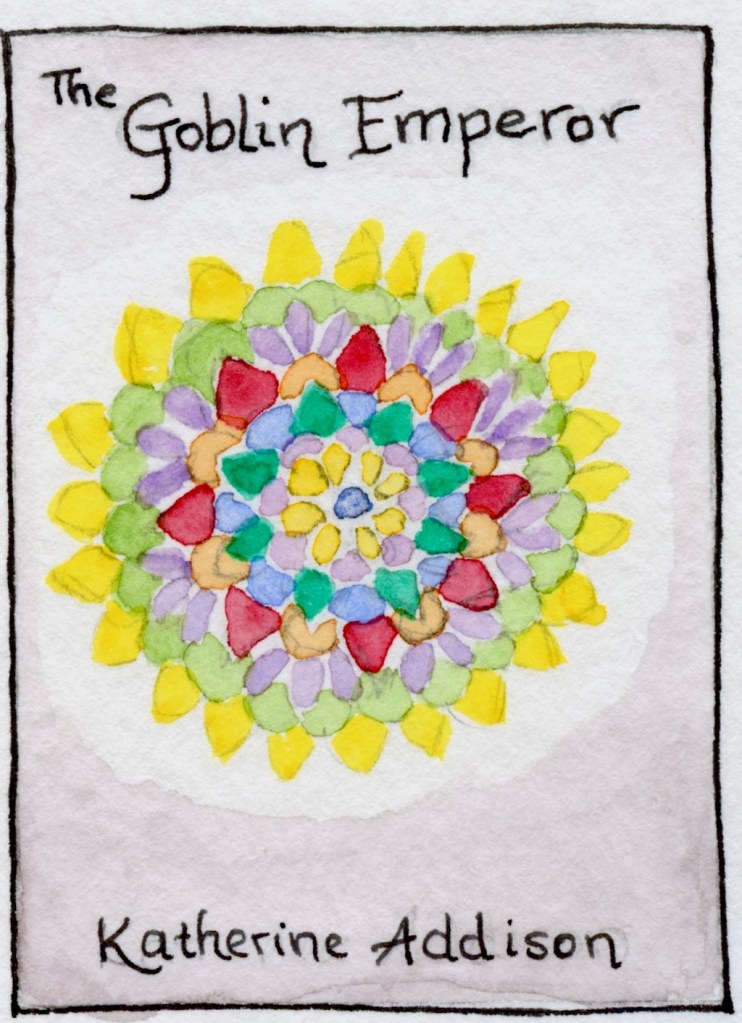
I enjoyed The Tomb of Dragons so much I decided to go back and read the book that started it all. I listened to this audio book while I painted our guest room, so I blew through it in several days.
As I said above, I love a complex social structure with court intrigue, and this is also a fish-out-of-water story, which is helpful in introducing a complicated world.
Maia is the fourth and youngest son of the Emperor of the Elflands. His mother died when he was a child, and Maia has been raised in exile by a distant cousin who was banished from court and who takes out his frustration on the boy.
A messenger arrives, and Maia is whisked off to the palace as the only surviving son and heir to the throne.
From learning about how the government functions and the dizzying intrigues of court politics, Maia will have to fall back on his own judgment and figure out who is loyal and who might be plotting against him, assuming him to be an ignorant lout (partially a stereotype because Maia’s mother was a goblin, and therefore considered inferior to the lighter-skinned elves).
Maia makes friends and enemies, good decisions and foolish ones, and must come to terms with what it means to be Emperor: he is both alone and also never alone. As Emperor, Maia has a lot of power, and he is self-reflective enough to know that this power could be corrosive. It is also strong and fragile, as all power is: he knows if he pushes too far, he could lose it, but if he plays it too safe, important work for the less fortunate will not happen. Being the Emperor is both a privilege and a responsibility, and those themes are explored without feeling like they hit you on the head.
A lot happens in this book (assassination attempts, audiences with any number of petitioners wanting something from the emperor, details about setting up a household, and many many names and aristocratic titles) and the steampunk details are fun.
While I would gladly read more about Maia’s adventures as Emperor, the book ends on a satisfying note and so far the other books set in this world are about a side character (though we do get a glimpse of Maia in The Tomb of Dragons, which is so fun). I do like a book that sticks the landing, and this one does.
The Man Who Died Twice, by Richard Osman
Published 2021
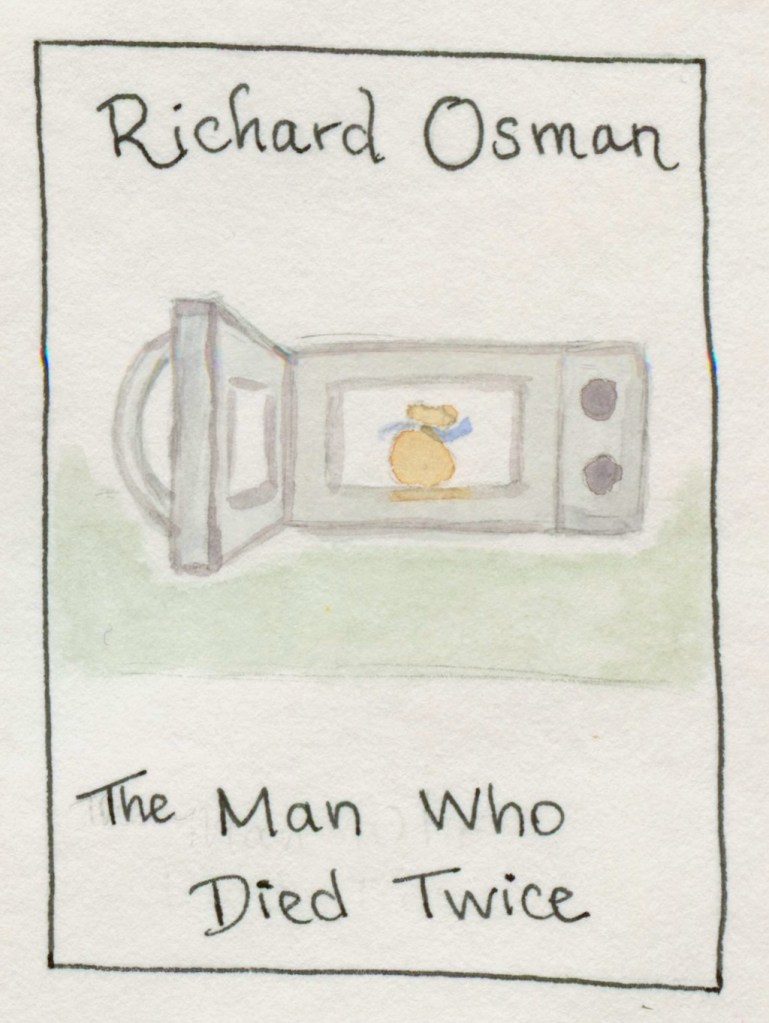
This is the second book in the Thursday Murder Club series, and it was also delightful. Elizabeth, Ron, Ibrahim, and Joyce and back for another adventure.
Elizabeth’s ex-husband, Douglas, was also in MI5 and returns to her life as a man in hiding due to stealing some diamonds from a black market “banker.” But did he actually steal the diamonds? Is his life really in danger (all signs point to yes, but Douglas is not exactly truthful). Can our geriatric heroes extricate themselves from more sticky situations? Especially when Ibrahim is mugged by some teenage delinquents and is not at the top of his game.
Blending mystery, friendship, and the indignities of aging in a humorous way, Osman’s books are entertaining with poignant moments of reflection on the difficulties of getting older. When mind and body are no longer going to be in better shape even with mental and physical exercise as the body slowly breaks down, it creates an urgency and clarity that is refreshing in some ways.
The mystery is again entertaining, the characters endearing, and it’s just a fun ride.